

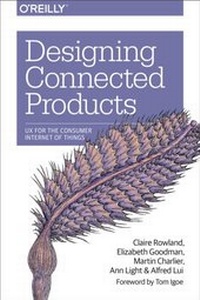
Designing Connected Products
UX for the Consumer Internet of Things
1st Edition
Published on 18. May 2015
726 pages
978-1-4493-7272-9 (ISBN)
Description

Networked thermostats, fitness monitors, and door locks show that the Internet of Things can (and will) enable new ways for people to interact with the world around them. But designing connected products for consumers brings new challenges beyond conventional software UI and interaction design.
This book provides experienced UX designers and technologists with a clear and practical roadmap for approaching consumer product strategy and design in this novel market. By drawing on the best of current design practice and academic research, Designing Connected Products delivers sound advice for working with cross-device interactions and the complex ecosystems inherent in IoT technology.
More details
Other editions
Additional editions
Claire Rowland | Elizabeth Goodman | Martin Charlier
Designing Connected Products
UX for the Consumer Internet of Things
Book
06/2015
1st Edition
O'Reilly
€47.00
Article not available at the moment
Content
- Intro
- Contents
- Foreword
- Preface
- Chapter 1: What's Different About User Experience Design for the Internet of Things?
- How Is UX for IoT Different?
- A Design Model for IoT
- Summary
- Chapter 2: Things: The Technology of Connected Devices
- Types of Connected Device
- Multipurpose Computers
- Bridging Physical and Digital: Sensors and Actuators
- The Challenge of Powering Devices
- Conserving Battery Life
- Summary
- Chapter 3: Networks: The Technology of Connectivity
- Why Is Networking Relevant to IoT UX?
- Networking Issues That Cause UX Challenges for IoT
- The Architecture of the Internet of Things
- Types of Network
- Network Communication Patterns
- Internet Service
- Summary
- Case Study 1: Proteus Digital Health: The Connected Pill
- Chapter 4: Product/Service Definition and Strategy
- Making Good Products
- From Innovation to Mass Market
- Tools Versus Products
- What Makes a Good Product?
- Services in IoT
- Business Models
- Summary
- Chapter 5: Understanding People and Context
- The Role of Research in Connected Product Design
- Summary
- Chapter 6: Translating Research into Product Definitions
- Generating the Elevator Pitch
- Why Does Your Product Matter?
- What Is Your Product?
- What Does the Product Do?
- Recurring Questions for Product Strategy
- Summary
- Case Study 2: Little Kelham: Connected Home
- Chapter 7: Embedded Device Design
- An Introduction to Thinking About Physical Objects in IoT
- Making Stuff: Differences to UX
- Essentials of the Design Process
- Three Faces of a Physical Product
- Summary
- Chapter 8: Interface and Interaction Design
- Types of Interaction
- IoT-Specific Challenges and Opportunities
- Universal Design and Accessibility
- Summary
- Case Study 3: Ford SYNC 3: Connected Car
- Chapter 9: Cross-Device Interactions and Interusability
- Cross-Platform UX and Usability
- What Is Interusability?
- Conceptual Models and Composition
- Consistency
- Continuity
- Summary
- Chapter 10: Interoperability
- The Compuserve of Things
- What Is Interoperability and Why Is It a Problem?
- How Can Devices Interoperate?
- How Can We Improve Interoperability?
- The UX of Interoperability
- Summary
- Case Study 4: LOOP: Connected Pelvic Floor Exerciser
- Chapter 11: Responsible IoT Design
- Security
- Privacy
- Social Engineering
- Environment
- Summary
- Chapter 12: Supporting Key Interactions
- In-Life Housekeeping
- Discovery
- Control Experiences
- Platforms
- The Technology of Getting Things Connected
- Summary
- Case Study 5: BRCK: Rugged Portable WiFi Hotspot
- Chapter 13: Designing with Data
- Introduction
- Data in IoT
- Types of Data-Driven Product
- What This Means for Design
- Summary
- Chapter 14: Iterative Design: Prototyping and Learning
- The Necessity of Working Iteratively
- Using Prototypes to Answer Questions
- How Do You Decide What to Prototype?
- Evaluation: Success Demands Failure
- Summary
- Chapter 15: Designing Complex, Interconnected Products and Services
- It's Complicated.
- Scaling the UX
- Control
- Approaches to Managing Complexity
- Summary
- Appendix A: Companies, Products, and Links
- Index
