

Urban Intensities
Description

Vielfalt und Dichte im Wohnungsbau
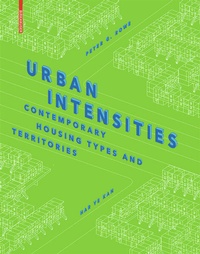
Vielfalt und Dichte im Wohnungsbau stehen als Anforderungen heute im Mittelpunkt der Entwurfs- und Bautätigkeit. Der Schlüssel zur erfolgreichen Planung von verdichtetem Geschosswohnungsbau ist eine spezifische Qualität der städtischen Dichte ("Density"): die städtische Intensität ("Intensity").
In einer Verbindung von Architektur- und Städtebauaspekten stellt dieses Buch die unterschiedlichen Formen und Strukturen dar, mit denen heute Vielfalt und Dichte im Wohnungsbau entstehen. Systematisch wird eine breite Information über die Vor- und Nachteile aller wichtigen verdichteten Bautypen geliefert. Hinzu kommen der Vergleich mit prägenden Vorbildern und eine kritische Einschätzung durch die international hochgeschätzten Autoren. Mehr als 20 Fallstudien werden in eigens angefertigten, Vergleichbarkeit herstellenden Zeichnungen von Grundrissen bis hin zu spektakulären 3D-Luftbildsimulationen des städtebaulichen Kontextes analysiert. Zu den drängenden Aufgaben, die mit diesen Instrumenten bewältigt werden können, gehören die Vermeidung von Zersiedelung, die Stärkung der städtischen Zentren und die Entwicklung innovativer Wohntypologien.
- Vielfalt und Dichte als Qualitäten des Wohnens
- Verbindung von architektonischen und städtebaulichen Aspekten
-
Vorbildliche Beispiele systematisch analysiert
More details
Other editions
Additional editions
Persons
Content
2 - URBAN BLOCK SHAPERS [Seite 10]
2.1 - Precedents: From Plan Zuid to the Meander [Seite 11]
2.2 - Contemporary Cases: Building in Barcelona and Los Angeles [Seite 14]
2.3 - Convergences and Contexts [Seite 36]
3 - HOUSING AND LANDSCAPES [Seite 37]
3.1 - Precedents: From Active Mergers to Objects of Contemplation [Seite 38]
3.2 - Contemporary Cases: Houses and New Grounds [Seite 41]
3.3 - Trends, Consistencies, and Contexts [Seite 57]
4 - SUPERBLOCK CONFIGURATIONS [Seite 58]
4.1 - Precedents: From Mass Housing to a New Urban Lifestyle [Seite 59]
4.2 - Contemporary Cases: Chinese Superblocks in Beijing [Seite 63]
4.3 - Dimensional Issues, Strategies, and Domain Definitions [Seite 77]
5 - TALL TOWERS [Seite 79]
5.1 - Precedents: Early Beginnings, Mass Provision, and Dwelling Diversity [Seite 80]
5.2 - Contemporary Cases: Expressions of Sustainability and Variation [Seite 84]
5.3 - Balancing Dwelling and Conditions of Variation, Separation, and Resilience [Seite 100]
6 - BIG BUILDINGS [Seite 101]
6.1 - Precedents: From Unités to Sprawling Complexes and Green Buildings [Seite 101]
6.2 - Contemporary Cases: Big Buildings in Urban Circumstances\ [Seite 105]
6.3 - Community and Balances Among Residential and Other Factors [Seite 123]
7 - INFRASTRUCTURAL ENGAGEMENTS [Seite 124]
7.1 - Precedents: Direct Engagements and Reifications [Seite 125]
7.2 - Contemporary Cases: Re-occupation of Urban Sites [Seite 127]
7.3 - Typal Independence, Reciprocity, and Contextual Influence [Seite 144]
8 - INDIGENOUS REINTERPRETATIONS [Seite 145]
8.1 - Precedents: Codes, Associations, and Reproductions [Seite 145]
8.2 - Contemporary Cases: References to the Past in Beijing and Shanghai [Seite 148]
8.3 - Contextual Engagements and Differences Between Form and Figure [Seite 164]
9 - INFILL AND PUNTAL INTERVENTIONS [Seite 166]
9.1 - Precedents: Infills, Unit Ensembles, and Intervention Processes [Seite 167]
9.2 - Contemporary Cases: Single Houses and Ensembles of Units [Seite 169]
9.3 - Animation, Completion, Contradistinction, and Other Outcomes [Seite 194]
10 - HOUSING SPECIAL POPULATIONS [Seite 195]
10.1 - Precedents: Recent Social, Student, and Elderly Housing [Seite 196]
10.2 - Contemporary Cases: From Slum Reparation to Co-op Life [Seite 203]
10.3 - Flexibility, Accommodating Change, and Special Programming [Seite 218]
11 - A TURNING POINT [Seite 220]
11.1 - Constants and Trends [Seite 221]
11.2 - Metrics and Measures [Seite 224]
11.3 - Selected Projects and Contextual Connectivity [Seite 226]
11.4 - Units, Types, and Use Mixes by Categories [Seite 229]
12 - Notes [Seite 231]
13 - Index [Seite 235]
14 - About the Authors, Acknowledgements, Credits, Colophon [Seite 239]
