

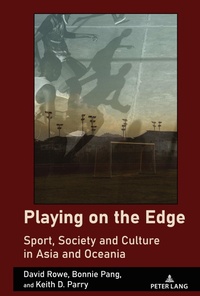
Playing on the Edge
Description

Contemporary global sport is in constant, sometimes bewildering flux. This book goes beyond orthodox globalisation theory, deploying the metaphor of 'playing on the edge' in analysing the dynamic process of making and remaking sport culture in Asia and Oceania. Beyond sport's traditionally dominant centres in the West, here the edges of the sport and media fields are vividly exposed, re-positioned, blunted and sharpened, revealing many points of tension - racial, ethnic, gendered, classed, sexual, cultural, linguistic, national, etc. - and in many combinations. This embraces many dimensions of the sport-society nexus relating to subjects including association (soccer) and Australia rules football, cricket, esport, casual and urban community sport, the Gay Games, and sports diplomacy. Playing on the Edge engages with the socio-cultural implications of this relentless sporting movement in considering the extent to which the Occidental may, in some respects, be becoming incidental.
Playing on the Edge is an exciting contribution to understanding the complexities, specificities, multidirectional nature, and unevenness of sport and globalization. It makes a convincing case for widening analytical horizons and frames of reference as sport cultures in Asia and Oceania influence and perhaps represent the future of world sport.
-Professor Toni Bruce, University of Auckland, Aotearoa New Zealand
Focusing on the unconventional geographical pairing of Asia and Oceania, Playing on the Edge offers a fresh perspective on globalization and sport. In addressing enduring concerns with the social, cultural and political dimensions and emerging issues in gender, technology, and intellectual property, the authors illuminate world sport's complex, edgy connections.
-Professor Younghan Cho, Hankuk University of Foreign Studies, South Korea
More details
Other editions
Additional editions
Persons
DAVID ROWE is Emeritus Professor of Cultural Research, Institute for Culture and Society, Western Sydney University. His books include Sport, Culture and the Media; Global Media Sport; Sport Beyond Television; and Making Culture.
BONNIE PANG is Associate Professor, University of Bath. She has published three monographs and was a recipient of the Marie Sklodowska-Curie Fellowship (2019-20).
KEITH D. PARRY is Principal Academic, Bournemouth University. His research interests relate to health, identity, sport and in/exclusion, and their representation and use in the media.
Content
Acknowledgements - Chapter 1 Introduction: Sport Fields on Edge - Chapter 2 Australian Rules Football Goes to China - Chapter 3 The Gay Games Comes to Hong Kong - Chapter 4 Sport and Regional Public Diplomacy: Asia and Oceania - Chapter 5 Cultures of Sport in Australia's Sinoburbia - Chapter 6 Australasia and Oceania in Asia in Football - Chapter 7 Informal Sport in Sydney and Singapore - Chapter 8 Esport in East Asia - Chapter 9 Sticky Wicket: Cricket and South Asian-Australian Tensions - Chapter 10 Conclusion: Sport Fields Edging Towards the Future - Bibliography - Index
