

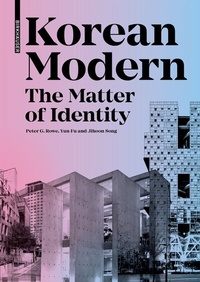
Korean Modern: The Matter of Identity
Description

Gesamtschau der koreanischen Moderne
Die Entwicklung der modernen Architektur in Korea und später in Südkorea ist eng mit den Umwälzungen verbunden, denen das Land seit dem späten 19. Jahrhundert ausgesetzt war. Die Autoren untersuchen die wichtigsten Perioden von der späten Joseon-Dynastie bis zur demokratischen Gegenwart und zeigen, wie die Architektur mittels technologischer und stilistischer Sprünge seit langem einen wesentlichen Beitrag zur Identitätsstiftung der koreanischen Nation leistet.
Die architektonischen Analysen konzentrieren sich auf Gebäude, an denen die Herausbildung eines spezifisch koreanischen Modernismus besonders gut zu beobachten ist: Sie reichen von der Festung Hwaseong bis zu Bauten des 21. Jahrhunderts wie der Paju Book City, dem Ssamziegil Shopping Center, dem Wolkenkrater Boutique Monaco und dem Bauzium Sculpture Museum.
- Überblick über die Entstehung und Entwicklung moderner Architektur in Korea
- Wichtiger Beitrag über den Zusammenhang von Architektur und Identitätsstiftung
- Von führenden Experten für ostasiatische Architektur und Stadtentwicklung geschrieben
More details
Other editions
Additional editions
Persons
Peter Rowe , Professor für Architektur, Yun Fu , Architekt/Wissenschaftler, Jihoon Song , Doktorand
Harvard Graduate School of Design
Content
- Intro
- Contents
- Chapter 1 Introduction
- On Modernity and a Path- Dependent Turn
- On 'Koreanness': Han Minjok and Reaching Out
- Organization of the Book
- Chapter 2 Movement in the Late Joseon Dynasty
- King Jeongjo Proceeds to the Hwaseong Fortress
- The Geojunggi and Architectural Depiction
- Consolidation of Power towards the Gwangmu Reforms
- The Gyeongbokgung Restoration
- Seokjojeon
- Chapter 3 Under the Thumb of Colonial Rule
- Three Phases of Colonial Rule
- Architectural Symbols of Colonial Rule
- Places of Worship in the Manner of the West
- Two Department Stores and Modernity
- A Modernism of the East
- Chapter 4 The Generals, Park's Regime and Followers
- The Rise of Chung-hee Park
- The Two Architects Kim
- Re- Interpreting and Sublimating Tradition
- Exploring Modern Technology
- Pulling Up with the Times
- Chapter 5 Modern Democracy and the 4.3 Group
- The Building of a New Korea
- The Beauty of Poverty and Structuring Emptiness
- Making Frames, Walls and Voids
- Architectural Essences and Themes
- Chapter 6 The Sixth Republic and Returning Contemporaries
- Spatial Recoveries
- Spatial Flows
- Others
- Realizing Cultural Potentials
- Chapter 7 Koreanness: Some Observations
- Traditional Tropes
- Efficient Project Delivery
- Self- Reference
- Consolidating Identity
- References
- Biographical Notes
- Acknowledgments
- Illustration Credits
- About the Authors
- Index
