

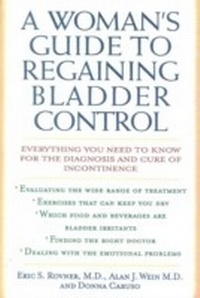
A Woman's Guide to Regaining Bladder Control
Everything You Need to Know for the Diagnosis and Cure of Incontinence
1st Edition
Published on 19. February 2004
235 pages
978-1-4617-0014-2 (ISBN)
Description

Respected urologists, reassure women that incontinence can be controlled or cured and they can live without fear of having an accident in public.
More details
Other editions
Additional editions
Eric S. Rovner | Alan J. Wein | Donna Caruso
A Woman's Guide to Regaining Bladder Control
Everything You Need to Know for the Diagnosis and Cure of Incontinence
Book
04/2004
M. Evans& Co Inc
€17.40
Shipment within 3-4 weeks
Eric S. Rovner | Alan J. Wein | Donna Caruso
A Woman's Guide to Regaining Bladder Control
Everything You Need to Know for the Diagnosis and Cure of Incontinence
Book
04/2002
M. Evans& Co Inc
€19.00
Shipment within 3-4 weeks
Persons
By Eric S. Rovner; Alan J. Wein and Donna Caruso
Content
- Cover
- Title Page
- Copyright Page
- Dedication Page
- Table of Contents
- Introduction
- Facts you should Know about Incontinence
- How this Book can Help you
- Part One: What is Incontinence?
- Chapter 1: What you should know about Incontinence
- The Basic Facts
- Chapter 2: How a Woman's Urinary System Works
- The Parts of the Urinary System
- Steps in the Urinary Process
- Holding it in
- Chapter 3: The Many Causes of Incontinence
- You Need Help no Matter what the Cause
- Physical Conditions that can Cause Incontinence
- Pelvic Surgery
- Medications
- Dietary Factors
- Other Possible Causes of Urinary Incontinence
- It May not be Urine
- Chapter 4: The Five Types of Incontinence
- Stress Urinary Incontinence
- Urge Incontinence
- Reflex Incontinence
- Mixed Incontinence
- Overflow Incontinence
- Total Incontinence
- Other Types of Incontinence
- Chapter 5: How to Determine if you are Incontinent
- Scoring the Questionnaire
- Incontinence Questionnaire
- Risk Factors
- Symptoms
- Part Two: Finding Help
- Chapter 6: Overcoming the Emotional Obstacles to Seeking Help
- The Emotional Issues of Incontinence
- The Myths and the Facts about Incontinence
- Taking Control
- Taking Action
- Chapter 7: Finding the Right Doctor
- Treatment with your Primary Care Doctor
- Consulting a Specialist
- The Ideal Doctor
- Organizations to Contact
- Other Referral Sources
- Questions to ask Prospective Doctors
- Questions to ask before your First Visit to the Doctor's Office
- Chapter 8: Preparing for your First Medical Visit
- Be Patient if you have a Complicated, Severe, or Long-Standing Condition
- Medical Questionnaire
- Information to Bring along
- A Sample Questionnaire
- Your Voiding Diary
- The Medical History Form
- Your First Meeting with the Doctor
- Chapter 9: How Incontinence is Diagnosed
- Diagnostic Tests
- The Physical Exam
- Pad Tests
- Urine Tests
- Urodynamic Tests
- Cystometry
- Making a Diagnosis
- Part Three: Treating Incontinence
- Chapter 10: General Treatments for Incontinence
- The Non- Treatment Option
- Guidelines for Treatment Selection
- Your Attitude toward Treatment
- Chapter 11: Behavioral Techniques
- How Behavioral Techniques can help you
- Lifestyle Changes
- Psychotherapy
- Behavioral Modification
- Private Practice Vibration Reminder Disk
- Bladder Retraining
- Pelvic Floor Exercises, or Kegels
- Biofeedback
- Vaginal Weights or Cones
- Electrical Stimulation
- The Neocontrol Device
- Chapter 12: Acupuncture
- Chapter 13: Medication
- Estrogen Replacement
- Types of Medication for Incontinence
- Using Medication
- Which Medications for Which Problem?
- How Long do the Drugs take to Work?
- Chapter 14: Choosing Surgery
- Factors Involved in your Decision
- Surgical Pros and Cons
- Surgery for Stress Urinary Incontinence
- Surgery for Urge Incontinence
- Choosing a Surgeon
- Second Opinions
- Preparing for Surgery
- Possible Risk Factors
- The Results of Surgery
- Chapter Fifteen: Helpful Products and Devices
- Finding the Products you Need
- How to Select the Right Products
- Absorbent Products
- Skin Care Products
- Incontinence Devices
- Catheters and Self-Catheterization
- Part Four: Getting Better
- Chapter 16: Coping with the Emotional Issues
- Keep your Urinary System in Proper Working Order
- Combining Self-Help and Medical Care
- Dealing with Emotional Issues
- Taking Positive Steps to Cope with your Condition
- Getting Help from Therapists and Support Groups
- Finding a Support Group
- Waiting for Treatment Results
- Chapter 17: Future Treatments
- Appendices
- Appendix A: Organizations
- Appendix B: Books
- About the Authors
- Index
