

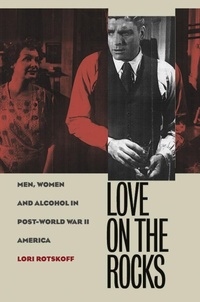
Love on the Rocks
Men, Women, and Alcohol in Post-World War II America
Published on 15. October 2003
328 pages
978-0-8078-6142-4 (ISBN)
Description

In this fascinating history of alcohol in postwar American culture, Lori Rotskoff draws on short stories, advertisements, medical writings, and Hollywood films to investigate how gender norms and ideologies of marriage intersected with scientific and popular ideas about drinking and alcoholism.
After the repeal of Prohibition in 1933, recreational drinking became increasingly accepted among white, suburban, middle-class men and women. But excessive or habitual drinking plagued many families. How did people view the “problem drinkers” in their midst? How did husbands and wives learn to cope within an “alcoholic marriage”? And how was drinking linked to broader social concerns during the Great Depression, World War II, and the Cold War era?
By the 1950s, Rotskoff explains, mental health experts, movie producers, and members of self-help groups like Alcoholics Anonymous and Al-Anon helped bring about a shift in the public perception of alcoholism from “sin” to “sickness.” Yet alcoholism was also viewed as a family problem that expressed gender-role failure for both women and men. On the silver screen (in movies such as The Lost Weekend and The Best Years of Our Lives) and on the printed page (in stories by such writers as John Cheever), in hospitals and at Twelve Step meetings, chronic drunkenness became one of the most pressing public health issues of the day.
Shedding new light on the history of gender, marriage, and family life from the 1920s through the 1960s, this innovative book also opens new perspectives on the history of leisure and class affiliation, attitudes toward consumerism and addiction, and the development of a therapeutic culture.
After the repeal of Prohibition in 1933, recreational drinking became increasingly accepted among white, suburban, middle-class men and women. But excessive or habitual drinking plagued many families. How did people view the “problem drinkers” in their midst? How did husbands and wives learn to cope within an “alcoholic marriage”? And how was drinking linked to broader social concerns during the Great Depression, World War II, and the Cold War era?
By the 1950s, Rotskoff explains, mental health experts, movie producers, and members of self-help groups like Alcoholics Anonymous and Al-Anon helped bring about a shift in the public perception of alcoholism from “sin” to “sickness.” Yet alcoholism was also viewed as a family problem that expressed gender-role failure for both women and men. On the silver screen (in movies such as The Lost Weekend and The Best Years of Our Lives) and on the printed page (in stories by such writers as John Cheever), in hospitals and at Twelve Step meetings, chronic drunkenness became one of the most pressing public health issues of the day.
Shedding new light on the history of gender, marriage, and family life from the 1920s through the 1960s, this innovative book also opens new perspectives on the history of leisure and class affiliation, attitudes toward consumerism and addiction, and the development of a therapeutic culture.
More details
Other editions
Additional editions
Book
10/2002
The University of North Carolina Press
€47.60
Shipment within 15-20 days
Person
Lori Rotskoff teaches history at Sarah Lawrence College and has previously taught American studies at Yale University. She lives in Larchmont, New York.
Content
- Intro
- Contents
- Acknowledgments
- Introduction
- Notes
- 1. Cultures of Drink in Prohibition and Post-Repeal America
- Notes
- 2. Engendering the Alcoholic
- Notes
- 3. Alcoholics Anonymous and the Culture of Sobriety
- Notes
- 4. The Dilemma of the Alcoholic Marriage
- Notes
- 5. Drink and Domesticity in Postwar America
- Notes
- Conclusion
- Notes
- Notes
- Bibliography
- Index
