

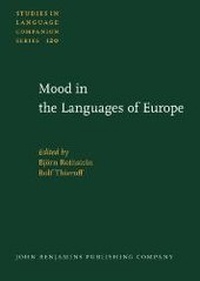
Mood in the Languages of Europe
1st Edition
Published on 15. December 2010
XVI, 647 pages
978-90-272-8763-2 (ISBN)
Description

This book is the first comprehensive survey of mood in the languages of Europe. It gives readers access to a collection of data on mood. Each article presents the mood system of a specific European language in a way that readers not familiar with this language are able to understand and to interpret the data. The articles contain information on the morphology and semantics of the mood system, the possible combinations of tense and mood morphology, and the possible uses of the non-indicative mood(s). The papers address the explanation of mood from an empirical and descriptive perspective. This book is of interest to scholars of mood and modality, language contact, and areal linguistics and typology.
More details
Other editions
Additional editions
Bjoern Rothstein | Rolf Thieroff
Mood in the Languages of Europe
Book
12/2010
John Benjamins Publishing Co
€116.60
Shipment within 10-15 days
Persons
Content
- Mood in the Languages of Europe
- Editorial page
- Title page
- LCC data
- Table of contents
- Preface
- List of contributors
- List of Abbreviations
- Moods, moods, moods
- 1. In the mood for moods
- 2. What is mood?
- 3. What's the name of the moods?
- 4. How many moods can a language have?
- 5. Is it mood?
- 6. One and one is one
- 7. Moods and tenses
- 8. If I had a hammer.
- 9. Summary: That's the way it is
- References
- Part I. Germanic
- Mood in Icelandic
- 1. Introduction
- 2. Verbal categories
- 2.1 An overview
- 2.2. Inflection
- 2.3 Auxiliary verbs
- 2.4. Imperatives and exhortatives
- 2.5. Participles and infinitives
- 2.6. The (indicative) tense system
- 3. The subjunctive
- 3.1 Morphology
- 3.2. Main clause subjunctives
- 3.3. Embedded subjunctives: Their use and meaning
- 3.4. Tense interpretation in subordinate clauses.
- 4. Conclusion
- References
- Mood in Norwegian
- 1. Introduction
- 2. Verbal categories in Norwegian
- 3. Mood categories in Norwegian
- 3.1 Imperative
- 3.2 Subjunctive
- 4. Substituting for the non-indicative moods
- 4.1 The light verb la
- 4.2 Kanskje, mon and tro/tru
- 4.3. Tenses
- 4.4 Modals
- 4.5. Past participle
- 5. Expression of mood in Norwegian
- References
- Mood in Swedish
- 1. Introduction
- 2. Verbal categories in Swedish
- 3. Mood categories in Swedish
- 3.1 The imperative
- 3.2 The preterite subjunctive
- 3.3 The present subjunctive
- 4. Substituting for the non-indicative moods
- 4.1 The indicative
- 4.2 The evidential present perfect
- 5. Conclusion
- References
- Mood in Danish
- 1. Introduction
- 2. Inflexional mood
- 3. Distality
- 4. The secondary mood system: S-passive and periphrastic passive
- 4.1 Old Danish Mood
- 4.2 The modern passive mood
- 5. Morphology prompts word order
- 5.1 Mood in subordinate clauses
- 5.2 Mood in main clauses
- 6. Mood in the declarative pattern: Realis vs. Non-realis
- 6.1 Filled-in Fundamental Field
- 6.2 Empty Fundamental Field
- 7. How is it mood?
- References
- Mood in English
- 1. Introduction
- 2. The English verbal system
- 3. The development of mood in English
- 4. Mood in contemporary English
- 4.1 Indicative
- 4.2 Subjunctive
- 4.2.1 Present subjunctive
- 4.2.2 Past subjunctive
- 4.3 Imperative
- 4.4 Prohibitive
- 5. let
- 6. Non-inflectional mood
- 7. Conclusion
- References
- Mood in Dutch
- 1. Introduction
- 2. The verbal categories
- 3. The mood categories in Dutch
- 3.1 The non-finite subcategories
- 3.2 The finite subcategories of the indicative
- 3.3 The finite subcategories of the subjunctive
- 3.4 The finite subcategories of the imperative
- 4. Meaning and use of the subjunctive mood
- 4.1 Subjunctive mood in main clauses
- 4.2 Subjunctive mood in subordinate clauses
- 4.3 Alternative expressions
- 5. Conclusion
- References
- Mood in German
- 1. Introduction
- 2. The subjunctive
- 2.1 Morphology
- 2.1.1 Present subjunctive
- 2.1.2 Preterite subjunctive
- 2.1.3 Subjunctive 1 and subjunctive 2
- 2.1.4 würde + infinitive
- 2.2 Functions of the subjunctive
- 2.2.1 Subjunctive 1
- 2.2.2 Subjunctive 2
- 2.2.3 Reported speech
- 2.2.4 würde + infinitive
- 3. The imperative
- 3.1 The paradigm
- 3.2 Morphology
- 3.3 Use of the imperative
- 4. Conclusion
- References
- Part II. Romance
- Mood in French
- 1. Introduction
- 2. The verb in French grammar
- 2.1 Morphology
- 2.2 The verbal system
- 2.2.1 Moods
- 2.2.2 Tenses and aspectual oppositions
- 3. Moods
- 3.1. The imperative
- 3.2 The subjunctive
- 3.2.1 Independent (main) clauses
- 3.2.2 Complement clauses
- 3.2.3 Adverbial clauses
- 3.2.4 Relative clauses
- 4. Indirect discourse
- 5. Conclusions
- References
- Mood in Portuguese
- 1. Introduction
- 2. Morphological aspects of the Portuguese mood system
- 3. Mood distribution in Portuguese
- 3.1 Subjunctive in main clauses
- 3.2. Subjunctive in subordinate clauses
- 3.2.1 Mood selection in argument clauses
- 3.2.2 Mood selection in relative clauses
- 3.2.3 Mood in adverbial clauses
- 4. The 'semantics' of mood
- 5. Competing structures - some remarks on the Infinitive
- 6. Concluding remarks
- References
- Mood in Spanish
- 1. Introduction
- 2. The temporal-aspectual system of Spanish
- 3. The subjunctive
- 3.1 Subjunctive morphology
- 3.2 Temporal and aspectual relations
- 3.3 The meaning and uses of the subjunctive
- 3.3.1 Argument clauses
- 3.3.2 Relative clauses
- 3.3.3 Adverbial and/or adjunct clauses
- 3.3.4 Root contexts
- 4. The conditional
- References
- Mood in Catalan
- 1. Introduction
- 2. Verbal categories
- 3. Mood categories
- 3.1 Main clause uses of non-indicative moods
- 3.1.1 Imperative
- 3.1.2 Subjunctive
- 3.2 Embedded uses of moods
- 3.2.1 Argument clauses
- 3.2.2 Relative clauses
- 3.2.3 Adjunct clauses
- 3.3 Modal uses of indicative mood
- 4. Conclusions
- References
- Mood in Italian
- 1. Italian
- 2. The Italian verb system
- 3. Italian moods
- 3.1 Subjunctive
- 3.2 Imperative
- 3.3 Other moods?
- 3.4 Restrictions of moods to specific tense-aspect
- 3.5 Syntactic restrictions
- 4. Meaning and use of the Italian moods
- 4.1 Subjunctive
- 4.1.1 Complement clauses
- 4.1.2 Adverbial clauses
- 4.1.3 Relative clauses
- 4.1.4 Subjunctive and Imperative in independent non-declarative clauses
- 4.2 Conditional
- 5. Analytic mood markers?
- 6. Conclusion
- References
- Mood in Rumanian
- 1. Introduction
- 2. Morphology: Present Indicative, Present Subjunctive and the competing Conditional
- 3. Mood in Rumanian
- 3.1 Main clause contexts
- 3.2 Contexts of subordination
- 3.2.1 Substantive (complement) clauses
- 3.2.2 Relative ('adjective') clauses
- 3.2.3 Adverbial clauses
- 3.2.3.1 Purpose, consecutive and comparative clauses
- 3.2.3.2 Temporal clauses
- 3.2.3.3 Conditionals and concessive-conditionals
- 3.4 Competitions between the Subjunctive and the Conditional
- 3.5. Sa-constructions in Infinitive contexts (the so-called 'Balkan infinitive'
- 4. Concluding remarks
- References
- Part III. Celtic
- Mood in Irish
- 1. Introduction
- 2. The imperative mood
- 2.1 Function and status of the Irish imperative
- 2.2 Impersonal/autonomous forms
- 2.3 Imperatives in concessive clauses
- 3. The subjunctive mood
- 3.1 The verbal morphology
- 3.2 Usage
- 3.2.1 Non-finite structures
- 3.2.2 Go as a temporal conjunction
- 3.2.3 Explicitness and pragmatic strengthening
- 3.2.4 The development of ach(t) go
- 4. The Conditional
- 4.1 The Morphology
- 4.2 Conditional sentences and the expression of mood
- 4.3 Concessives
- 4.4 Conditional markers
- 4.4.1 The conditional and new markers
- 4.4.2 The restrictive conditionals acht (go) and ach má
- 4.5 Negative conditionals
- 4.6 Conditionals and the realis-irrealis continuum
- 4.6.1 Diachronic changes
- 4.6.2 Indefinite antecedents
- 4.7 The conditional in indirect speech
- 5. Conjunction and complementizer sequences
- 6. Conclusion
- Abbreviations
- References
- Mood in Breton
- 1. Historical and sociolinguistic background
- 2. Linguistic background
- 3. Evolution of the Breton TAM sets and values
- 4. The Future
- 5. Two conditionals
- 6. The Imperative
- 7. Conclusion
- Abbreviations and symbols in glosses
- Mood in Welsh
- 1. Introduction
- 2. The verbal system in Welsh
- 3. Mood categories
- 3.1 Imperative mood
- 3.2 Subjunctive mood
- 3.3 The Potential and Irrealis tenses in the 'Typical' Domain of the subjunctive
- 4. Conclusion
- Abbreviations
- References
- Part IV. Slavic
- Mood in Russian
- 1. Introduction
- 2. The verbal categories in Russian
- 3. The mood subcategories
- 3.1 Morphology of non-indicative moods
- 3.1.1 The Conditional
- 3.1.2 Some remarks on the diachronic development of the conditional
- 3.1.3 The imperative
- 3.2 Restrictions of non-indicative moods to specific tenses/aspects/voices
- 1.3 Meaning and use of non-indicative moods
- 3.3.1 Conditional
- 3.3.1.1 Conditional in main and subordinated clause
- 3.3.1.2 Conditional in subordinated clauses
- 3.3.1.3 Main clause usage of the conditional
- 3.3.2 Imperative
- 4. Conclusion
- References
- Mood in Polish
- 1. Introduction
- 2. The verbal categories in Polish
- 3. The mood subcategories
- 3.1 Morphology of non-indicative moods
- 3.1.1 The Conditional
- 3.1.2 Some remarks on the diachronic development of the conditional
- 3.1.3 The imperative
- 3.2 Restrictions of non-indicative moods to specific tenses/ aspects/ voices
- 3.3 Meaning and use of non-indicative moods
- 3.3.1 Conditional
- 3.3.1.1 Conditional in main and subordinated clause
- 3.3.1.2 Dependent conditional in subordinated clauses (subjunctive)
- 3.3.1.3 Independent conditional in main clauses
- 3.3.1.4 Specific behaviour with modals
- 3.3.2 Imperative
- 4. Conclusion
- References
- Mood in Czech and Slovak
- 1. Introduction
- 2 Verbal categories in Czech and Slovak
- 3. The mood categories in Czech and Slovak
- 3.1 Morphology of non-indicative moods
- 3.2 Restrictions of non-indicative moods
- 3.3 Meaning and use of non-indicative moods
- 3.3.1 The imperative
- 3.3.2 Conditional
- 3.3.3 Infinitives
- 4. Other expressions for non-indicative moods
- 5. Conclusion
- Abbreviations
- Primary sources
- References
- Mood in Sorbian
- 1. Introduction
- 2. The verbal categories of Sorbian
- 2.1 The category of tense
- 2.2 The category of aspect
- 2.3 The category of voice
- 3. The category of mood in Sorbian
- 3.1 Morphology of non-indicative moods
- 3.1.1 Infinitive, imperative and jussive
- 3.1.2 The conditional mood
- 3.2 Meaning and use of non-indicative moods
- 3.2.1 Infinitive, imperative and jussive
- 3.2.2 The conditional mood
- 4. Conclusion
- References
- Mood in Bosnian, Croatian and Serbian
- 1. Introduction
- 2. The verbal categories in BCS
- 3. The mood categories in BCS
- 3.1 Morphology of non-indicative moods
- 3.1.1 The subjunctive
- 3.1.2 The imperative
- 3.1.3 The optative
- 3.2 Restrictions of non-indicative moods to specific tenses/aspects/voices
- 3.3 Meaning and use of non-indicative moods
- 3.3.1 The subjunctive
- 3.3.2 The synthetic imperative and optative constructions
- 4. Conclusion
- Abbreviations
- References
- Mood in Bulgarian and Macedonian
- 1. Balkan Slavic: Bulgarian and Macedonian
- 2. The major finite non-modal verbal categories
- 3. Mood domains in Bulgarian and Macedonian
- 3.1 The imperative domain
- 3.2 The conditional domain
- 3.3 The subjunctive domain
- 3.4 Evidentiality
- 4. Conclusion
- References
- Part V. Baltic
- Mood in Latvian and Lithuanian
- 1. Introductory remarks
- 2. The repertoire of moods in Lithuanian and Latvian
- 3. Imperatives and hortative constructions
- 4. The irrealis
- 4.1 Forms
- 4.2 Functions
- 4.2.1 Counterfactive uses
- 4.2.2 Counterfactivity marking on modal verbs
- 4.2.3 Irrealis in non-factive subordinate clauses
- 4.2.4 Irrealis in questions
- 4.2.5 Deontic uses of the irrealis
- 4.2.6 Politeness functions
- 4.2.7 Irrealis and presupposed information
- 4.2.8 Usage types not represented by the Baltic irrealis
- 5. Forms of doubtful status in Lithuanian and Latvian grammar
- 5.1 Evidential forms
- 5.2 The Latvian debitive
- 6. Interpretive use of imperatives and hortatives
- 7. Mood and tense
- 8. Mood in subordination
- 8.1 Mood in complementation
- 8.2 Mood in other forms of subordination
- 9. Subjunctive or irrealis?
- Abbreviations
- References
- Part VI. Other Indo-European languages
- Mood in Albanian
- 1. Introduction
- 2. The verbal categories of Standard Albanian
- 2.1 The category of tense
- 2.2 The category of aspect
- 2.3 The category of voice
- 3. Morphology of non-indicative moods
- 3.1 The imperative mood
- 3.2 The optative mood
- 3.3 The admirative mood
- 3.4 The subjunctive mood
- 3.5 The jussive mood
- 3.6 The conditional mood
- 3.7 The possibilitative mood
- 3.8 The obligative mood
- 3.9 The volitive mood
- 3.10 The hypothetical mood
- 3.11 Restrictions of non-indicative moods to specific tenses and aspects
- 4. Meaning and use of non-indicative moods
- 4.1 Meaning and use of the imperative
- 4.2 Meaning and use of the optative
- 4.3 Meaning and use of the admirative
- 4.4 Meaning and use of the subjunctive
- 4.5 Meaning and use of the jussive
- 4.6 Meaning and use of the conditional
- 4.7 Meaning and use of the possibilitative, obligative and volitive
- 4.8 Meaning and use of the hypothetical
- 5. Conclusion
- References
- Mood in Greek
- 1. Introduction
- 1.1 The Greek language
- 1.2 Words vs. stress units
- 1.3 Verbal categories in Greek
- 2. Mood in Greek
- 2.1 The Greek mood system
- 2.1.1 The Indicative pattern
- 2.1.1.1 Indicative without ?a
- 2.1.1.2 Indicative with ?a
- 2.1.2 The subjunctive pattern
- 2.1.2.1 The subjunctive pattern in main clauses
- 2.1.2.1.2 Wishes and curses
- 2.2 The Imperative
- 3. Other expressions of modality
- 3.1 Negative questions as polite impositions
- 3.2 Modal verbs
- 3.3 The passive
- References
- Sources
- Mood in Modern Eastern Armenian
- 1. Introduction - a sketch of Modern Eastern Armenian
- 2. Subjunctive
- 2.1 Morphology
- 2.2 Meaning and functions
- 2.2.1 Subjunctive Present
- 2.2.1.1 Simple sentences
- 2.2.1.2 In subordinated clauses in complex sentences
- 2.2.2 Subjunctive Past
- 3. Conditional
- 3.1 Morphology of Conditional
- 3.2 Meaning and functions of Conditional
- 3.2.1 Conditional Present
- 3.2.1.1 Simple sentences
- 3.2.1.2 In subordinate clauses
- 3.2.2 Conditional Past
- 4. Debitive
- 4.1 Morphology of Debitive
- 4.2 Meanings and functions of Debitive
- 4.2.1 Debitive Present
- 4.2.2 Debitive Past
- 5. Imperative
- 5.1 Morphology of Imperative
- 5.2 Meaning and function of Imperative
- 6. Conclusion
- References
- Part VII. Finno-Ugric
- Mood in Finnish
- 1. Finnish among the Finno-Ugrian languages
- 2. The verbal categories in Finnish
- 2.1 Person, number, tense and voice marking on Finnish verbs
- 2.2 Mood marking
- 2.3 Negation
- 3. The non-indicative moods
- 3.1 The meaning and use of the imperative
- 3.2 The meaning and use of the conditional
- 3.3 The meaning and use of the Potential
- 4. The use of the non-indicative moods in indirect discourse
- 5. Other expressions of modal meanings
- 6. Conclusions
- References
- Mood in Estonian*
- 1. Introduction
- 2 Verb categories of Estonian
- 3. Mood categories in Estonian
- 3.1 Imperative
- 3.2 Conditional
- 3.3 Quotative
- 3.4 Jussive and particle las
- 4. Conclusions
- Abbreviations
- References
- Mood in Hungarian
- 1. Introduction
- 2. General information about Hungarian
- 3. The verbal categories
- 4. Mood: basic illocutions
- 4.1 Assertive
- 4.2 Questioning
- 4.2.1 Polar Interrogative
- 4.2.2 Content Interrogative
- 4.3 Behavioural illocution
- 4.3.1 Imperative
- 4.3.2 Hortative
- 4.3.3 Prohibitive
- 4.3.4 Dishortative
- 4.3.5 Admonitive
- 4.3.6 Supplicative
- 5. Mood: modalities
- 6. Mood: Conditional
- 7. Conclusion
- Abbreviations
- References
- Appendix 1. Verbal paradigm
- Appendix 2. Question words in Hungarian
- Part VIII. Other European languages
- Mood in Maltese
- 1. Introduction
- 2. Verbal categories
- 2.1 Morphology of the Indicative and Imperative moods
- 2.2 The morphology of the non-finite verb forms
- 2.3 The morphology and morphosyntax of voices
- 2.3.1 The inherited derivational system
- 2.3.2 The periphrastic constructions
- 3. The modal uses of the two basic aspects
- 3.1 The modal uses of the Perfective
- 3.2 The modal uses of the Imperfective
- 3.2.1 Epistemic uses
- 3.2.2 Optative
- 3.2.3 Hortative
- 3.2.4 Prohibitive
- 4. The modal auxiliaries
- 4.1 The epistemic auxiliary ikun 'be'
- 4.2 The polysemous auxiliary jaf 'know'
- 4.3 The polysemous auxiliary seta' 'can'
- 4.4 The polysemous auxiliary ghandu/kellu/ikollu 'have'
- 5. Conclusion
- References
- Mood in Turkish
- 1. Introduction
- 2. Verbal categories of Turkish
- 3. Mood categories in Turkish
- 3.1 Morphology of non-indicative moods
- 3.1.1 Imperative, voluntative, optative
- 3.1.2 Irrealis
- 3.1.3 Necessitative
- 3.1.4 Conditional
- 3.1.5 Possibility
- 3.2 Restrictions of non-indicative moods
- 3.3 Meaning and use of non-indicative moods
- 3.3.1 Commands, demands etc.
- 3.3.2 Counterfactual wishes with the irrealis
- 3.3.3 Necessitative
- 3.3.4 Conditional
- 3.3.5 Possibility
- 4. Other expressions for non-indicative moods
- 4.1 Modal values of some aspecto-temporal suffixes
- 4.2 The copula elements -DIr and =(y)mIs
- 4.3 gerek and lazım
- 5. Conclusion
- Abbreviations
- References
- Mood in Modern Georgian
- 1. Introduction
- 2. The verbal morphology of Georgian
- 3. The patterns of tense-mood assignment
- 3.1 Preliminaries
- 3.2 The future-oriented predicate-class pattern
- 3.3 The modal predicate-class pattern
- 3.4 The attitudinal predicate-class pattern
- 3.5 The future subjunctive
- 4. Bare subjunctives in main clauses
- 4.1 Subjunctives of wish and of possibility
- 4.2 Subjunctives in interrogative clauses
- 5. The modal uses of the indicative in main clauses
- 5.1 Indicatives expressing wishes
- 5.2 Future and conditional
- 6. Imperatives, prohibitives and subjunctives
- 7. The subjunctive in adverbial clauses
- 8. Conclusion
- Abbreviations
- References
- Mood in Basque
- 1. Different degrees of grammaticalization
- 2. Mood as a grammatical category
- 2.1 Subjunctive
- 2.1.1 Stem alternation
- 2.1.2 Functions
- 2.2 Potential
- 2.3 Future and Conditional
- 3. Modal operators
- 3.1 ezin (inhibitive)
- 3.2 behar (obligative)
- 3.3 nahi (volitive)
- 3.4 ahal (potentative)
- 3.5 al (interrogative)
- 3.6 ote (speculative)
- 3.7 bide (inferential)
- 3.8 omen (reportative)
- 3.9 ari (progressive)
- 3.10 ohi (habitual)
- 4. Summary
- Abbreviations
- References
- Index
- The Studies in Language Companion Series
