

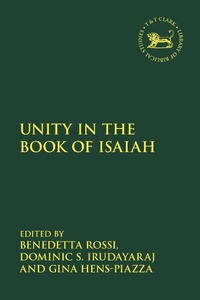
Unity in the Book of Isaiah
1st Edition
Published on 8. February 2024
312 pages
978-0-567-70594-5 (ISBN)
Description

Building on previous holistic readings of the Book of Isaiah, this collection approaches Isaiah through the concept of unity. Contributors outline research that point to new directions in the unity movement and, in the process, bring it under a critical gaze, considering the perennial challenges to unity reading and thus problematizing the very concept of unity.
Divided into four parts, the book provides methodological reflections on reading Isaiah as a unity, and examines historical and redactional readings, literary readings and contextual or reader-orientated readings. Topics include how the figure of Jacob functions as a unifying motif in the final form of the book, Isaiah 1 as an example of the relevance of local structure for global coherence and how woman as a root metaphor of Zion not only bears revelatory significance but also serves as a theological linchpin for a more holistic reading of the book. Overall, the book highlights the continued promise of holistic readings for diverse methods and varied approaches to the Book of Isaiah.
Divided into four parts, the book provides methodological reflections on reading Isaiah as a unity, and examines historical and redactional readings, literary readings and contextual or reader-orientated readings. Topics include how the figure of Jacob functions as a unifying motif in the final form of the book, Isaiah 1 as an example of the relevance of local structure for global coherence and how woman as a root metaphor of Zion not only bears revelatory significance but also serves as a theological linchpin for a more holistic reading of the book. Overall, the book highlights the continued promise of holistic readings for diverse methods and varied approaches to the Book of Isaiah.
More details
Series
Edition
1. Auflage
Language
English
Place of publication
London
United Kingdom
Publishing group
Bloomsbury Publishing PLC
Target group
Professional and scholarly
ISBN-13
978-0-567-70594-5 (9780567705945)
Copyright in bibliographic data and cover images is held by Nielsen Book Services Limited or by the publishers or by their respective licensors: all rights reserved.
Schweitzer Classification
Other editions
Additional editions
Benedetta Rossi | Dominic S. Irudayaraj | Gina Hens-Piazza
Unity in the Book of Isaiah
Book
09/2025
T.& T.Clark Ltd
€44.80
Shipment within 3-4 weeks
Benedetta Rossi | Dominic S. Irudayaraj | Gina Hens-Piazza
Unity in the Book of Isaiah
Book
03/2024
T.& T.Clark Ltd
€153.40
Shipment within 3-4 weeks
Persons
Benedetta Rossi is Associate Professor of Old Testament Exegesis at the Pontifical Biblical Institute, Italy.
Dominic S. Irudayaraj S.J. is a faculty member at the Pontifical Biblical Institute, Italy, Visiting Professor at Hekima College, Kenya and Research Associate at University of Pretoria, South Africa.
Gina Hens-Piazza is Professor of Biblical Studies and Joseph S. Alemany Endowed Chair at the Jesuit School of Theology of Santa Clara University, USA.
Dominic S. Irudayaraj S.J. is a faculty member at the Pontifical Biblical Institute, Italy, Visiting Professor at Hekima College, Kenya and Research Associate at University of Pretoria, South Africa.
Gina Hens-Piazza is Professor of Biblical Studies and Joseph S. Alemany Endowed Chair at the Jesuit School of Theology of Santa Clara University, USA.
Content
List of contributors
Introduction - Gina Hens-Piazza, Jesuit School of Theology of the Santa Clara University, USA, Dominic S. Irudayaraj, Pontifical Biblical Institute, Italy and Benedetta Rossi, Pontifical Biblical Institute, Italy
Section One
Chapter 1. The "Unity" of the Book of Isaiah: A Personal Review and Outlook - Ulrich Berges, the University of Bonn, Germany
Chapter 2. Two Steps Forward, One Step Back: Methodological Reflections On Reading Isaiah As A Unity - Hugh G. M. Williamson, University of Oxford, UK
Chapter 3: E Pluribus Unum: Finding Intertextual Threads That Unite The Book Of Isaiah - Hyun Chul Paul Kim, Methodist Theological School in Ohio, USA
Chapter 4. Tracking The Scribal Trails In The Book Of Isaiah: The Sabbath Affair - Benedetta Rossi, Pontifical Biblical Institute, Italy
Chapter 5. Concept Of History In The Book Of Isaiah - Peter Dubovsky¿, Pontifical Biblical Institute, Italy
Chapter 6: The Remnants Of A Figural Past: Symmetry, Analogy, And The Search For A Holy Seed In The Book Of Isaiah - Jacob Stromberg, University of North Carolina, USA
Section Two
Chapter 7: The Unity Of The Book Of Isaiah: More Than A Memory Game Or A Fata Morgana? - Willem A. M. Beuken, KU Leuven, Belgium
Chapter 8: Jacob As A Unifying Motif In The Book Of Isaiah - Marvin A. Sweeney, CST Claremont School of Theology, USA
Chapter 9: Can Jeremiah Quote Deutero- Or Trito- Isaiah? Its Impact On The "Unity" Movement In Isaiah Studies - Georg Fischer, University of Innsbruck, Austria
Chapter 10: Blindness In Discourse: Cognitive Links In Isaiah Through The Metaphors In Isa 42-43 As Test Cases - Boris Lazzaro, Independent scholar
Section Three
Chapter 11: "Desolate" Depictions In Isaiah: Approaching The Unity Question, Anew! - Dominic S. Irudayaraj, Pontifical Biblical Institute, Italy
Chapter 12: Zion's Destiny As Theological Disclosure: Mapping Of A Metaphor Across Isaiah - Gina Hens-Piazza, esuit School of Theology of the Santa Clara University, USA
Chapter 13: Between Absurdity And Hope: Suffering In The Book Of Isaiah - Blazenka Scheuer, Lund University, Sweden
Chapter 14: The Isaianic "Unity Movement" From A Perspective Of Trauma Studies: With A Special Focus On Isaiah 1-12 - Elizabeth Esterhuizen, University of Pretoria, South Africa and Alphonso Groenewald, University of Pretoria, South Africa
Chapter 15: Unity And Translation Criticism: The Case Of The Peshitta Translation - Attila Bodor, Pontifical Biblical Institute, Italy
Bibliography
Index Of References And Authors
Introduction - Gina Hens-Piazza, Jesuit School of Theology of the Santa Clara University, USA, Dominic S. Irudayaraj, Pontifical Biblical Institute, Italy and Benedetta Rossi, Pontifical Biblical Institute, Italy
Section One
Chapter 1. The "Unity" of the Book of Isaiah: A Personal Review and Outlook - Ulrich Berges, the University of Bonn, Germany
Chapter 2. Two Steps Forward, One Step Back: Methodological Reflections On Reading Isaiah As A Unity - Hugh G. M. Williamson, University of Oxford, UK
Chapter 3: E Pluribus Unum: Finding Intertextual Threads That Unite The Book Of Isaiah - Hyun Chul Paul Kim, Methodist Theological School in Ohio, USA
Chapter 4. Tracking The Scribal Trails In The Book Of Isaiah: The Sabbath Affair - Benedetta Rossi, Pontifical Biblical Institute, Italy
Chapter 5. Concept Of History In The Book Of Isaiah - Peter Dubovsky¿, Pontifical Biblical Institute, Italy
Chapter 6: The Remnants Of A Figural Past: Symmetry, Analogy, And The Search For A Holy Seed In The Book Of Isaiah - Jacob Stromberg, University of North Carolina, USA
Section Two
Chapter 7: The Unity Of The Book Of Isaiah: More Than A Memory Game Or A Fata Morgana? - Willem A. M. Beuken, KU Leuven, Belgium
Chapter 8: Jacob As A Unifying Motif In The Book Of Isaiah - Marvin A. Sweeney, CST Claremont School of Theology, USA
Chapter 9: Can Jeremiah Quote Deutero- Or Trito- Isaiah? Its Impact On The "Unity" Movement In Isaiah Studies - Georg Fischer, University of Innsbruck, Austria
Chapter 10: Blindness In Discourse: Cognitive Links In Isaiah Through The Metaphors In Isa 42-43 As Test Cases - Boris Lazzaro, Independent scholar
Section Three
Chapter 11: "Desolate" Depictions In Isaiah: Approaching The Unity Question, Anew! - Dominic S. Irudayaraj, Pontifical Biblical Institute, Italy
Chapter 12: Zion's Destiny As Theological Disclosure: Mapping Of A Metaphor Across Isaiah - Gina Hens-Piazza, esuit School of Theology of the Santa Clara University, USA
Chapter 13: Between Absurdity And Hope: Suffering In The Book Of Isaiah - Blazenka Scheuer, Lund University, Sweden
Chapter 14: The Isaianic "Unity Movement" From A Perspective Of Trauma Studies: With A Special Focus On Isaiah 1-12 - Elizabeth Esterhuizen, University of Pretoria, South Africa and Alphonso Groenewald, University of Pretoria, South Africa
Chapter 15: Unity And Translation Criticism: The Case Of The Peshitta Translation - Attila Bodor, Pontifical Biblical Institute, Italy
Bibliography
Index Of References And Authors
