

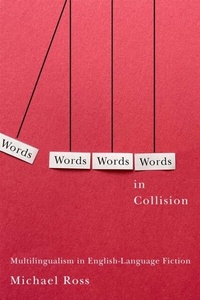
Words in Collision
Multilingualism in English-Language Fiction
1st Edition
Published on 15. April 2023
224 pages
978-0-2280-1777-6 (ISBN)
Description

For centuries, English-language writers have borrowed words and phrases from other languages in their fictional works. Words in Collision explores this tradition of language-mixing and its consequences.
Returning to Shakespeare's Henry V, Michael Ross asks why writers employ "foreign" phrases in their English-language texts, why this practice continues, and what it means. He finds that the insertion of "foreign elements," rather than random or arbitrary, occurs in literary works that display a self-conscious preoccupation with language in general as a dynamic determinant of social relations. Discussing nineteenth-century works by Sir Walter Scott, Charlotte Bronte, and Henry James, the book demonstrates how multilingualism connects with themes of cosmopolitanism, estrangement, and resistance to social convention. In the second half of the book, the multilingual practices of canonical Anglo-American literature are compared with postcolonial texts by Caribbean, Nigerian, and Indian authors, including Chimamanda Ngozi Adichie and Arundhati Roy, whose choice of language is fraught with complex moral and artistic implications. Ross's readings reveal both crucial departures and surprising underlying continuities in linguistic traditions often thought to be deeply divided in time, space, and politics.
The first extended treatment of language-mixing in English texts, Words in Collision is critical to understanding past practices and future prospects for multilingualism in fiction.
Returning to Shakespeare's Henry V, Michael Ross asks why writers employ "foreign" phrases in their English-language texts, why this practice continues, and what it means. He finds that the insertion of "foreign elements," rather than random or arbitrary, occurs in literary works that display a self-conscious preoccupation with language in general as a dynamic determinant of social relations. Discussing nineteenth-century works by Sir Walter Scott, Charlotte Bronte, and Henry James, the book demonstrates how multilingualism connects with themes of cosmopolitanism, estrangement, and resistance to social convention. In the second half of the book, the multilingual practices of canonical Anglo-American literature are compared with postcolonial texts by Caribbean, Nigerian, and Indian authors, including Chimamanda Ngozi Adichie and Arundhati Roy, whose choice of language is fraught with complex moral and artistic implications. Ross's readings reveal both crucial departures and surprising underlying continuities in linguistic traditions often thought to be deeply divided in time, space, and politics.
The first extended treatment of language-mixing in English texts, Words in Collision is critical to understanding past practices and future prospects for multilingualism in fiction.
Reviews / Votes
"Michael Ross presents the field of English fiction in a new and consistently interesting fashion, making us read Charlotte Bronte's overseas experience against Henry James's international theme, and both alongside Chimamanda Ngozi Adichie, Arundhati Roy, and more. Anyone interested in the English novel will profit from reading Words in Collision." Neil ten Kortenaar, University of Toronto "Words in Collision shows us a refreshing, indeed exhilarating, engagement with literature broadly conceived. Cogent, wide-ranging in his sources and examples, savvy about current discussions regarding language and literary expression, Ross expresses his meaning with both economy and evident pleasure in the books he discusses. An all-around excellent read." Allan Hepburn, McGill UniversityMore details
Language
English
Place of publication
Montreal
Canada
Target group
Professional and scholarly
File size
2,18 MB
ISBN-13
978-0-2280-1777-6 (9780228017776)
Copyright in bibliographic data and cover images is held by Nielsen Book Services Limited or by the publishers or by their respective licensors: all rights reserved.
Schweitzer Classification
Other editions
Additional editions
Book
04/2023
McGill-Queen's University Press
€135.19
Shipment within 15-20 days
Person
Michael L. Ross (1936-2024) was professor emeritus at McMaster University and the author of Designing Fictions: Literature Confronts Advertising.
Content
- Cover
- Words in Collision
- Title
- Copyright
- Contents
- Acknowledgments
- 1 Introduction: Intruders in the Text
- PART ONE THE WESTERN CANON
- 2 Shakespeare and Company: Language Barriers and Penetrations
- 3 "Music to My Ears": Charlotte Brontë's French Immersion
- 4 Strange Encounters: Henry James's French Connection
- 5 Cosmopolitanism and Its Discontents: D.H. Lawrence
- PART TWO POSTCOLONIAL LANGUAGE VARIANCE
- 6 As the Word Turns: Postcolonial Language Variance
- 7 "The Greatest Trick Colonialism Plays": Nigerian Novelists and the Question of Language
- 8 Languages of History: Anita Desai and Arundhati Roy
- 9 Conclusion: Cities of Strangers and the New Insularity
- Notes
- Works Cited
- Index
