

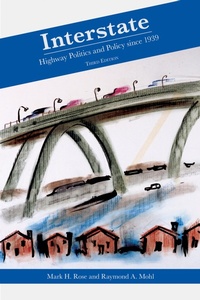
Interstate
Description

This new, expanded edition brings the story of the Interstates into the twenty-first century. It includes an account of the destruction of homes, businesses, and communities as the urban expressways of the highway network destroyed large portions of the nation's central cities. Mohl and Rose analyze the subsequent urban freeway revolts, when citizen protest groups battled highway builders in San Francisco, Baltimore, Memphis, New Orleans, Washington, DC, and other cities. Their detailed research in the archival records of the Bureau of Public Roads, the Federal Highway Administration, and the U.S. Department of Transportation brings to light significant evidence of federal action to tame the spreading freeway revolts, curb the authority of state highway engineers, and promote the devolution of transportation decision making to the state and regional level. They analyze the passage of congressional legislation in the 1990s, especially the Intermodal Surface Transportation Efficiency Act (ISTEA), that initiated a major shift of Highway Trust Fund dollars to mass transit and light rail, as well as to hiking trails and bike lanes. Mohl and Rose conclude with the surprising popularity of the recent freeway teardown movement, an effort to replace deteriorating, environmentally damaging, and sometimes dangerous elevated expressway segments through the inner cities. Sometimes led by former anti-highway activists of the 1960s and 1970s, teardown movements aim to restore the urban street grid, provide space for new streetcar lines, and promote urban revitalization efforts. This revised edition continues to be marked by accessible writing and solid research by two well-known scholars.
More details
Other editions
Additional editions
Persons
Raymond A. Mohl is distinguished professor of history at the University of Alabama at Birmingham. He is the author of South of the South: Jewish Activists and the Civil Rights Movement in Miami, 1945-1960 and co-editor of The Making of Urban America, 3rd edition.
Mark H. Rose is professor of history at Florida Atlantic University. He is the author of Cities of Light and Heat: Domesticating Gas and Electricity in Urban America and coauthor of The Best Transportation System in the World: Railroads, Trucks, Airlines and American Public Policy in the Twentieth Century.
Content
- Intro
- Contents
- Preface to the Third Edition
- Preface to the Second Edition
- Preface to the First Edition
- Chapter 1: Rebuilding America: Express Highways and Visions of Reform, 1890-1941
- Chapter 2: Planning for Postwar America, 1941-1944
- Chapter 3: The Politics of Highway Finance, 1945-1950
- Chapter 4: Project Adequate Roads: Traffic Jams, Business, and Government, 1951-1954
- Chapter 5: The Highway and the City, 1945-1955
- Chapter 6: Dwight D. Eisenhower and Express Highway Politics, 1954-1955
- Chapter 7: The Interstate Highway Act of 1956
- Chapter 8: The Interstates and the Cities
- Chapter 9: Stop the Road: Freeway Revolts in American Cities
- Chapter 10: The U.S. Department of Transportation and the Freeway Revolt
- Chapter 11: ISTEA and the Reframing of American Highway Politics, 1956-1995
- Chapter 12: The Freeway Teardown Movement in American Cities
- Notes
- Index
