

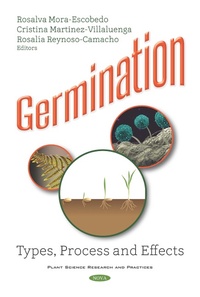
Germination: Types, Process and Effects
Published on 12. September 2019
368 pages
978-1-5361-5980-6 (ISBN)
Description

Germination: Types, Process and Effects is a book that brings together the contribution of new and relevant information from many experts in the fields of food and biological sciences, nutrition, and food engineering, to provide the reader with the latest information of fundamental and applied research in the role of edible seeds and discuss the benefits of consuming them. In this book, you will find relevant information regarding origin and taxonomy of seeds, global markets, physicochemical composition and the effect of edible seeds germination on chronic degenerative diseases, such as obesity, diabetes, cancer, cardiovascular disease, inflammation and arthritis. This book will be of great interest to food scientist, biologists, nutritionists, and food engineers who are particularly interested in the process, changes and contribution of seed germination to food security.
More details
Other editions
Additional editions
Book
10/2019
Nova Science Publishers Inc
€303.55
Shipment within 15-20 days
Content
- Intro
- Contents
- Preface
- Chapter 1
- Biochemistry of Seed Germination
- Abstract
- Introduction
- Changes in Nutrient Content, Phytochemicals, and Other Metabolites during Germination
- Starch
- Protein
- Lipids
- Minerals
- Dietary Fiber
- Nutrient Bioavailability
- Antioxidant Compounds
- Changes in Gene and Enzyme Expression/Activity during Germination
- Hydrolases
- Photosynthetic Enzymes
- Aminotransferases
- ATP Synthase
- Fermentation Enzymes
- Effects of External Factors on Germination
- Temperature
- Light
- Reactive Oxygen Species
- Biomagnetism
- Endophytes
- Conclusion
- References
- Chapter 2
- Enzymes Role during Seed Germination
- Abstract
- Introduction
- Mobilization of Stored Reserves
- Hydrolytic Enzymes of Starch
- Hydrolytic Enzymes of Proteins
- Hydrolytic Enzymes of Lipids
- Hydrolytic Enzymes of Phytin
- Synthesys of Stored Reserves
- Synthesis of Carbohydrates
- Synthesis of Proteins
- Synthesis of Lipids
- Synthesys of Phytohormones
- Abscisic Acid
- Gibberellic Acid
- Ethylene
- Auxin
- Cytokinins
- Brassinosteroids
- Enzymes Involved in Cell Repair during Germination
- Other Active Metabolic Pathways during Germination
- Conclusion
- References
- Chapter 3
- Germination Seeds: Physiological and Genetic Changes
- Abstract
- Introduction
- Definition and General Features
- Development and Germination of Cereal Seeds
- Biochemistry and Physiological Changes during Germination
- Hormone Regulation during Germination
- Bioactive Compounds of Germinated Cereal
- Vitamins
- (-Aminobutyric Acid
- Polyphenols
- Abiotic Factors Influence during the Germination
- Studies on the Molecular Mechanisms
- Transcriptome and Proteomic Change during Germination
- Priming and the Enhancement of Germination
- Conclusion
- References
- Chapter 4
- Microstructural Changes during Soybean Germination and the Relationship with Their Chemical Composition
- Abstract
- Introduction
- Seed
- Chemical Composition of the Seed
- Proteins
- Lipids
- Carbohydrates
- Phenolic Compounds
- Germination
- Microstructural Characterization of Legume Seeds by Microscopy Techniques
- Optical Microscopy
- Scanning Electron Microscopy
- Methods
- Raw Material
- Soybean Germination
- Chemical Proximal Analysis
- Microstructural Changes by Means of the Microscopy Techniques
- Protein Staining
- Phenolic Compound Staining
- Result and Discussion
- Evaluation of Germination Process
- Chemical Proximal Analysis
- Microstructural Changes through Microscopy Techniques
- Conclusion
- References
- Chapter 5
- Effect of Germination on Antinutritional Compounds of Grains and Seeds
- Abstract
- Introduction
- Lectins
- Phytic Acid
- Saponins
- Tannins
- Protease Inhibitors
- a-Galactosidases
- Conclusion
- References
- Chapter 6
- Effect of Germination on Physicochemical, Chemical, Nutritional, and Nutraceutical Properties of Legumes
- Abstract
- Introduction
- General and Nutritional Aspects of Legumes
- General Aspects of Legumes
- Nutritional and Bioactive Compounds in Legumes
- Changes in Legumes during the Germination Process
- Effect of Germination Process on Physicochemical Properties of Legumes
- Effect of Germination Process on the Chemical Composition of Legumes
- Effect of Germination Process on Proteins
- Effect of Germination Process on Carbohydrates
- Effect of Germination Process on Lipids
- Effect of Germination Process on Minerals
- Effect of Germination on Anti-Nutritional Factors
- Anti-Nutritional Factors
- Nutritional Factors
- Amino Acids Composition
- In Vitro Digestibility
- Effect of Germination on Bioactive Compounds and Nutraceutical Properties of Legumes
- Conclusion
- References
- Chapter 7
- Effect of the Germination on Physicochemical Properties, Nutritional Profile, and Bioactive Compounds of Cereals and Pseudocereals
- Abstract
- Introduction
- Germination
- Factors That Influence Germination
- Changes during Germination
- Physicochemical Properties
- Chemical Composition
- Proteins
- Carbohydrates
- Lipids
- Vitamins and Minerals
- Phytochemical Content
- Phenolic Content
- ?-Aminobutyric Acid (GABA)
- Phytic Acid
- Antioxidant Activity
- Nutraceutical Potential
- Conclusion
- References
- Chapter 8
- Germination of Edible Seeds: Effect on Bioactive Compounds and Their Health-Promoting Benefits
- Abstract
- 1. Introduction
- 1.1. Trends in Germination Studies
- 2. Research Methodology
- 3. Germination Strategies
- 3.1. Germination Strategies
- 3.1.1. Sterilization
- 3.1.2. Soaking
- 3.1.3. Sprouting
- 4. Effect of Germination on Bioactive Compounds from Edible Seeds and Their Health Benefits
- 4.1. Lupins
- 4.2. Lentils
- 4.3. Beans
- 4.4. Chickpea
- 4.5. Soybean
- 4.6. Amaranth
- 4.7. Quinoa
- Conclusion
- References
- Chapter 9
- Germination: Strategy to Improve the Nutritional and Functional Value of Bean Seeds
- Abstract
- Introduction
- Materials and Methods
- Result and Discussion
- Changes of Protein Concentration by Germination
- Changes in Starch Concentration by Germination
- Non-Nutritional Compounds
- Conclusion
- References
- Chapter 10
- Biochemical Changes of the Bioactive Compounds during Germination of Legumes and Their Effect in Degenerative Diseases
- Abstract
- Introduction
- Germination of Legumes
- Bioactive Compounds in Germination of Legumes
- Peptides Produced during Germination of Legumes
- ? -Amino Butyric Acid (GABA) during Sprouting
- Phenolic Compounds during Germination
- Chronic Diseases
- Bioactive Compounds in the Prevention of Chronic Degenerative Diseases
- Conclusion
- References
- Chapter 11
- Generation of Bioactive Peptides Derived from Germination of Legumes
- Abstract
- Introduction
- Legumes
- Process of Germination in Legumes
- Biopeptides
- Antioxidant Activity
- Inhibitory Activity of Angiotensin-Converting Enzyme I (ACE-I)
- Anti-Inflammatory Activity
- Anticancer Activity
- Conclusion
- References
- Chapter 12
- Impact of Legume Germination on Bioactive Compounds with Antiproliferative Effects
- Abstract
- Introduction
- Melatonin
- Saponins
- Phenolics Compounds
- Flavones
- Anthocyanins
- Isoflavones
- Peptides and Protein Hydrolysates
- Conclusion
- Methods
- References
- Chapter 13
- An Approach to the Interaction between Sprouts and Gut Microbiota
- Abstract
- Introduction
- Diet and Gut Microbiota
- Metabolites Interacting with Colonic Microbiota and Health
- Dietary Fiber and Short-Chain Fatty Acids: Acetate, Propionate, and Butyrate Production
- Resistant Starches
- Proteins and Protein Fractions
- Amino Acids
- Glycoproteins
- Phytic Acid
- Glucosinolates: Glucoraphanin, Glucoraphenin, and Glucoraphasatin
- Isoflavones (Genistein and Daidzein)
- Other Compounds
- Mucin and Other Proteoglycans
- Conclusion
- References
- Chapter 14
- Chemical Elicitors and Their Effects on the Nutraceutical Quality of Sprouts
- Abstract
- Introduction
- Classification of Phytochemicals
- Elicitors
- Effect of Elicitors on the Bioactive Composition of Sprouts
- Wheat
- Buckwheat
- Beans
- Antioxidant Capacities of Sprout Elicited
- Conclusion
- References
- Chapter 15
- Changes in the Composition of Bioactive Compounds in Pulses and Other Legumes Due to Germination and Thermal Processing
- Abstract
- Introduction
- Germination
- Cooking
- Boiling and Microwaving
- Autoclaving and Extrusion
- Conclusion
- References
- Chapter 16
- Effect of Germination on the Composition, Protein Profile and Antioxidant Capacity of Soymilk and Okara
- Abstract
- Introduction
- Methods
- Seed Germination
- Obtention of Soymilk and Okara
- Yield, pH and Density of Soymilk
- Proximate Analysis
- Extraction of Antioxidant Compounds
- Determination of Total Phenolic Compounds
- Determination of Antioxidant Capacity
- Electrophoretic Profile
- Statistical Analysis
- Results
- Germination
- Physical and Chemical Characteristics of Soybeans, Soymilk and Okara
- Changes in the Antioxidant Properties of Soybeans, Soymilk and Okara Due to Germination
- Changes in the Electrophoretic Profile of Soybeans, Soymilk and Okara Due to Germination
- Conclusion
- References
- Chapter 17
- Cereal Seeds Germination: Malting for Brewing
- Abstract
- Introduction
- Germination and Malting
- Malting Process for Elaborating Beer
- Differences between Seeds with Gluten and Gluten-Free
- Celiac Disease
- Gluten-Free vs. Gluten Removed
- Quality of the Final Product Made with Different Cereals
- Conclusion
- References
- Chapter 18
- D-Alanyl-D-Alanine Carboxypeptidases Participate in Spore Cell Wall Maturation, Resistance and Germination in Streptomyces coelicolor
- Abstract
- 1. Introduction
- 1.1. Streptomyces Development
- 1.2. Streptomyces D-Alanyl-D-Alanine Carboxypeptidases
- 2. SCO4439 a LMM DD-Peptidase Involved in Spore Cell Wall Maturation, Resistance, and Germination in Streptomyces coelicolor
- 3. The SCO4439 DD-CPase Activity Controls Spore Peptidoglycan Crosslinking
- 4. The SCO4439 LMM DD-CPase Activity Participates in Resistance to Glycopeptide Antibiotics
- 5. The SCO4439 DD-CPase Controls PG Spore Crosslinking That Modulates Spore Resistance and Germination
- Conclusion and Further Perspectives
- References
- Chapter 19
- Modulators of Bacterial Spore Germination
- Abstract
- Introduction
- The Classical Germination Process
- Non-Nutrient Germination
- Antigerminants as Part of Disease Profilaxis
- Bacillus anthracis
- Paenibacillus larvae
- Clostridioides difficile
- Future Direction/Unanswered Questions
- References
- About the Editors
- Index
- Blank Page
