

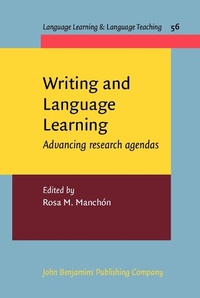
Writing and Language Learning
Advancing research agendas
1st Edition
Published on 20. November 2020
440 pages
978-90-272-6058-1 (ISBN)
Description

The current volume aspires to add to previous research on the connection between writing and language learning from a dual perspective: It seeks to reflect current progress in the domain as well as to foster future developments in theory and research. The theoretical postulations contained in Part I identify and expand in novel ways the diverse lenses through which the varied, multi-faceted dimensions of the connection between writing and language learning can be explored. The methodological reflections put forward in Part III signal theoretically-grounded and pedagogically-relevant paths along which future empirical work can grow. The empirical studies reported in Part II illuminate the myriad of individual, educational, and task-related variables that (may) mediate short-term and long-term language learning outcomes. These studies examine diverse forms of writing, performed in varied environments (including pen-and-paper and digital writing), conditions (writing individually and/or collaboratively), and instructional settings (academic settings - including secondary school and college level institutions - as well as out-of-school contexts).
More details
Other editions
Additional editions
Book
11/2020
John Benjamins Publishing Co
€123.30
Shipment within 10-15 days
Content
- Intro
- Writing and Language Learning
- Editorial page
- Title page
- Copyright page
- Table of contents
- Introduction
- Chapter 1. Writing and language learning: Looking back and moving forward
- Looking back: A synthetic review of key developments in theory and research on writing and language learning
- Cumming's pioneering work: A writing perspective
- Linda Harklau's contribution: An instructed SLA perspective
- Manchón and Roca de Larios's contribution: A problem-solving, L2-writing, SLA perspective
- Subsequent collective initiatives to drive theory and research forward
- Empirical developments on writing as language learning: A synthetic overview
- Moving forward in research agendas on writing and language learning: The present book
- Theory
- Empirical developments
- Future avenues
- Closing commentary
- References
- Part I. Advances in theoretical perspectives
- Chapter 2. L2 writing and L2 learning: Transfer, self-regulation, and identities
- Transfer of knowledge and skills
- L2 learning while composing
- Identities in discourse communities
- Ten claims and relevant theories of learning
- Behaviorist theories of learning
- Cognitive theories of learning
- Sociocultural theories of learning
- Complexity theories of learning
- Summary thoughts
- References
- Chapter 3. A dual-process model of L1 writing processes: Implications for L2 writing research agendas on processing and language development
- Writing as problem solving
- Dual process model of writing in L1
- The knowledge-transforming process
- The knowledge-constituting process
- The two processes in combination
- Evidence for the dual process model
- Keystroke studies of text production
- Drafting strategies
- Implications for L2 writing research and language development
- Conclusion
- References
- Chapter 4. Toward an agenda for researching L2 writing and language learning: The educational context of development
- Introduction
- Theorizing writing as textual meaning-making
- Linking processing and meaning-oriented approaches to compositional writing
- In search of the uniqueness of writing as embodied thinking with language: Emig and Vygotsky
- Toward a textual meaning-oriented inquiry for L2 composing
- Toward researching the L2 writer as textual meaning-maker
- Foregrounding the pivotal role of the educational context
- Exploring educational dimensions of writing development
- Affirming the long-term nature of developing written literacy
- Privileging an extended curricular framework for researching the writing-language learning interface
- Concluding reflections
- References
- Chapter 5. L2 writing-to-learn: Theory, research, and a curricular approach
- Introduction
- Writing in the L2 curriculum
- Theoretical underpinnings for WCF
- Schmidt's Noticing Hypothesis
- Swain's Output Hypothesis
- Skill Acquisition Theory
- The model of the L2 learning process in ISLA
- Empirical studies
- Direct and indirect feedback
- Unfocused and focused feedback
- A curricular approach and future directions
- Conclusion
- References
- Part II. Advances in empirical research
- Chapter 6. The effects of task repetition across modalities and proficiency levels
- Introduction
- Task repetition and language learning: Rationale
- Empirical research on task repetition in speaking and writing
- The role of proficiency
- The present study: Research questions
- Method
- Participants
- Tasks and procedures
- Data analyses procedures
- Data analysis procedures
- Results
- Complexity
- Modality-related effects
- Accuracy
- Fluency
- Discussion
- Conclusions
- Acknowledgements
- References
- Appendix
- Chapter 7. Effects of task repetition with the aid of direct and indirect written corrective feedback: A longitudinal study in an out-of-school context
- Introduction
- Task repetition, language learning, and language learning through writing
- Methodological considerations
- The present study: Research questions
- Method
- Participants and context
- Data collection procedures
- Data analysis
- Results
- Discussion
- Effects on performance across tasks and time
- Nature of the intervention: The appropriation of WCF and its mediation in TR effects
- Conclusion
- Acknowledgements
- Funding
- References
- Chapter 8. Task modality, communicative adequacy and CAF measures: The moderating role of task complexity
- Introduction
- Task complexity and task modality in SLA research
- CAF and communicative adequacy
- The present study: Research questions
- Method
- Participants
- The experimental task
- Data collection procedures
- Data analysis procedures
- CAF measures
- Communicative adequacy raters and scale
- Statistical analyses
- Results
- Discussion
- Similarities and differences across modalities
- Implications of the findings for the connection between L2 writing and L2 learning
- Conclusion
- Acknowledgements
- References
- Appendix
- Chapter 9. A mixed-methods approach to exploring the L2 learning potential of writing versus speaking
- Introduction
- Task modality and L2 learning potential
- Prior empirical research on task modality and SLA
- Indicators of L2 learning potential: Noticing, incorporation, and task perception
- The study
- Research question
- Method
- Participants
- Target structure
- Procedure
- Materials
- Coding and scoring
- Analyses
- Results
- Stimulated recall protocols: Noticing
- Focused task: Form incorporation
- Post-task questionnaire: Perceptions of task demands
- Discussion
- Conclusions and limitations
- References
- Chapter 10. Processing output during individual L2 writing tasks: An exploration of depth of processing and the effects of proficiency
- Introduction
- Theoretical and empirical background
- Writing as a site for language learning: The relevance of studying individual writing
- Writing and language learning opportunities in individual writing conditions: The empirical evidence
- The role of L2 proficiency in linguistic processing
- L2 proficiency and depth of processing
- L2 proficiency and learners' strategic orientation of problem-solving behaviour
- The present study
- Research questions
- Method
- Participants
- Task and data collection procedures
- Data coding and analysis procedures
- Results
- Research question 1
- Research question 2
- Discussion
- Conclusions, limitations and future directions
- Acknowledgements
- Funding
- References
- Chapter 11. Investigating the relationship between peer interaction and writing processes in computer-supported collaborative L2 writing: A mixed-methods study
- Introduction
- Collaborative writing in an L2 in a digital age
- The language learning potential of collaborative writing
- Patterns of interaction in collaborative writing
- L2 writing in CSCW
- Eye-tracking methodology when studying collaborative writing: Insights and challenges
- The present study
- Research question
- Method
- Research context and participants
- Task
- Data collection tools and procedure
- Data coding and analysis: Equality and mutuality
- Text generation and editing of (peer) text
- Chat interactions
- Visual attention as measured by Eye Gazes
- Contributing and editing during text generation
- Contributing to and language functions within text chat conversations
- Eye-gaze data
- Data triangulation and discussion
- Classification of interaction patterns based on data triangulation - The value of self-reports (Pair 1 - dominant/passive)
- Classification of a highly dynamic process of interaction during CSCW - The value of eye-gaze information (Pair 2 - alternating between collaboration and cooperation)
- Affordances and limitations of communication during CSCW (Pair 3 - dominant/passive)
- Computer-supported collaborative writing as observational learning tool (Pair 4 - expert/novice)
- Conclusion
- References
- Chapter 12. The meaning-making potential of collaborative L2 writing at tertiary level
- Introduction
- Theoretical framework
- Cognitive perspective
- Sociocultural perspective
- Functional perspective
- The present study
- Aims and research questions
- Method
- Research site
- Research approach
- Participants
- Instruments
- Audio recordings
- Surveys
- Expository essays
- Data analysis procedures
- Discourse analysis of dyadic interaction
- Language-related episodes
- Non-linguistic episodes
- Survey analysis
- Corpus analysis of expository essays
- Results and discussion
- Collaborative L2 writing and meaning negotiations
- Meaning negotiations
- Content negotiations
- Students' perceptions of collaborative L2 writing
- Quantitative survey results
- Qualitative survey results
- Collaborative L2 writing and syntactic complexity development
- Conclusion and implications
- References
- Appendix A. Essay topics and writing prompts
- Appendix B. Main survey (items 30-50)
- Appendix C. Retrospective survey
- Chapter 13. Writing on history in a Content and Language Integrated Learning (CLIL) context: Development of grammatical metaphor and abstraction as evidence of language learning
- Introduction
- Writing in CLIL classes and academic language development
- The role of grammatical metaphor (GM) in meaning-making in history writing
- The development of grammatical metaphor
- The study
- Research questions
- Method
- Context, participants, and data collection procedures
- Data analysis procedures
- Results
- Discussion: Expanding meaning-making resources through writing on history
- Conclusions and pedagogical implications for writing in CLIL classes
- Acknowledgements
- Funding
- References
- Part III. Advances in future research agendas
- Chapter 14. An ISLA perspective on L2 learning through writing: Implications for future research agendas
- Introduction
- The connection between L2 writing and language learning: An ISLA perspective
- ISLA and language learning through writing
- Implications for future research on L2 writing as a site for L2 learning
- Past research on writing processes and its connection with learning through writing
- Future research directions
- Conclusions
- References
- Chapter 15. Can writing facilitate the development of a richer vocabulary?: Advancing research agendas
- Introduction
- Challenge one: Vocabulary size
- Challenge 2: Word knowledge
- Challenge 3: Lexical fluency
- Interim summary
- Operationalising vocabulary in writing research
- Interim summary
- Writing instruction
- A future research agenda
- Input
- Attention
- Practice
- Conclusion
- References
- Chapter 16. Can writing facilitate the development of grammatical competence?: Advancing research agendas
- Introduction
- Why writing should facilitate grammatical development
- Related areas of research
- How writers focus on grammar
- Written grammatical development during instruction
- The effect of task differences
- Interventions
- Differences in spoken and written learner language
- Transfer across modalities
- Research agendas and research tasks
- How do writers focus on grammar as they write in less-controlled writing tasks?
- How can or cannot writing instruction be linked to grammatical development?
- Can writing tasks be manipulated to promote grammatical development?
- Other than feedback, what kinds of interventions promote grammatical development?
- Does written grammatical development precede oral grammatical development?
- Can writing activities promote oral grammatical competence?
- Conclusion
- References
- Coda
- Chapter 17. The language learning potential of L2 writing: Moving forward in theory and research
- Dimensions of the connection between writing and language learning: Learning through, by, for, and with writing
- New empirical insights on the learning affordances of L2 writing and the variables mediating observed effects
- The language learning potential of writing from the perspective of the affordances of writing vs. speaking
- Learning through writing: New insights on the processing dimension of L2 writing and associated learning effects
- Learning by writing: Language learning and the meaning-making activity that is criterial to writing
- New directions for future research agendas
- Future inquiry into writing processes and effects on learning
- Future inquiry into learning that accrues in writing: The role of tasks
- The role of individual differences
- The role of instruction in promoting vocabulary and grammar learning
- Future empirical research agendas: Research methodology considerations
- Refinements of constructs and analytical approaches
- Relevance of data triangulation and the use of mixed-methods research approaches
- Adopting an educational, curricular approach: The needed longitudinal perspective
- Concluding remarks
- References
- Index
