

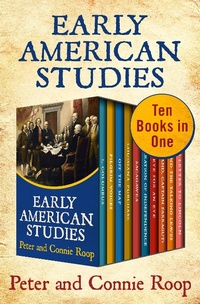
Early American Studies
Ten Books in One
Published on 31. July 2018
860 pages
978-1-5040-5513-0 (ISBN)
Description

American history comes alive for young readers in this collection of richly detailed narratives ranging from Christopher Columbus to Abraham Lincoln.
These "direct and surprisingly accessible" histories, often told in the actual words of key figures from the American past, are a brilliant blend of fact and imagination ( Publishers Weekly) .
I, Columbus: A firsthand account of Christopher Columbus's famous voyage to the East, taken directly from his journal entries. He tells of excitement, drama, and terror on the high seas, as he and his crew weather the path to discovery.
Pilgrim Voices: The pilgrims' own writings of their voyage on the Mayflower, their first encounters with indigenous people, and their Thanksgiving celebration after surviving a difficult first winter in the New World.
Off the Map: The story of Lewis and Clark's famous 1804 expedition into the uncharted lands of America, in an accessible version drawn from the explorers' own account.
Louisiana Purchase: Biographical sketches of Lewis and Clark, Napoleon Bonaparte, and Thomas Jefferson tell the story of the United States' expansion into a new territory and a new era.
Sacagawea: Told from Sacagawea's point of view, this historical novel shares the ordeals of her youth along with the memory of her journey west with Lewis and Clark. She shares her love of nature and explains how her loyalties have changed over time.
The Declaration of Independence: Covering major events such as the Boston Massacre and Paul Revere's midnight ride, this accessible history brings the story of the Revolutionary War to life.
An Eye for an Eye: When her brother is captured at the start of the Revolutionary War, fourteen-year-old Samantha sets off to rescue him. But when she comes face-to-face with the enemy, will she still stand by her peaceful principles?
Take Command, Captain Farragut!: Ten-year-old David Glasgow Farragut is the youngest midshipman ever assigned to a warship in the US Navy. Told through fictional letters that Farragut writes from prison after his capture in the War of 1812, this richly imagined story is based on real history.
Ahyoka and the Talking Leaves: Ahyoka's father is a Cherokee silversmith who dreams of a written language for his people. When he is ostracized for the "magic" he is creating, father and daughter leave home to pursue his dream on their own.
Grace's Letter to Lincoln: After seeing Abraham Lincoln on a poster, eleven-year-old Grace decides to write to him and suggest that he might win more votes in the 1860 election if he grows a beard. Much to her surprise, Lincoln answers her letter, and history is made. This "touching historic encounter" is based on true events ( Scholastic).
These "direct and surprisingly accessible" histories, often told in the actual words of key figures from the American past, are a brilliant blend of fact and imagination ( Publishers Weekly) .
I, Columbus: A firsthand account of Christopher Columbus's famous voyage to the East, taken directly from his journal entries. He tells of excitement, drama, and terror on the high seas, as he and his crew weather the path to discovery.
Pilgrim Voices: The pilgrims' own writings of their voyage on the Mayflower, their first encounters with indigenous people, and their Thanksgiving celebration after surviving a difficult first winter in the New World.
Off the Map: The story of Lewis and Clark's famous 1804 expedition into the uncharted lands of America, in an accessible version drawn from the explorers' own account.
Louisiana Purchase: Biographical sketches of Lewis and Clark, Napoleon Bonaparte, and Thomas Jefferson tell the story of the United States' expansion into a new territory and a new era.
Sacagawea: Told from Sacagawea's point of view, this historical novel shares the ordeals of her youth along with the memory of her journey west with Lewis and Clark. She shares her love of nature and explains how her loyalties have changed over time.
The Declaration of Independence: Covering major events such as the Boston Massacre and Paul Revere's midnight ride, this accessible history brings the story of the Revolutionary War to life.
An Eye for an Eye: When her brother is captured at the start of the Revolutionary War, fourteen-year-old Samantha sets off to rescue him. But when she comes face-to-face with the enemy, will she still stand by her peaceful principles?
Take Command, Captain Farragut!: Ten-year-old David Glasgow Farragut is the youngest midshipman ever assigned to a warship in the US Navy. Told through fictional letters that Farragut writes from prison after his capture in the War of 1812, this richly imagined story is based on real history.
Ahyoka and the Talking Leaves: Ahyoka's father is a Cherokee silversmith who dreams of a written language for his people. When he is ostracized for the "magic" he is creating, father and daughter leave home to pursue his dream on their own.
Grace's Letter to Lincoln: After seeing Abraham Lincoln on a poster, eleven-year-old Grace decides to write to him and suggest that he might win more votes in the 1860 election if he grows a beard. Much to her surprise, Lincoln answers her letter, and history is made. This "touching historic encounter" is based on true events ( Scholastic).
More details
Persons
Peter and Connie Roop are award-winning authors and educators who have published over one hundred children's books, including the Reading Rainbow feature selection
Keep the Lights Burning, Abbie.They have written biographies, historical fiction, general fiction, and science books. In 2013 the Wisconsin Library Association recognized the Roops as Notable Wisconsin Authors for their body of work, andPeter Roop has been named a Wisconsin State Teacher of the Year.
Content
- Intro
- Cover Page
- Title Page
- Contents
- I, Columbus
- Title Page
- Dedication
- Prologue
- August
- September
- October
- November
- December
- January
- February
- March
- Epilogue
- Acknowledgements
- Pilgrim Voices
- Title Page
- Dedication
- Foreword
- Editors' Note
- Leaving
- Land
- Mayflower Compact
- Going Ashore
- Exploring the Land
- More Exploration
- The Third Discovery
- Meeting the Indians
- Making Peace
- Spring and Summer 1621
- Autumn 1621
- The Harvest Festival
- New Arrivals
- Epilogue
- Glossary
- Bibliography
- Source Information
- Further Exploration for Young Readers
- Index
- Acknowledgments
- Off the Map
- Title Page
- Dedication
- Prologue
- Off the Map
- Epilogue
- Glossary/Index
- Appendix of Native Americans
- Louisiana Purchase
- Title Page
- Dedication
- Cast of Major Characters
- 1. Napoléon Takes a Bath
- 2. What Was the Big Deal About Louisiana, Anyway?
- 3. The Deal Is Sealed
- 4. What Exactly Did Jefferson Purchase?
- 5. The French Claim and Name Louisiana
- 6. France Gets Kicked Out and Britain Gets the Boot
- 7. Napoléon's Dream Becomes a Nightmare
- 8. The Stars and Stripes Finally Fly Over Louisiana
- 9. Lewis and Clark Explore Louisiana
- 10. Under My Wings Every Thing Prospers
- States Formed from the Louisiana Purchase
- Bibliography
- Sacagawea
- Title Page
- Dedication
- Chapter 1
- Chapter 2
- Chapter 3
- Chapter 4
- Chapter 5
- Chapter 6
- Chapter 7
- Chapter 8
- Chapter 9
- Chapter 10
- Chapter 11
- Chapter 12
- Chapter 13
- Chapter 14
- Chapter 15
- Chapter 16
- Chapter 17
- Chapter 18
- Chapter 19
- Chapter 20
- Chapter 21
- Chapter 22
- Chapter 23
- Chapter 24
- Chapter 25
- Chapter 26
- Authors' Note
- Historical Note
- The Declaration of Independence
- Title Page
- Cast of Leading Characters
- Chapter One: When in the Course of Human Events
- Chapter Two: We Hold These Truths to Be Self-Evident
- Chapter Three: The Stage Is Set
- Chapter Four: The Stamp Act
- Chapter Five: The "Heroick" Boycott
- Chapter Six: Boston Massacre
- Chapter Seven: The Boston Tea Party
- Chapter Eight: The First Continental Congress
- Chapter Nine: Paul Revere's Midnight Ride
- Chapter Ten: The Shots Heard Round the World
- Chapter Elven: Don't Shoot Until You See the Whites of Their Eyes
- Chapter Twelve: General George Washington
- Chapter Thirteen: Independence!
- An Eye for an Eye
- Title Page
- Dedication
- Chapter 1
- Chapter 2
- Chapter 3
- Chapter 4
- Chapter 5
- Chapter 6
- Chapter 7
- Chapter 8
- Chapter 9
- Chapter 10
- Chapter 11
- Chapter 12
- Chapter 13
- Chapter 14
- Chapter 15
- Chapter 16
- Chapter 17
- Chapter 18
- Chapter 19
- Chapter 20
- Chapter 21
- Chapter 22
- Chapter 23
- Chapter 24
- Chapter 25
- Chapter 26
- Chapter 27
- Chapter 28
- Chapter 29
- Chapter 30
- The 13 Original Colonies
- Proclamation of the Earl of Dunmore
- Take Command, Captain Farragut!
- Title Page
- Dedication
- Prison Ship Valparaíso, Chile
- Glossary of Nautical Terms
- Bibliography
- Authors' Note
- Ahyoka and the Talking Leaves
- Title Page
- Dedication
- One
- Two
- Three
- Four
- Five
- Six
- Epilogue
- Bibliography
- Acknowledgments
- Grace's Letter to Lincoln
- Title Page
- Dedication
- Chapter One
- Chapter Two
- Chapter Three
- Chapter Four
- Chapter Five
- Chapter Six
- Chapter Seven
- Chapter Eight
- Chapter Nine
- Author's Note
- About the Authors
- Copyright Page
