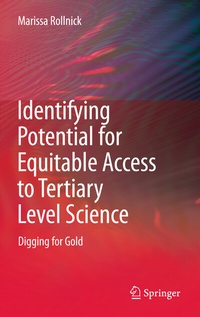
Identifying Potential for Equitable Access to Tertiary Level Science
Description

Higher education internationally is in a state of transition and transformation, leading to an increase in the level of participation, and a consequent increase in number of non traditional and underprepared students. The appearance of these students provides a particular challenge in the sciences where adequate grounding is crucial. One response to this challenge has been the provision of access, foundation or "second chance programmes" which operate on different models internationally. In South Africa, where the push for equity is strong in the wake of the apartheid era, programmes have generally been established at all tertiary institutions with some of the most successful of these programmes based at universities characterised by a high research output. Consequently in the last decade there has been a great deal of research into the effectiveness of these programmes both at a micro and macro level. Similar research in other countries exists, but is patchy and often based on small groups of students. This book provides valuable information on what research has to say about disadvantaged and under prepared science students and how they learn - what works and what does not work. It provides an examination of issues related to the programmes, their structure, student selection and adjustment. Issues such the learning of these students, their communicative ability and laboratory work come under the spotlight. Although examining the issue internationally, the book draws heavily on lessons from South Africa where there has been considerably experience of such programmes.
More details
Other editions
Additional editions