

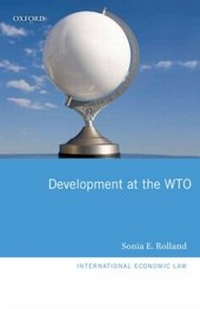
Development at the WTO
1st Edition
Published on 23. February 2012
398 pages
978-0-19-162766-8 (ISBN)
Description

Seeking to open paths for reconsidering the trade and development relationship at the WTO, this book takes into account both the heritage of the trade regime and its present dynamics. It argues that the institutional processes for creating and implementing trade rules at the WTO and the actual regulatory outcomes are inseparable. A consideration of the WTO's development dimension must examine both jointly. It shows that the shortcomings of the Doha Development Round are in part due to a failure to assess trade rules as part of the legal processes and institutions that produced them. This book devotes significant analysis to the systemic impact of the WTO as an institution on developing and least developed members. From a pragmatic perspective, it provides a coherent and systematic analysis of the legal meaning, the implementation, and the adjudication of special and differential treatment rules for developing members. It then evaluates the different regulatory approaches to trade and development from a more theoretical perspective. The book finishes by presenting a range of proposals for a better balance between trade liberalization and the development needs of many WTO members.
More details
Other editions
Additional editions
Sonia E. Rolland
Development at the WTO
Book
02/2012
1st Edition
Oxford University Press
€135.70
Shipment within 15-20 days
Content
- Cover
- Contents
- List of Tables and Figures
- Table of Cases
- List of Cited GATT Panel and Working Party Reportsand their Common Abbreviations
- List of Cited WTO Panel and Appellate Body Reports, Other Initiated WTO Disputes, and their Common Abbreviations
- Table of Conventions and Treaties
- List of Abbreviations
- Introduction
- The Current Practice: What Informs the Development Dimension at the WTO?
- First Paradigm: Development as an Idiosyncrasy
- Second Paradigm: Development as a Normative Co-constituent
- Methodology and Organization of the Book
- I: DEVELOPMENT AND ITS INSTITUTIONS IN INTERNATIONAL ECONOMIC LAW: WHO DECIDES WHAT DEVELOPMENT MEANS?
- 1 The Multiple Meanings of Development
- 1. Development Economics Theories: From Political Economy to Microeconomy
- 2. Integrated Perspectives on Human Development: Rights-based Approaches
- 3. "Law and Development" Perspectives
- 4. Conclusion
- 2 The Contribution of International Organizations to Development Policy-Making
- 1. The Colonial Heritage for Development Instruments
- 2. The United Nations: Public International Law Approaches to Development
- 3. The Bretton Woods Institutions: From International Reconstruction to Domestic Restructuring
- 4. Institutional Arrangements and Development Ethos in South-South Economic Organizations
- 5. Conclusion
- II: FRAMING DEVELOPMENT AT THE GATT AND WTO
- 3 The Trade and Development Relationship during the GATT Years and the Genesis of the WTO
- 1. The Trade and Development Component of the ITO and the GATT's First Steps
- 2. The UNCTAD Legacy for the GATT
- 3. The Expansion of GATT Subject Matters
- 4. Towards a Free Trade Consensus? The Context of the Uruguay Round
- 5. Conclusion
- 4 "Developing Member" and Least-Developed Country Status at the GATT and WTO: Self-Designation versus the Politics of Accession
- 1. The Traditional Practice: "Developing Country" Self-Designation and LDC Status
- 2. Restricting "Developing Country"and LDC Benefits through Accessions
- 3. Conclusion
- 5 From the Uruguay Round to the Doha Round: Changing Dynamics in Developing Countries' Participation
- 1. The Singapore Ministerial Meeting: Understanding the Importance of Agenda-setting
- 2. The Seattle Ministerial Meeting: Fighting for Participation
- 3. The Doha Round: Shaping the Negotiations
- 4. Conclusion
- III: UNDERSTANDING AND CONTEXTUALIZING WTO DEVELOPMENT PROVISIONS
- 6 Special and Differential Treatment in the WTO Agreements: A Legal Analysis
- 1. A Substantive Overview of SDT in the WTO Agreements
- 2. Trends in Legal Drafting of SDT Provisions: Towardsa Reinterpretation
- 3. SDT: What Use by Developing Members?
- 4. Conclusion
- 7 Invoking Development in Dispute Settlement
- 1. A Brief Overview of Developing Country Practice in Dispute Settlement at the GATT and WTO
- 2. Development Arguments in Disputes
- 3. Development in Disputes Regarding Implementation of Paneland AB Reports
- 4. Beyond SDT in Litigation: "Interpreting WTO Agreements for the Development Objective?"
- 5. Conclusion
- 8 Reconsidering Special and Differential Treatment in the Global Context
- 1. Special and Differential Treatment in Trade and Non-trade Treaties
- 2. Adjudicating Development in International Courts and Tribunals
- 3. Conclusion
- 9 Institutional Processes: What Impact on Developing Members?
- 1. Decision-Making Procedures: What Representation for Developing Members?
- 2. The Negotiation Process: Creating or Hindering Opportunities for Developing Members?
- 3. The WTO as an Administration: What Impacton Developing Country Participation?
- 4. Conclusion
- IV: RETHINKING THE TRADE AND DEVELOPMENT RELATIONSHIP AT THE WTO
- 10 The Doha Round: Chronicle of a Death Foretold?
- 1. Proposed Amendments Expounding the Meaning of Existing SDT Provisions
- 2. Proposals to Create New SDT Clauses
- 3. Proposals on Transitional Periods
- 4. Proposals to Reinforce SDT Provisions' Obligatory Value
- 5. Doha's Achievements and Shortcomings
- 6. Conclusion
- 11 Strategic Challenges to Integrating Development at the WTO
- 1. What is Development at the WTO?
- 2. Special and Differential Treatment versus Mainstreaming Development
- 3. Multilateralism versus Regionalism and Bilateralism
- 4. Looking Beyond the WTO? "The WTO is not a Development Agency"
- 5. Conclusion
- 12 Towards Development-Oriented Rules at the WTO: Some Proposals
- 1. Exceptions and Derogations Revisited
- 2. One Size Does Not Fit All: General Differentiation at the WTO?
- 3. Rationalizing the Role of Development in Dispute Settlement
- 4. Moving Away from All-or-Nothing Negotiations
- 5. Systemic Issues: Empowering Groupsof Developing Countries at the Institutional Level
- 6. Conclusion
- Conclusion
- Bibliography
- Index
- A
- B
- C
- D
- E
- F
- G
- H
- I
- L
- M
- N
- P
- R
- S
- T
- U
- V
- W
