

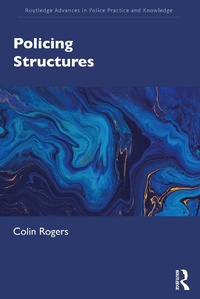
Policing Structures
1st Edition
Published on 20. October 2020
222 pages
978-1-000-19619-1 (ISBN)
Description

This book examines the structures that support the policing organisation internally and externally, including its partners within the criminal justice system. It has been written for students of policing, especially those undertaking qualifications under the new Police Education Qualifications Framework (PEQF), undergraduates who study the police as part of a criminology or criminal justice degree or similar, and those with a general interest in the police organisation in England and Wales. It includes chapters on:
The historical context of police structure.
Accountability, governance, and control in the police.
Local, national, and international police structures.
The partnership between the police and the criminal justice system.
The future structure of policing.
Throughout the chapters are 'important point boxes' which emphasise the key parts of each topic. At the end of each chapter are reflective questions, useful websites, and a further reading list, all of which reinforces students' knowledge and furthers their professional development. Written in clear and direct style, this book will appeal to students of policing, criminology, criminal justice, cultural studies, and law. It is essential reading for students taking a degree in Professional Policing.
The historical context of police structure.
Accountability, governance, and control in the police.
Local, national, and international police structures.
The partnership between the police and the criminal justice system.
The future structure of policing.
Throughout the chapters are 'important point boxes' which emphasise the key parts of each topic. At the end of each chapter are reflective questions, useful websites, and a further reading list, all of which reinforces students' knowledge and furthers their professional development. Written in clear and direct style, this book will appeal to students of policing, criminology, criminal justice, cultural studies, and law. It is essential reading for students taking a degree in Professional Policing.
Reviews / Votes
"Professor Colin Rogers has produced a timely and comprehensive introduction to policing. Key areas of study from police history, accountability through to international policing and views on future developments combine to provide an excellent foundation for students of policing. Key points are highlighted and reflective questions raised to support learners in developing their understanding while directing them to additional resources. Highly recommended." Professor Stephen Tong, School Director of Research & Enterprise, School of Law, Criminal Justice and Policing, Canterbury Christ Church University, UKMore details
Series
Edition
1. Auflage
Language
English
Place of publication
London
United Kingdom
Publishing group
Taylor & Francis Ltd
Target group
College/higher education
Professional and scholarly
Illustrations
10 Tables, black and white; 3 Line drawings, black and white; 10 Illustrations, black and white
ISBN-13
978-1-000-19619-1 (9781000196191)
Copyright in bibliographic data and cover images is held by Nielsen Book Services Limited or by the publishers or by their respective licensors: all rights reserved.
Schweitzer Classification
Other editions
Additional editions
Person
Colin Rogers is Professor of Policing and Security at the International Centre for Policing and Security, University of South Wales. As a former practitioner of 30 years' service he has been involved in policing matters at a local, national, and international level.
Content
1. Policing Structure-Historical Context; 2. Policing Structures-Accountability, Governance, and Control; 3. Local Police Structures; 4. National Policing Structures; 5. International Police Structures; 6. Partnership Structures 7. Working within the Structures; 8. Police Structures and the Future?
