

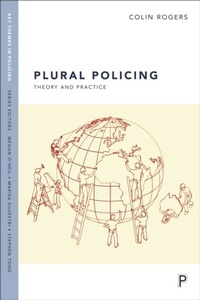
Plural Policing
Theory and Practice
1st Edition
Published on 9. November 2016
184 pages
978-1-4473-2639-7 (ISBN)
Description

This book critically analyses the rise of Plural policing in England and Wales over the past decade, giving examples of national and international practice. Written by an author with experience in both practice and academia, it discusses the consequences of this approach for the historical model of policing provision and challenges views on how policing should be delivered in the future.
The police increasingly need to work with other government agencies, the third sector, community organisations and the private sector, an approach known as "Plural Policing". This book critically analyses the rise of this approach in England and Wales over the past decade, giving examples of national and international practice. Written by an author with experience in both practice and academia, it discusses the consequences of this approach for the historical model of policing provision and challenges views on how policing should be delivered in the future.
Part of Key themes in policing, a textbook series designed to fill a growing need for research-informed policing within Higher Education curriculums and in practice, edited by Megan O'Neill, Marisa Silvestri & Stephen Tong, this accessible text, aimed primarily at undergraduate students, will appeal widely across different modules and tie into important issues covered on all policing courses.
The police increasingly need to work with other government agencies, the third sector, community organisations and the private sector, an approach known as "Plural Policing". This book critically analyses the rise of this approach in England and Wales over the past decade, giving examples of national and international practice. Written by an author with experience in both practice and academia, it discusses the consequences of this approach for the historical model of policing provision and challenges views on how policing should be delivered in the future.
Part of Key themes in policing, a textbook series designed to fill a growing need for research-informed policing within Higher Education curriculums and in practice, edited by Megan O'Neill, Marisa Silvestri & Stephen Tong, this accessible text, aimed primarily at undergraduate students, will appeal widely across different modules and tie into important issues covered on all policing courses.
More details
Other editions
Additional editions
Book
11/2016
1st Edition
Policy Press
€34.20
Shipment within 15-20 days
Book
11/2016
1st Edition
Policy Press
€82.40
Shipment within 15-20 days
E-Book
11/2016
1st Edition
Policy Press
€41.49
Available for download
Person
Author
University of South Wales
Professor Colin Rogers is Professor of Police Sciences at the University of South Wales, where he is Head of Research and also responsible for developing postgraduate courses. Colin is a former police Inspector with South Wales Police with 30 years' service. His areas of expertise include Community Safety Partnerships, Situational Crime Prevention, Problem Oriented Partnerships and also Police Governance and Accountability and he is editor of The Police Journal.
Professor Colin Rogers is Professor of Police Sciences at the University of South Wales, where he is Head of Research and also responsible for developing postgraduate courses. Colin is a former police Inspector with South Wales Police with 30 years' service. His areas of expertise include Community Safety Partnerships, Situational Crime Prevention, Problem Oriented Partnerships and also Police Governance and Accountability and he is editor of The Police Journal.
Content
What is policing?;
Defining plural policing;
Private Policing;
Neighbourhood policing teams;
Community support Officers;
The rise of the volunteer;
Partnership or plural policing?;
Future directions.
Defining plural policing;
Private Policing;
Neighbourhood policing teams;
Community support Officers;
The rise of the volunteer;
Partnership or plural policing?;
Future directions.
