

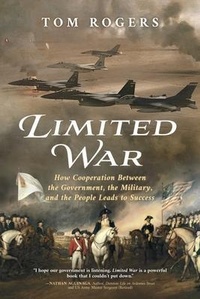
Limited War
Description

The phrase "trinity of war" represents the intimate cooperation of the government, the military, and, most importantly, the people of the nation in the context of military action. With this cooperation, each member of this trinity better understands the issues prior to a fully committed war. Without this close cooperation, history has shown, success is highly unlikely.
Limited War delves into the criteria that determines whether a war is necessary and, once a decision is made to go to war, what is needed from the government, the military, and the people in order to win. The book revisits the mistakes and successes of six wars-the American War of Independence, War of 1812, Anglo-Irish War, Korean War, Vietnam War, and Iraq War-and discusses how the processes for either entering or avoiding war should change.
More details
Person
Content
- Intro
- Copyright
- Title Page
- Contents
- Prologue
- Chapter One: Limited War
- The Trinity of War
- The Steps to Full Understanding
- The Consequences of War
- Destruction
- The Psychological and Physical Damage
- Once the War Has Begun
- Chapter Two: The American Revolution
- The Early Settlement of the British Colonies in America
- The Move Toward Independence
- Great Britain's Decision to Go to War
- The American Decision to Rebel
- The American War of Independence
- No Taxation Without Representation
- The Royal Proclamation
- The Stamp Act Crisis
- The Battles of Lexington, Concord, and Bunker Hill
- Additional Factors Leading to War
- The American Colonies Mature
- The American Revolution, Phase I
- George Washington Takes Charge of the Continental Army
- The American Revolution, Phase II
- The Battle of Trenton
- The Battle of Princeton
- The British Forage War
- The Surrender at Saratoga
- Origins of the American-French Alliance
- The American Revolution, Phase III
- Summary of Battles in the Southern Colonies
- Chapter Three: The War of 1812
- Jefferson's Embargo of
- An Alternative to War
- The Embargo's Effect on Canada
- The Struggle for Sovereignty
- The Louisiana Purchase: Another Complication
- Phase I: Westward Movement, Tecumseh, and the Indian Confederacy
- The Inevitable Conflict With Native America
- Phase II: The Canadian Invasion
- Growing Anger Between Belligerents
- The First Land Battle of the War
- Thwarted Plans to Invade Canada
- Canadian Patriotism and the Battle of Beaver Dams
- The French Invasion of Russia
- Phase III: Great Britain
- March on Washington
- The Star-Spangled Banner: Francis Scott Key
- Additional Indian Problems: The Battle at Horseshoe Bend
- The Battle of New Orleans
- The Aftereffects of the War of 1812
- Post-War Summary
- Chapter Four: The Anglo-Irish War
- The Republican Tradition
- The Rebellion of 1641
- The Confederate War, 1642-48
- The Rebellions of 1868-1870
- The Fenian Influence
- Gladstone's Impact on Irish Freedom
- Leading up to the Schism
- The Schisms
- The Home Rule Movement
- The Easter Rising of 1916: Plans for the Rebellion Take Form
- Actions to Arrest Sinn Féin Leaders
- The Aftereffects of the Easter Rising
- The Anglo-Irish War Begins
- IRA Attacks Continue with Increased Force
- The Irish Revolutionary War 1920-1921
- Archbishop Mannix Pays a Visit
- The Black and Tans Take the Offensive
- The Restoration of Order in Ireland Act
- Restoration of Order Delayed
- Efforts for Compromise
- The Truce at Last
- Chapter Five: The Korean War
- Prelude to the Korean War
- The United States' Decision to Invade the Korean Peninsula
- The Korean War: Explained
- The American Response to the Collapse of the ROKA
- The Initial American Offensive in Korea
- China's Decision to Enter the War
- China Enters the War-Phase I of the Chinese Offensive
- First Contact with Chinese Forces
- The Battle of the Chosin Reservoir
- The Second Phase of the Chinese Offensive (late November 1950)
- The Battle Resumes for the Eighth Army
- The Third Phase of the Chinese Offensive
- General MacArthur's Retreat
- MacArthur's Dismissal and the Limited War Doctrine
- The Path to Peace
- The Long Road to an Armistice: Truce Talks Begin
- Chapter Six: The Vietnam War
- The Complex Nature of the Vietnam War
- The United States Decision Process for Intervention
- The Possible Consequences of Not Intervening
- Direct United States Intervention Begins
- Severe Policy Limitations
- The Restricted Focus on South Vietnam
- The Civil-Military Disconnect
- McNamara's "Theory of Victory"
- The Transfer of Vast Military Resources and Expertise Proved Insufficient
- Seeking a Winning American Strategic Policy
- The Battle of Ap Bac
- The Enemy is Gaining Strength
- The Viet Cong Find Their Voice
- The Army of the Republic of Vietnam (ARVN) Showed Their Weaknesses
- None Are So Blind as Those Who Will Not See
- The ARVN Dereliction of Duty and Viet Cong Rise to the Occasion
- The Army of Vietnam is Failing the Test
- Push Back on Reality
- Tet Offensive: Accelerating Loss of Public Support
- The Trinity of War and the Failure of Leadership?
- The Beginning of the End
- Presidential Leadership: The Buck Stops Here
- Conclusions
- Chapter Seven: The Iraq War
- Reaching a Decision
- The Neoconservative Influence
- Neoconservative Beliefs and Objectives
- The Neoconservative Intent
- How Much Was George W. Bush Influenced by Neoconservative Thinking?
- Possession of Weapons of Mass Destruction: An Intelligence Failure
- The Policy of Containment
- Early Plans for War
- Prelude to War
- Phase I: The Invasion of Iraq
- The Battle of An-Nasiriyah
- The Approach to Baghdad
- The Battles of An-Najaf, As-Samawah, and Karbala
- The Battle of Baghdad
- Post-Invasion Iraq
- Democracy
- Mission Accomplished?
- Too Many Hands on the Steering Wheel
- Fallujah and the Al-Anbar Campaign
- Fallujah: "The Most Dangerous City in Iraq"
- Winning Hearts and Minds
- Operation Vigilant Resolve: The First Battle of Fallujah
- Operation Phantom Fury: The Second Battle of Fallujah
- An Inefficient Way of Operating
- Post-War Iraq: Who Won the War?
- Postscript
- Chapter Eight: The Past and Future of Limited War
- Acknowledgments
- Endnotes
