

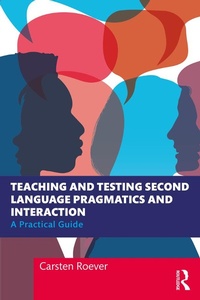
Teaching and Testing Second Language Pragmatics and Interaction
A Practical Guide
1st Edition
Published on 30. September 2021
208 pages
978-0-429-52288-8 (ISBN)
Description

Pragmatic ability is crucial for second language learners to communicate appropriately and effectively; however, pragmatics is underemphasized in language teaching and testing. This book remedies that situation by connecting theory, empirical research, and practical curricular suggestions on pragmatics for learners of different proficiency levels: It surveys the field comprehensively and, with useful tasks and activities, offers rich guidance for teaching and testing L2 pragmatics. Mainly referring to pragmatics of English and with relevant examples from multiple languages, it is an invaluable resource for practicing teachers, graduate students, and researchers in language pedagogy and assessment.
More details
Edition
1. Auflage
Language
English
Place of publication
London
United Kingdom
Publishing group
Taylor & Francis Ltd
Target group
College/higher education
Illustrations
9 Tables, black and white; 10 Line drawings, black and white; 10 Illustrations, black and white
ISBN-13
978-0-429-52288-8 (9780429522888)
Copyright in bibliographic data and cover images is held by Nielsen Book Services Limited or by the publishers or by their respective licensors: all rights reserved.
Schweitzer Classification
Other editions
Additional editions
Book
09/2021
1st Edition
Routledge
€61.00
Shipment within 15-20 days

Book
09/2021
1st Edition
Routledge
€206.20
Shipment within 15-20 days
Person
Carsten Roever is Associate Professor in Applied Linguistics at the University of Melbourne, Australia.
Content
Table of Contents
1 Introduction
1.1 What is pragmatics and why does it matter?
1.2 Who this book is for (and some terminology you might need)
1.3 How this book is organized
2 Pragmatic competence and interactional competence
2.1 Pragmatics
2.2 How to talk to whom: pragmatic competence
2.2.1 Speech acts and politeness
2.2.2 Learning L2 speech acts
2.2.3 Conclusion
2.3 Understanding non-literal speech: implicature
2.3.1 Learning L2 implicature
2.4 Fixed expressions for fixed purposes: routine formulae
2.4.1 Learning L2 routines
2.4.2 Conclusion: Implicature and routine formulae
2.5 Interactional competence
2.5.1 Learning L2 interactional competence
2.5.2 Conclusion
2.6 Summary: Speech acts, implicature, routines and interactional competence
2.7 Resources and further readings
3 Pragmatics and Curriculum
3.1 The CEFR and other frameworks: A brief introduction
3.2 A developmentally sensitive pragmatics curriculum
3.3 Pragmatics and proficiency levels
3.4 Beginners: The A1 level learner and pragmatics
3.4.1 Getting learners from 0 to A1
3.5 Upper Beginner / Low Intermediate: The A2 level learner and pragmatics
3.5.1 Getting learners from A1 to A2
3.6 Intermediate: The B1 level learner and pragmatics
3.6.1 Getting learners from A2 to B1
3.7 Upper-intermediate: The B2 learner and pragmatics
3.7.1 Getting learners from B1 to B2
3.8 Advanced: The C1 learner and pragmatics
3.8.1 Getting learners from B2 to C1
3.9 The high advanced learner: Pragmatics at the C2 level
3.9.1 Getting learners from C1 to C2
3.10 Resources and further readings
3.11 Conclusion
4 How to make teaching materials and tests for pragmatics
4.1 The basics: How to establish context
4.2 Metapragmatic judgments
4.2.1 Variations on metapragmatic judgment tasks
4.2.2 Procedure: administering metapragmatic judgment tasks
4.2.3 Resources and further reading
4.3 Multiple choice tasks
4.3.1 Creating multiple choice items for routines
4.3.2 Creating multiple choice items for implicature
4.3.3 Creating multiple choice items for speech acts
4.3.4 Procedure: administering multiple choice tasks
4.3.5 Beyond multiple choice: Multi-response tasks
4.3.6 Resources and further readings
4.4 Discourse completion tasks
4.4.1 Types of DCTs
4.4.2 Designing DCTs
4.4.3 Procedure: Administering DCTs
4.4.4 Resources and further readings
4.5 Role plays
4.5.1 Types of role plays
4.5.2 Target features in role plays
4.5.3 Role play scenarios
4.5.4 Interlocutor considerations
4.5.5 Procedure: how to run role plays
4.5.6 Resources and further readings
4.6 Elicited conversation
4.6.1 Designing elicited conversation tasks
4.6.2 Procedure: how to run elicited conversation tasks
4.6.3 Resources and further readings
5 Teaching pragmatics
5.1 Overview: Findings and issues in teaching L2 pragmatics
5.1.1 Effectiveness of teaching L2 pragmatics
5.1.2 Factors in teaching pragmatics
5.2 Materials for teaching pragmatics
5.3 Phases of a pragmatics lesson
5.3.1 Step 1: Presenting the target feature
5.3.2 Step 2: Receptive practice
5.3.3 Step 3: Productive practice
5.4 Teaching a feature across levels
5.4.1 Requests at A1 level
5.4.2 Requests at B1 level
5.4.3 Requests at C1 level
5.5 Resources and further readings
6 Testing pragmatics
6.1 Pragmatics testing so far
6.2 Testing in pragmatics research
6.3 Pragmatic norms
6.4 Assessing learning: classroom-based testing of pragmatics and interaction
6.5 How to make sure tests work: validation of large-scale tests
6.6 Validating "objective" tests
6.7 Validating sociopragmatic judgment tests
6.8 Validating productive tests and their rating scales
6.9 Fairness and bias in testing of pragmatics
6.10 Conclusion
6.11 Resources and further readings
7 Outlook: The future of teaching and testing of L2 pragmatics
7.1 Pragmatics in general language teaching
7.2 Specific purposes pragmatics: needs analyses, tasks, and indigenous criteria
7.3 Making pragmatics tests practical: the role of technology
8 References
1 Introduction
1.1 What is pragmatics and why does it matter?
1.2 Who this book is for (and some terminology you might need)
1.3 How this book is organized
2 Pragmatic competence and interactional competence
2.1 Pragmatics
2.2 How to talk to whom: pragmatic competence
2.2.1 Speech acts and politeness
2.2.2 Learning L2 speech acts
2.2.3 Conclusion
2.3 Understanding non-literal speech: implicature
2.3.1 Learning L2 implicature
2.4 Fixed expressions for fixed purposes: routine formulae
2.4.1 Learning L2 routines
2.4.2 Conclusion: Implicature and routine formulae
2.5 Interactional competence
2.5.1 Learning L2 interactional competence
2.5.2 Conclusion
2.6 Summary: Speech acts, implicature, routines and interactional competence
2.7 Resources and further readings
3 Pragmatics and Curriculum
3.1 The CEFR and other frameworks: A brief introduction
3.2 A developmentally sensitive pragmatics curriculum
3.3 Pragmatics and proficiency levels
3.4 Beginners: The A1 level learner and pragmatics
3.4.1 Getting learners from 0 to A1
3.5 Upper Beginner / Low Intermediate: The A2 level learner and pragmatics
3.5.1 Getting learners from A1 to A2
3.6 Intermediate: The B1 level learner and pragmatics
3.6.1 Getting learners from A2 to B1
3.7 Upper-intermediate: The B2 learner and pragmatics
3.7.1 Getting learners from B1 to B2
3.8 Advanced: The C1 learner and pragmatics
3.8.1 Getting learners from B2 to C1
3.9 The high advanced learner: Pragmatics at the C2 level
3.9.1 Getting learners from C1 to C2
3.10 Resources and further readings
3.11 Conclusion
4 How to make teaching materials and tests for pragmatics
4.1 The basics: How to establish context
4.2 Metapragmatic judgments
4.2.1 Variations on metapragmatic judgment tasks
4.2.2 Procedure: administering metapragmatic judgment tasks
4.2.3 Resources and further reading
4.3 Multiple choice tasks
4.3.1 Creating multiple choice items for routines
4.3.2 Creating multiple choice items for implicature
4.3.3 Creating multiple choice items for speech acts
4.3.4 Procedure: administering multiple choice tasks
4.3.5 Beyond multiple choice: Multi-response tasks
4.3.6 Resources and further readings
4.4 Discourse completion tasks
4.4.1 Types of DCTs
4.4.2 Designing DCTs
4.4.3 Procedure: Administering DCTs
4.4.4 Resources and further readings
4.5 Role plays
4.5.1 Types of role plays
4.5.2 Target features in role plays
4.5.3 Role play scenarios
4.5.4 Interlocutor considerations
4.5.5 Procedure: how to run role plays
4.5.6 Resources and further readings
4.6 Elicited conversation
4.6.1 Designing elicited conversation tasks
4.6.2 Procedure: how to run elicited conversation tasks
4.6.3 Resources and further readings
5 Teaching pragmatics
5.1 Overview: Findings and issues in teaching L2 pragmatics
5.1.1 Effectiveness of teaching L2 pragmatics
5.1.2 Factors in teaching pragmatics
5.2 Materials for teaching pragmatics
5.3 Phases of a pragmatics lesson
5.3.1 Step 1: Presenting the target feature
5.3.2 Step 2: Receptive practice
5.3.3 Step 3: Productive practice
5.4 Teaching a feature across levels
5.4.1 Requests at A1 level
5.4.2 Requests at B1 level
5.4.3 Requests at C1 level
5.5 Resources and further readings
6 Testing pragmatics
6.1 Pragmatics testing so far
6.2 Testing in pragmatics research
6.3 Pragmatic norms
6.4 Assessing learning: classroom-based testing of pragmatics and interaction
6.5 How to make sure tests work: validation of large-scale tests
6.6 Validating "objective" tests
6.7 Validating sociopragmatic judgment tests
6.8 Validating productive tests and their rating scales
6.9 Fairness and bias in testing of pragmatics
6.10 Conclusion
6.11 Resources and further readings
7 Outlook: The future of teaching and testing of L2 pragmatics
7.1 Pragmatics in general language teaching
7.2 Specific purposes pragmatics: needs analyses, tasks, and indigenous criteria
7.3 Making pragmatics tests practical: the role of technology
8 References
