

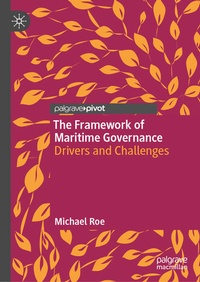
The Framework of Maritime Governance
Description

The neglect of maritime governance by governments, institutions and the industry itself has been nothing short of remarkable. For a sector that is characterised by widespread corruption, inefficiency and excessive environmental pollution, injury and death, the inadequacies of the current structure of control, policy and administration, which have persisted throughout its development over many years whilst increasingly recognised, has resulted in little progress or improvement. This book provides a detailed yet concise and succinct interpretation of what constitutes maritime governance and its significance for the success, operation and influence of the sector.
The major drivers, their impact and how they inter-relate, are identified and the whole process is placed within the context of globalisation, a major factor within the shipping and ports industry. A framework for analysing maritime governance structures is put forward centred around jurisdiction, objectives, instruments and agencies. The issue of maritime governance is then examined from an international policy perspective and how this differs from domestic agendas. Conclusions are drawn on the future for maritime governance, how the current situation can be improved and the remaining problems considered. The book will be of great interest to scholars and students of maritime governance, as well as practitioners seeking a scholarly overview of the topic.
More details
Other editions
Additional editions
Person
Michael Roe holds the Chair of Maritime and Logistics Governance at the University of Plymouth, UK. He previously worked with the Greater London Council and the Universities of Aston, Coventry, London Metropolitan and the University of London (City). The author of over 70 refereed journal papers and 16 books, he specialises in Eastern European maritime policy and the wider governance of maritime affairs.
Content
1. Introduction.- 2. Goods and value.- 3. Exchange and price.- 4. Monopoly and competition.- 5. Production and its structure.- 6. Capital and interest.- 7. Money and its purchasing power.- 8. Inflation and crisis.- 9. State and the market.- 10. Conclusion.
