

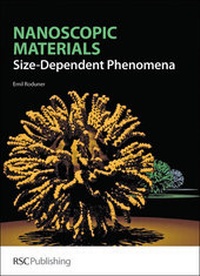
Nanoscopic Materials
Size-Dependent Phenomena
1st Edition
Published on 31. October 2007
298 pages
978-1-84755-763-6 (ISBN)
Description

Nanotechnology has been hailed as a key technology of the 21st century. The scope of this field is huge and could have a wide influence on many aspects of life. Nanoscience; the manipulation of matter at the atomic and molecular level, and nanomaterials; materials so small that their behaviour and characteristics deviate from those of macroscopic specimens and may be predicted by scaling laws or by quantum confinement effects, are discussed in Nanoscopic Materials: Size - Dependent Phenomena.
The book focuses on a qualitative and quantitative approach discussing all areas of nanotechnology with particular emphasis on the underlying physico-chemical and physical principles of nanoscience. Topics include electronic structure, magnetic properties, thermodynamics of size dependence and catalysis. There is also a section discussing the future potential of the field and the ethical implications of nanotechnology.
The book is ideal for graduate students of chemistry and materials science and researchers new to the field of nanoscience and nanotechnology.
The book focuses on a qualitative and quantitative approach discussing all areas of nanotechnology with particular emphasis on the underlying physico-chemical and physical principles of nanoscience. Topics include electronic structure, magnetic properties, thermodynamics of size dependence and catalysis. There is also a section discussing the future potential of the field and the ethical implications of nanotechnology.
The book is ideal for graduate students of chemistry and materials science and researchers new to the field of nanoscience and nanotechnology.
Reviews / Votes
Lots of helpful illustrations and some of them in full colour....each of the eleven chapters includes a summary box at the end where the 'key points' are reiterated in clear and concise language, complete with bullet points.A timely reminder of how much every-thing we think we know about matter can change when the packaging unit of that matter becomes very small. * Chemistry & Industry, 10 December 2007, 34 (Michael Gross) * This book provides an overview of the size-related changes that underlie much of the current interest in nanoscience. * Nanotoday, June 2007, Vol.2, No.3 * Excellent as an introductory text to inorganic nanoscopic materials.......a very useful primer on inorganic nanoscopic materials. * Journal of the American Chemical Society, Vol.129, No.13, 2007 (Thomas P Russell) *More details
Edition
1. Auflage
Language
English
Place of publication
Cambridge
United Kingdom
Target group
College/higher education
Professional and scholarly
ISBN-13
978-1-84755-763-6 (9781847557636)
DOI
10.1039/9781847557636
Copyright in bibliographic data and cover images is held by Nielsen Book Services Limited or by the publishers or by their respective licensors: all rights reserved.
Schweitzer Classification
Other editions
New editions

E-Book
10/2015
2nd Edition
Royal Society of Chemistry
€129.99
Available for download
Additional editions
Book
08/2006
Royal Society of Chemistry
€46.50
Shipment within 3-4 weeks
Person
Content
1: Introduction;
1.1: Clusters and nanoparticles;
1.2: Feynman's vision;2: Bulk and interface;
2.1: Gradients near surfaces;
2.2: The coordination number rules the game;
2.3: Surface science, a source of information;
for nanoscience 2.4: Particle size and microstrain;
2.5: Biomimetics: nature as a source of inspiration for strategies in nanotechnology;
3: Geometric structure, magic numbers, and coordination numbers of small clusters;
3.1: The consequences of the range of the radial potential energy function;
3.2: Magic numbers by geometric shells closing;
3.3: Magic numbers by electronic shells closing;
3.4: Cohesive energy and coordination number;
4: Electronic structure;
4.1: Discrete states versus band structure;
4.2: The effects of dimensionality and symmetry in quantum structures;
4.3: The nonmetal-to-metal transition;
4.4: Work function, ionisation potential and electron affinity;
4.5: Electronic structure of semiconductor and metal clusters;
4.6: A semiconductor quantum dot electronic device;
5: Magnetic properties;
5.1: A brief primer on magnetism;
5.2: The concept of frustration;
5.3: Magnetic properties of small clusters;
5.4: Ferromagnetic order in thin films and monoatomic chains;
5.5: Finite size effects in magnetic resonance detection;
6: Thermodynamics for finite size systems;
6.1: Limitations of macroscopic thermodynamics;
6.2: The basics of capillarity;
6.3: Phase transitions of free liquid droplets;
6.4: The Lotus effect;
6.5: Classical nucleation theory;
6.6: Shape control of nanocrystals;
6.7: Size effects on ion conduction in solids;
6.8: Principles of self-assembly;
7: Adsorption, phase behaviour and dynamics of surface layers and in pores;
7.1: Surface adsorption and pore condensation;
7.2: Adsorption hysteresis and pore criticality;
7.3: The melting point of pore-confined matter;
7.4: Layering transitions;
7.5: Liquid coexistence and ionic solutions in pores;
7.6: The effect of pressure;
7.7: Dynamics in pores;
8: Phase transitions and dynamics of clusters;
8.1: Melting point and melting enthalpy;
8.2: Dynamics of metal clusters;
9: Phase transitions of two-dimensional systems;
9.1: Melting of thin layers;
9.2: Structural phase transitions in thin layers;
9.3: Glass transition of a polymer thin film;
9.4: Surface alloy phases;
10: Catalysis by metallic nanoparticles;
10.1: Some general principles of catalysis by nanoparticles;
10.2: Size-controlled catalytic clusters;
10.3: Shape dependent catalytic activity;
10.4: The effect of strain;
10.5: The effect of alloying;
10.6: Metal-support interaction;
10.7: The influence of external bias voltage;
11: Applications: facts and fictions;
11.1: Nanomaterials;
11.2: Nanotechnology;
11.3: Hopes, hazards and hype;
1.1: Clusters and nanoparticles;
1.2: Feynman's vision;2: Bulk and interface;
2.1: Gradients near surfaces;
2.2: The coordination number rules the game;
2.3: Surface science, a source of information;
for nanoscience 2.4: Particle size and microstrain;
2.5: Biomimetics: nature as a source of inspiration for strategies in nanotechnology;
3: Geometric structure, magic numbers, and coordination numbers of small clusters;
3.1: The consequences of the range of the radial potential energy function;
3.2: Magic numbers by geometric shells closing;
3.3: Magic numbers by electronic shells closing;
3.4: Cohesive energy and coordination number;
4: Electronic structure;
4.1: Discrete states versus band structure;
4.2: The effects of dimensionality and symmetry in quantum structures;
4.3: The nonmetal-to-metal transition;
4.4: Work function, ionisation potential and electron affinity;
4.5: Electronic structure of semiconductor and metal clusters;
4.6: A semiconductor quantum dot electronic device;
5: Magnetic properties;
5.1: A brief primer on magnetism;
5.2: The concept of frustration;
5.3: Magnetic properties of small clusters;
5.4: Ferromagnetic order in thin films and monoatomic chains;
5.5: Finite size effects in magnetic resonance detection;
6: Thermodynamics for finite size systems;
6.1: Limitations of macroscopic thermodynamics;
6.2: The basics of capillarity;
6.3: Phase transitions of free liquid droplets;
6.4: The Lotus effect;
6.5: Classical nucleation theory;
6.6: Shape control of nanocrystals;
6.7: Size effects on ion conduction in solids;
6.8: Principles of self-assembly;
7: Adsorption, phase behaviour and dynamics of surface layers and in pores;
7.1: Surface adsorption and pore condensation;
7.2: Adsorption hysteresis and pore criticality;
7.3: The melting point of pore-confined matter;
7.4: Layering transitions;
7.5: Liquid coexistence and ionic solutions in pores;
7.6: The effect of pressure;
7.7: Dynamics in pores;
8: Phase transitions and dynamics of clusters;
8.1: Melting point and melting enthalpy;
8.2: Dynamics of metal clusters;
9: Phase transitions of two-dimensional systems;
9.1: Melting of thin layers;
9.2: Structural phase transitions in thin layers;
9.3: Glass transition of a polymer thin film;
9.4: Surface alloy phases;
10: Catalysis by metallic nanoparticles;
10.1: Some general principles of catalysis by nanoparticles;
10.2: Size-controlled catalytic clusters;
10.3: Shape dependent catalytic activity;
10.4: The effect of strain;
10.5: The effect of alloying;
10.6: Metal-support interaction;
10.7: The influence of external bias voltage;
11: Applications: facts and fictions;
11.1: Nanomaterials;
11.2: Nanotechnology;
11.3: Hopes, hazards and hype;
