

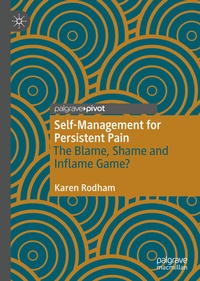
Self-Management for Persistent Pain
Description

This book critiques the current approach to the self-management of persistent pain. The drive towards self-management of chronic pain is flourishing as healthcare systems struggle to facilitate the care of those with long term health conditions. In this book Karen Rodham argues that albeit an empowering idea, self-management has not yet been fully translated from idea to practice and as such, runs the risk of blaming and shaming the person living with a chronic condition for failing to manage their condition effectively. She contends that the additional stress of this tension may in fact worsen their condition. Drawing from the research evidence as well as her practice experience, she advocates a move away from the terms 'self' and 'management' towards a more collaborative approach. One which takes account of the life-context of the person who is living with persistent pain.
This book explores the shortcomings of the tendency to focus on self-management without takinginto account life context and considers how we got here and what can be done. It will be a valuable resource to researchers and practitioners, especially in the field of health psychology.Reviews / Votes
"Professor Rodham has written a fascinating book that challenges, quite rightly, the current beliefs and misconceptions around the self-management approach to chronic pain. This excellent book views it more as a supportive partnership than yet something else the individual with pain has to motivate themselves to do. A welcome addition to the improving the lives of people with chronic pain."(Dr Sue Peacock, Consultant Health Psychologist, UK)More details
Other editions
Additional editions
Person
Karen Rodham is Professor of Health Psychology at Staffordshire University, UK. Her research focuses on how people cope with challenging health conditions. Her interest in pain self-management stems from her practice experience as a health psychologist working in the NHS with people living with complex regional pain syndrome (CPRS).
Content
Chapter 1: Self-management the panacea for coping with persistent pain?.- Chapter 2: Self-management as presented in policy.- Chapter 3: Self-management in practice: Mind the gap.- Chapter 4: Does pain self-management result in the blame, shame and inflame game?.- Chapter 5: Re-imagining self-management.- Chapter 6: An invitation to make a difference.
