

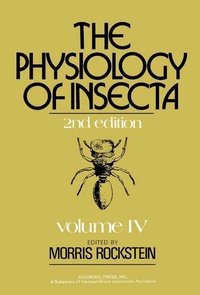
The Physiology of Insecta
Volume IV
1st Edition
Published on 22. October 2013
464 pages
978-1-4832-7670-0 (ISBN)
Description

The Physiology of Insecta, Second Edition, Volume IV, is part of a multivolume treatise that brings together the known facts, the controversial material, and the many still unsolved and unsettled problems of insect physiology. Since the first edition of this multivolume treatise was published, there has been a notable expansion of scientific endeavor in each of the various aspects of insect physiology. The original three-volume work has now grown to a thoroughly revised six-volume treatise. The book contains six chapters and opens with a discussion of the insect central nervous system. This is followed by separate chapters on axonal and synaptic pharmacology; the neural control of skeletal muscle; the structural proteins in insect muscle and their physico-chemical properties; biological oxidation and energetics in insects; and protein synthesis in insects.
More details
Other editions
New editions
E-Book
10/2013
2nd Edition
Academic Press
€70.95
Available for download
E-Book
10/2013
2nd Edition
Academic Press
€70.95
Available for download
E-Book
10/2013
2nd Edition
Academic Press
€70.95
Available for download
Additional editions

M. Rockstein
Physiology of Insecta: v. 4
Book
12/1974
2nd Edition
Academic Press
€84.81
Article exhausted; check different version
Content
List of ContributorsPrefacePreface to First EditionContents of Other VolumesThe Insect and the Internal Environment-Homeostasis-I Chapter 1. Neural Integration (Central Nervous System) I. Introduction II. Levels and Principles of Neural Integration III. Methods of Studying Neural Integration in Insects IV. Structural Basis of the Insect Nervous System V. Integration at the Neuronal Level VI. Integration at the Multineuronal Level VII. Coordination of Movements and Behavior VIII. Neural Basis of Habituation and Learning IX. General Conclusions References Chapter 2. The Pharmacology of the Insect Nervous System I. Introduction II. The Insect "Blood-Brain Barrier" III. Pharmacology of the Axonal Membrane IV. Pharmacology of Synaptic Transmission V. Pharmacology of the Receptors VI. Conclusion References Chapter 3. Neural Control of Skeletal Muscle I. Introduction II. Structure and Design of Insect Skeletal Muscle III. Innervation IV. Nature of Excitable Membrane of Muscle Fiber V. Neuromuscular Transmission VI. Ionic Activity Underlying Electric Phenomena VII. Mechanical Responses VIII. Synaptic Transmitters IX. Effects of the Nerve Sheath X. Consequences of Variations in Mineral Ion Composition of Hemolymph XI. Physiology of Spiracular Muscle XII. The Effects of Denervation XIII. Neural Control in the Intact Animal References Chapter 4. The Biochemistry of the Contractile Elements of Insect Muscle I. Introduction II. Structural Proteins of Muscle III. Interaction of Actomyosin with ATP IV. Concluding Remarks Note Added in Proof References Chapter 5. Biological Oxidations and Energetics in Insect Mitochondria I. Introduction II. The Mitochondrion III. The Respiratory Chain IV. The Activity of the Respiratory Chain and the Coupling of Oxidative Phosphorylation to Electron Transport V. Utilization of Other Metabolic Substrates by Flight-Muscle Mitochondria VI. The Control of Mitochondrial Oxidations References Chapter 6. Protein Synthesis in Insects I. Introduction II. The Aminoacylation of Transfer Ribonucleic Acid III. Initiation of Messenger RNA Translation IV. Polypeptide Elongation V. Polypeptide Chain Termination VI. Summary of the Steps Involved in Protein Synthesis VII. Regulation of Protein Synthesis ReferencesAuthor IndexSubject Index
