

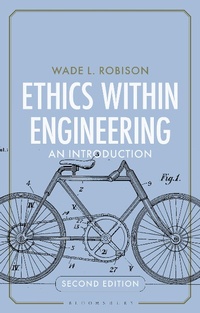
Ethics Within Engineering
An Introduction
2nd Edition
Published on 28. December 2023
256 pages
978-1-350-34046-6 (ISBN)
Description

Exploring key ethical concerns in the engineering industry, this 2nd edition of Ethics Within Engineering is fully revised and updated to educate a new generation of engineers in ethical decision-making. By focusing on critical issues concerning tracking harm, contract work, and collective action, Wade L. Robison provides educational tools and solutions that match the complexity of the engineering landscape today.
Two new chapters on the responsibility of the engineer and the ethical issues that arise when teams work together to solve design problems, together with new material on tracking harms in the design process, provide a fuller comprehension of risk and harm in engineering. Robison further enhances this new edition with contemporary examples that highlight the enduring necessity of ethics to engineering. These range from the Boeing 737-MAX to General Motors' controversial 20-gallon fuel tanks. Using real life examples that bring the theory to life, this student-led textbook encourages students to present, challenge, and work through different engineering problems and solutions with confidence and a strong evidence-based approach.
Consistent with the 1st edition's emphasis on the original design problem which drives ethical questions in engineering, this new edition positions the nascent engineer as its focus for driving positive change in practice, design, and delivery.
Two new chapters on the responsibility of the engineer and the ethical issues that arise when teams work together to solve design problems, together with new material on tracking harms in the design process, provide a fuller comprehension of risk and harm in engineering. Robison further enhances this new edition with contemporary examples that highlight the enduring necessity of ethics to engineering. These range from the Boeing 737-MAX to General Motors' controversial 20-gallon fuel tanks. Using real life examples that bring the theory to life, this student-led textbook encourages students to present, challenge, and work through different engineering problems and solutions with confidence and a strong evidence-based approach.
Consistent with the 1st edition's emphasis on the original design problem which drives ethical questions in engineering, this new edition positions the nascent engineer as its focus for driving positive change in practice, design, and delivery.
More details
Edition
2nd edition
Language
English
Place of publication
London
United Kingdom
Publishing group
Bloomsbury Publishing PLC
Target group
College/higher education
ISBN-13
978-1-350-34046-6 (9781350340466)
Copyright in bibliographic data and cover images is held by Nielsen Book Services Limited or by the publishers or by their respective licensors: all rights reserved.
Schweitzer Classification
Other editions
Additional editions
Book
01/2024
2nd Edition
Bloomsbury Academic
€29.00
Shipment within 15-20 days
Previous edition
E-Book
12/2016
1st Edition
Bloomsbury Academic
€30.99
Available for download
Person
Wade L. Robison is Ezra A. Hale Professor in Applied Ethics at Rochester Institute of Technology, USA.
Content
List of Figures
Prefaces
Acknowledgements
Introduction
1. Analyzing Accidents
2. Error-provocative Designs
3. Airliner Crashes
4. Moral Responsibility: Intent Is Not Necessary
5. Permitting, Encouraging, and Provoking Errors
6. Harms and Design Solutions
7. Role Morality
8. Forms of Life
9. Working With and For Others
10. Engineering and Ethics
Notes
Bibliography
Index
Prefaces
Acknowledgements
Introduction
1. Analyzing Accidents
2. Error-provocative Designs
3. Airliner Crashes
4. Moral Responsibility: Intent Is Not Necessary
5. Permitting, Encouraging, and Provoking Errors
6. Harms and Design Solutions
7. Role Morality
8. Forms of Life
9. Working With and For Others
10. Engineering and Ethics
Notes
Bibliography
Index
