

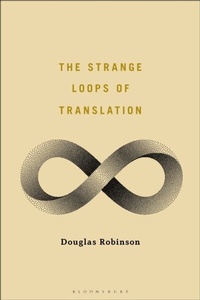
The Strange Loops of Translation
1st Edition
Published on 16. December 2021
240 pages
978-1-5013-8244-4 (ISBN)
Description

One of the most exciting theories to emerge from cognitive science research over the past few decades has been Douglas Hofstadter's notion of "strange loops," from Goedel, Escher, Bach (1979). Hofstadter is also an active literary translator who has written about translation, perhaps most notably in his 1997 book Le Ton Beau de Marot, where he draws on his cognitive science research. And yet he has never considered the possibility that translation might itself be a strange loop.
In this book Douglas Robinson puts Hofstadter's strange-loops theory into dialogue with a series of definitive theories of translation, in the process showing just how cognitively and affectively complex an activity translation actually is.
In this book Douglas Robinson puts Hofstadter's strange-loops theory into dialogue with a series of definitive theories of translation, in the process showing just how cognitively and affectively complex an activity translation actually is.
Reviews / Votes
A distinguished translator and theorist, Douglas Robinson has done a fabulous job in his discussions of the strange loops of translation. Like all his other books, this new book is set to inspire new thinking among translators and will be repeatedly referred to in translation studies in the future. * Defeng Li, Associate Dean of Research & Graduate Studies and Professor of Translation Studies, University of Macau, China *More details
Edition
1. Auflage
Language
English
Place of publication
New York
United States
Publishing group
Bloomsbury Publishing PLC (Digital)
Target group
College/higher education
ISBN-13
978-1-5013-8244-4 (9781501382444)
Copyright in bibliographic data and cover images is held by Nielsen Book Services Limited or by the publishers or by their respective licensors: all rights reserved.
Schweitzer Classification
Other editions
Additional editions
Douglas Robinson
The Strange Loops of Translation
Book
07/2023
Bloomsbury Academic USA
€55.89
Shipment within 15-20 days
Douglas Robinson
The Strange Loops of Translation
Book
01/2022
Bloomsbury Academic USA
€141.13
Shipment within 15-20 days
Person
Douglas Robinson is Chair Professor of English at Hong Kong Baptist University, Hong Kong, and is one of the world's leading experts on translation. He is the author or editor of two dozen books, including path-breaking publications in translation studies such as The Translator's Turn (1991), Translation and Taboo (1996), Translation and the Problem of Sway (2011), and The Dao of Translation (2015). He is also author of important works on postcoloniality, from Translation and Empire (1997) to Displacement and the Somatics of Postcolonial Culture (2013).
Content
Introduction
I.1 "Paradoxical Level-crossing Feedback Loop"
I.2 "Pleasantly Pervasive Paradoxes"
I.3 The Strange Loops of Translation
I.3a First Strange Loop of Translation: Self-reference
I.3b Second Strange Loop of Translation: The Incoherently Written Source Text
I.3c Third Strange Loop of Translation: The Passage of Time
I.4 The Structure of the Book
I.5 Acknowledgments
1. The Strange Loops of (Non)Equivalence
1.1 The Campaign Against Word-for-Word Translation
1.2 The Strange Loops of Sense-for-Sense Translation: St. Jerome
1.3 The Shared Strange Loops of Sense-for-Sense Translation
1.4 The Strange Loops of Word-for-Word Translation: Friedrich Schleiermacher
1.5 Conclusion
2. The Strange Loops of the Translator-Function
2.1 The Strange Loops of the Translator-Function 1: Myriam Diaz-Diocaretz
2.2 The Strange Loops of the Translator-Function 2: Rosemary Arrojo
2.3 Towards an Author-Function: Derrida, Barthes, Foucault
2.4 The Strange Loops of the Translator-Function 3: Theo Hermans
3. The Strange Loops of Translation as (Peri)Performative Identities
3.1 Logical Aporias and the Strange Loops of Periperformative Workarounds: Mauricio Mendonca Cardozo
3.2 The Strange Loops of Translating Heidegger's Untranslatables: Sabina Folnovic Jaitner
3.3 The Strange Loops of "Good" and "Bad" (Periperformative) Translatabilities: Natalia S. Avtonomova and Tatevik Gukasyan
3.4 The Strange Loops by which Translation Shapes Collective Subjectivities: Sakai Naoki and Lydia H. Liu
4. The Strange Loops of Translational Bodies
4.1 The Strange Loops of Somatic Response: the DRP
4.2 The Strange Loops of Knowledge-Translation as Mouthable Rhythm: Henri Meschonnic
4.3 The Strange Loops of the Translator's Constructivist Agency: Kobus Marais
Conclusion: The Strange Loops of Translation as Transgressive Circulations: Johannes Goeransson
C.1 Hoaxes
C.2 Interiority and Identity
C.3 Transminoritization
C.4 Salutary Failures
Notes
References
Index
I.1 "Paradoxical Level-crossing Feedback Loop"
I.2 "Pleasantly Pervasive Paradoxes"
I.3 The Strange Loops of Translation
I.3a First Strange Loop of Translation: Self-reference
I.3b Second Strange Loop of Translation: The Incoherently Written Source Text
I.3c Third Strange Loop of Translation: The Passage of Time
I.4 The Structure of the Book
I.5 Acknowledgments
1. The Strange Loops of (Non)Equivalence
1.1 The Campaign Against Word-for-Word Translation
1.2 The Strange Loops of Sense-for-Sense Translation: St. Jerome
1.3 The Shared Strange Loops of Sense-for-Sense Translation
1.4 The Strange Loops of Word-for-Word Translation: Friedrich Schleiermacher
1.5 Conclusion
2. The Strange Loops of the Translator-Function
2.1 The Strange Loops of the Translator-Function 1: Myriam Diaz-Diocaretz
2.2 The Strange Loops of the Translator-Function 2: Rosemary Arrojo
2.3 Towards an Author-Function: Derrida, Barthes, Foucault
2.4 The Strange Loops of the Translator-Function 3: Theo Hermans
3. The Strange Loops of Translation as (Peri)Performative Identities
3.1 Logical Aporias and the Strange Loops of Periperformative Workarounds: Mauricio Mendonca Cardozo
3.2 The Strange Loops of Translating Heidegger's Untranslatables: Sabina Folnovic Jaitner
3.3 The Strange Loops of "Good" and "Bad" (Periperformative) Translatabilities: Natalia S. Avtonomova and Tatevik Gukasyan
3.4 The Strange Loops by which Translation Shapes Collective Subjectivities: Sakai Naoki and Lydia H. Liu
4. The Strange Loops of Translational Bodies
4.1 The Strange Loops of Somatic Response: the DRP
4.2 The Strange Loops of Knowledge-Translation as Mouthable Rhythm: Henri Meschonnic
4.3 The Strange Loops of the Translator's Constructivist Agency: Kobus Marais
Conclusion: The Strange Loops of Translation as Transgressive Circulations: Johannes Goeransson
C.1 Hoaxes
C.2 Interiority and Identity
C.3 Transminoritization
C.4 Salutary Failures
Notes
References
Index
