

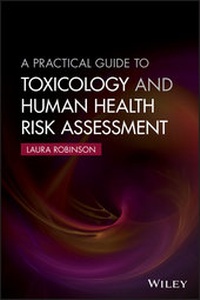
A Practical Guide to Toxicology and Human Health Risk Assessment
1st Edition
Published on 5. November 2018
400 pages
978-1-118-88207-8 (ISBN)
Description

Toxicology - the study of the adverse effects of chemicals on living organisms is the cornerstone to all aspects of chemical safety and knowledge of the subject is needed in a wide spectrum of fields from the chemical industry to medicine, emergency services, forensics, and regulatory science. Toxicology involves the study of symptoms, mechanisms, treatments and detection of poisoning ... especially the poisoning of people.
The many problems arising from a poor understanding of toxicology and its applications in hazard communication and chemical safety motivated the author's training courses and webinars, leading to this valuable book.
Providing a practical and accessible guide, A Practical Guide to Toxicology and Human Health Risk Assessment enables readers to quickly build up knowledge and understanding of toxicology and its use in hazard identification, which is a fundamental part of chemical risk assessment. The book also covers current toxicological testing strategies and the use of physicochemical test data in hazard identification and exposure assessment.
Examples are provided throughout the book to highlight important issues along with a summary of the key points that have been covered in each of the respective chapters. The book concludes with a listing of online resources on toxicology and risk assessment.
More details
Other editions
Additional editions
Book
12/2018
1st Edition
Wiley
€90.00
Shipment within 15-20 days
Content
- Intro
- Title Page
- Copyright Page
- Contents
- Foreword
- Preface
- Acknowledgment
- Chapter 1 Welcome to the World of Toxicology
- 1.1 Chemicals - They Are All Around Us
- 1.2 Synthetic or Naturally Occurring Chemicals - Which Are "Safer"?
- 1.3 Chemical Control Regulations
- 1.4 Perception of Chemical Risk
- 1.5 Why Is Toxicology Important?
- 1.6 Summary
- References
- Chapter 2 Basic Toxicological Terminology
- Introduction
- 2.1 The Cell
- 2.1.1 Stem Cells, Somatic Cells, and Germ Cells
- 2.2 Homeostasis
- 2.3 Adaptation and Cell Injury
- 2.4 Cellular Responses to Injury
- 2.5 Mode of Action and Mechanism of Action
- 2.6 Adverse Effects
- 2.7 Biological and Statistical Significance
- 2.8 Local and Systemic Effects
- 2.9 How Chemicals Cause Harm
- 2.10 Acute and Chronic Exposures
- 2.10.1 Acute and Chronic Exposures to Irritants and Corrosives
- 2.10.2 Subacute and Subchronic Exposure
- 2.11 Chemical Interactions in Mixtures
- 2.12 Summary
- References
- Chapter 3 The Dose Makes the Poison
- Introduction
- 3.1 Dose-Response and Dose-Effect Relationships
- 3.2 Internal and External/Exposure Dose
- 3.3 The Dose Makes the Poison: Dose-Response/Effect Curves
- 3.3.1 Dose-Response/Effect Curves - Thresholded Effects
- 3.3.2 Shape of the Dose-Response/Effect Curve
- 3.3.3 Absence of a Dose-Response Relationship
- 3.4 No Observed Adverse Effect Level (NOAEL)
- 3.5 Lowest Observed Adverse Effect Level (LOAEL)
- 3.6 What Affects the NOAEL and LOAEL?
- 3.7 No Observed Effect Level (NOEL)
- 3.8 Summary
- References
- Chapter 4 Toxicokinetics
- Introduction
- 4.1 Why Is Toxicokinetics So Useful?
- 4.2 ADME: Absorption, Distribution, Metabolism, and Excretion
- 4.2.1 Absorption
- 4.2.1.1 Transport Across Cellular Membranes
- 4.2.2 Exposure Routes
- 4.2.3 Absorption by the Oral Route (via the Gastrointestinal Tract)
- 4.2.3.1 First-Pass Metabolism
- 4.2.4 Absorption by the Inhalation Route
- 4.2.5 Absorption by the Skin
- 4.2.6 Absorption by Other Routes - Intravenous and Intraperitoneal Routes
- 4.2.7 Distribution (and Storage)
- 4.2.8 Apparent Volume of Distribution (Vd)
- 4.3 Biotransformation(Metabolism)
- 4.3.1 The Liver - Our Main Metabolizing Organ
- 4.3.2 Phase 1 and Phase 2 Reactions
- 4.3.3 Excretion
- 4.3.4 EliminationHalf-Life
- 4.4 Bioavailability and Area Under the Curve (AUC)
- 4.5 Assessment Approaches
- 4.5.1 OECD TG 428 Skin Absorption: In Vitro Method
- 4.5.2 OECD TG 427 Skin Absorption: In Vivo Method
- 4.5.3 Physiologically Based Toxicokinetics (PBTK) Model
- 4.6 Summary
- References
- Chapter 5 Factors That Modify Toxicity
- Introduction
- 5.1 Lifestyle Factors - Alcohol and Tobacco
- 5.2 Influence of Age
- 5.3 Health Status
- 5.4 Nutritional Status - Diet
- 5.5 Sex
- 5.6 Adaptation
- 5.7 Genetic Variability
- 5.8 Summary
- References
- Chapter 6 Local Effects
- Introduction
- 6.1 Irritants and Corrosives
- 6.2 Skin Structure
- 6.3 Irritant Contact Dermatitis
- 6.3.1 Acute Irritant Contact Dermatitis and Chronic (Cumulative) Irritant Contact Dermatitis
- 6.3.1.1 Acute Irritant Contact Dermatitis
- 6.3.1.2 Chronic (Cumulative) Irritant Contact Dermatitis
- 6.4 Chemical Corrosives
- 6.5 The Skin as a Target Organ - Severity of Effect
- 6.6 Chemical Irritants and Other Exposure Routes
- 6.6.1 Respiratory Irritation
- 6.6.2 Eye Irritation and Corrosion
- 6.7 Summary
- References
- Chapter 7 Systemic Effects
- Chapter 7.1 Chemical Allergies
- Introduction
- 7.1.1 Hypersensitivity
- 7.1.2 Allergies
- 7.1.3 Autoimmunity
- 7.1.4 Allergens, Hapten, Antigens, and Atopy
- 7.1.5 How an Allergy Develops
- 7.1.5.1 Induction/Sensitization Stage
- 7.1.5.2 Elicitation Stage
- 7.1.5.3 Dose-Response Relationships
- 7.1.6 Allergic Contact Dermatitis
- 7.1.6.1 Mechanism in the Development of Allergic Contact Dermatitis
- 7.1.6.1.1 Sensitization (Induction Phase)
- 7.1.6.1.2 Elicitation Phase
- 7.1.6.2 Chemical Structure and Skin Sensitization
- 7.1.7 Respiratory Allergy
- 7.1.7.1 Asthma
- 7.1.7.2 Diversity of Terminology
- 7.1.7.2.1 Work-Related Asthma
- 7.1.8 Hypersensitivity Pneumonitis (Extrinsic Allergic Alveolitis)
- 7.1.9 Can Skin Sensitizers Cause Respiratory Allergy and Vice Versa?
- 7.1.10 Summary
- References
- Chapter 7.2 Genetic Toxicology
- Introduction
- 7.2.1 Genotoxicity and Mutagenicity
- 7.2.2 The Dose Makes the Poison?
- 7.2.3 How Mutations Occur
- 7.2.3.1 Cell Structure
- 7.2.4 Cellular Replication
- 7.2.4.1 The Cell Cycle - Mitosis
- 7.2.4.2 Meiosis
- 7.2.4.3 Cellular Signaling and Cellular Replication
- 7.2.4.4 Control of Cell Replication
- 7.2.5 How Chemicals Cause Harm - Mutations
- 7.2.5.1 Gene Mutations
- 7.2.5.2 Changes in the Chromosome
- 7.2.6 Other Types of DNA Damage
- 7.2.7 DNA-Repair Mechanisms
- 7.2.8 Carcinogens and Mutagens
- 7.2.9 Summary
- References
- Chapter 7.3 Carcinogenicity
- Introduction
- 7.3.1 What Is Cancer?
- 7.3.1.1 Regulation of Cell Division and Growth
- 7.3.2 Chemical Carcinogenesis
- 7.3.2.1 Genetic Drivers of Carcinogenicity
- 7.3.2.2 Proto-oncogenes and Tumor-Suppressor Genes
- 7.3.2.3 Hallmarks of Cancer
- 7.3.3 Categories of Carcinogens
- 7.3.3.1 Genotoxic Carcinogens
- 7.3.3.2 Nongenotoxic Carcinogens (Epigenetic Carcinogens)
- 7.3.4 Benign and Malignant Tumors
- 7.3.5 Dose-Response Relationships
- 7.3.5.1 Saccharin - a Troubled Artificial Sweetener?
- 7.3.6 Causes of Cancer
- 7.3.7 Summary
- References
- Chapter 7.4 Reproductive and Developmental Toxicology
- Introduction
- 7.4.1 The Female Reproductive System
- 7.4.2 The Menstrual Cycle
- 7.4.2.1 The Ovarian Cycle
- 7.4.2.2 The Uterine Cycle
- 7.4.3 The Male Reproductive System
- 7.4.4 Production of Sperm (Spermatogenesis)
- 7.4.4.1 Structure of Sperm
- 7.4.5 The Reproductive Process and Fertilization
- 7.4.6 Organogenesis
- 7.4.7 The Endocrine System and Its Involvement in the Reproductive Process
- 7.4.7.1 The Hypothalamus-Pituitary-Gonad (HPG) Axis
- 7.4.7.1.1 How the HPG Axis Works
- 7.4.8 Sexual Reproduction and the Implications of Chemical Exposure
- 7.4.8.1 Effects on Fertility
- 7.4.8.2 Effects on the Male Reproductive System
- 7.4.8.2.1 A Note of Caution - Sperm Production
- 7.4.8.2.2 Adverse Effects - Males
- 7.4.8.3 Effects on the Female Reproductive System
- 7.4.8.3.1 Consequences of Chemical Exposure (Females)
- 7.4.8.3.2 Adverse Effects - Females
- 7.4.9 Effects on the Developing Organism - Developmental Toxicology
- 7.4.9.1 Variations and Malformations
- 7.4.10 Maternal Mediated Toxicity
- 7.4.11 Summary
- References
- Chapter 8 Target Organ Toxicity
- Chapter 8.1 The Liver
- Introduction
- 8.1.1 Histology of the Liver
- 8.1.1.1 Not All Hepatocytes Are Identical
- 8.1.2 Functions of the Liver
- 8.1.2.1 Metabolism (Biotransformation) of Xenobiotics
- 8.1.2.2 Production of Bile Acids and Salts for Fat Emulsification
- 8.1.2.3 Iron and Vitamin Storage
- 8.1.2.4 Synthesis of Glycogen from Glucose
- 8.1.2.5 Production of Plasma Proteins and Protein Metabolism
- 8.1.2.6 Excretion of Bilirubin in the Bile
- 8.1.2.7 Lipid Metabolism
- 8.1.3 The Liver and the Thyroid Gland
- 8.1.4 The Liver as a Target Organ
- 8.1.4.1 Adaptive Responses of the Liver
- 8.1.4.2 How the Liver Responds to Chemical Injury
- 8.1.4.2.1 Fatty Liver (Steatosis)
- 8.1.4.2.2 Cholestasis
- 8.1.4.2.3 Liver Cirrhosis
- 8.1.4.2.4 Liver Necrosis/Cytotoxicity
- 8.1.4.2.5 Liver Cancer
- 8.1.5 Peroxisome Proliferation
- 8.1.6 Common Indicators of Liver Injury
- 8.1.7 Summary
- References
- Chapter 8.2 The Kidney
- 8.2.1 Structure and Function of the Kidney
- 8.2.2 The Nephron
- 8.2.3 Filtration
- 8.2.4 Reabsorption and Secretion
- 8.2.5 Metabolic Ability of the Kidneys
- 8.2.6 Kidneys and Hormones
- 8.2.7 Why Are the Kidneys A Target Organ for Toxicity?
- 8.2.8 How Chemicals Cause Harm
- 8.2.8.1 Damage to the Proximal Tubules
- 8.2.8.2 a2u-Globulin Nephropathy
- 8.2.8.3 All Is Not Lost - Renal Injury
- 8.2.9 Common Indicators of Renal Injury
- 8.2.10 Summary
- References
- Chapter 8.3 The Immune System
- Introduction
- 8.3.1 Innate and Adaptive Immunity
- 8.3.2 The Organs of the Immune System
- 8.3.3 Cells of the Immune System
- 8.3.3.1 Lymphocytes Play a Pivotal Role in the Acquired Immune Response
- 8.3.3.2 Antigen-Presenting Cells
- 8.3.3.3 Signaling Molecules Involved in the Immune Response
- 8.3.3.4 B Cells and Humoral Immunity
- 8.3.3.5 Antibodies
- 8.3.3.6 Functions of the Antibody
- 8.3.4 The Immune System as a Target Organ
- 8.3.4.1 Consequences of Immunotoxicity
- 8.3.4.2 Assessment of Reduced Immunocompetence/Immunosuppression
- 8.3.5 Testing Methodology
- 8.3.5.1 Assessment of Enhanced Immunocompetence
- 8.3.6 Developmental Immunotoxicity (DIT)
- 8.3.7 Summary
- References
- Chapter 8.4 Hematopoietic System and Blood
- 8.4.1 Blood
- 8.4.1.1 White Blood Cells (Leucocytes)
- 8.4.1.2 Red Blood Cells (Erythrocytes)
- 8.4.2 Blood Formation
- 8.4.3 How Chemicals Cause Harm
- 8.4.3.1 Effects on the Red Blood Cells
- 8.4.3.2 Hypoxia
- 8.4.3.3 Effects on the White Blood Cells
- 8.4.3.4 Effects on the Bone Marrow
- 8.4.4 How to Detect Effects on the Bone Marrow and Blood
- 8.4.5 Summary
- References
- Chapter 8.5 The Nervous System
- 8.5.1 Introduction to the Nervous System
- 8.5.2 The Central Nervous System
- 8.5.2.1 The Blood-Brain Barrier (BBB)
- 8.5.3 The Peripheral Nervous System
- 8.5.4 The Cells of the Nervous System
- 8.5.4.1 Neurons and Neuroglial Cells
- 8.5.4.2 Classification of Neurons
- 8.5.4.3 The Basic Structure of the Neuron
- 8.5.4.4 Regeneration of Nerve Cells
- 8.5.4.5 Neuroglial Cells
- 8.5.5 Transmission of Information
- 8.5.5.1 The Synapse
- 8.5.6 The Nervous System as a Target Organ
- 8.5.6.1 Effects within the Central Nervous System (CNS)
- 8.5.6.2 Neuronopathy
- 8.5.6.3 Axonopathy
- 8.5.6.4 Myelinopathy
- 8.5.6.5 Interference with Neurotransmission
- 8.5.6.5.1 Effects on the Neurotransmitters
- 8.5.6.5.2 Other Effects
- 8.5.7 Assessment of Neurotoxicity
- 8.5.7.1 Starting Point
- 8.5.7.2 Use of Standard Repeated Dose Toxicity Studies
- 8.5.8 Developmental Neurotoxicity
- 8.5.9 Summary
- Additional Resources
- Chapter 8.6 The Respiratory Tract
- Introduction
- 8.6.1 Function and Structure
- 8.6.2 Defense Mechanisms
- 8.6.3 What Can Be Inhaled?
- 8.6.3.1 Gases and Vapors
- 8.6.3.2 Airborne Particulates
- 8.6.4 Deposition within the Respiratory System
- 8.6.4.1 Inhalable and Respirable Fraction
- 8.6.5 Respiratory Tract as a Target Organ
- 8.6.5.1 Respiratory Irritation
- 8.6.5.2 Emphysema
- 8.6.5.3 Pneumoconiosis - "dust in the lungs"
- 8.6.5.4 Lung Cancer
- 8.6.5.5 Immunological Reactions
- 8.6.6 Chemical Pneumonitis and Aspiration Pneumonia
- 8.6.7 Toxicity to the Lungs - by Other Exposure Routes
- 8.6.7.1 Assessment of Effects
- 8.6.8 Local Effects (to the Respiratory Tract)
- 8.6.9 Systemic Effects
- 8.6.10 Summary
- References
- Chapter 8.7 The Endocrine System
- Introduction
- 8.7.1 Hormones - Our Chemical Messengers
- 8.7.1.1 Exocrine Function
- 8.7.1.2 Neuroendocrine Cells
- 8.7.2 The Hypothalamus
- 8.7.3 The Endocrine Axis
- 8.7.3.1 The Hypothalamic-Pituitary-Gonadal (HPG) Axis
- 8.7.3.2 How the Endocrine Axis Works (HPG)
- 8.7.4 What Can Go Wrong?
- 8.7.5 Timing Is Everything
- 8.7.5.1 Endocrine Disruptors
- 8.7.5.2 Important Considerations
- 8.7.5.3 Does the Dose Make the Poison?
- 8.7.6 Assessment for Endocrine Disruption
- 8.7.6.1 The EATs Modalities
- 8.7.6.2 What Are the Requirements If There Is an Indication of the Potential for Endocrine-Disrupting Effects?
- 8.7.6.3 The US Endocrine Disruptor Screening Program
- 8.7.6.4 The OECD Approach for the Assessment of Endocrine Disruptors
- 8.7.7 Summary
- References
- Chapter 9 Assessment Methods
- Chapter 9.1 Assessment of Irritation and Corrosive Effects
- Introduction
- 9.1.1 Assessment Approaches
- 9.1.2 Physicochemical Properties
- 9.1.3 Human Data
- 9.1.4 QSAR and Read Across
- 9.1.5 In Vitro Testing
- 9.1.5.1 Top-down and Bottom-up Approach
- 9.1.5.2 Assessment of Corrosive Properties to Skin
- 9.1.5.2.1 In Vitro Skin Corrosion: Transcutaneous Electrical Resistance Test (OECD TG 430)
- 9.1.5.2.2 In Vitro Skin Corrosion: Human Skin Model Test (OECD TG 431)
- 9.1.5.2.3 In Vitro Membrane Barrier Test (OECD TG 435)
- 9.1.5.2.4 Evaluation of the Results
- 9.1.5.3 Assessment of Irritation Properties to the Skin
- 9.1.5.4 Assessment of Eye Irritation/Corrosion Potential
- 9.1.5.4.1 Bovine Corneal Opacity and Permeability Test Method (OECD TG 437)
- 9.1.5.4.2 Isolated Chicken Eye Test (OECD TG 438)
- 9.1.5.4.3 Epiocular Test (OECD TG 492)
- 9.1.5.4.4 Fluorescein Leakage Test Method (OECD TG 460)
- 9.1.5.4.5 Short Time Exposure Test Method (STE) (OECD TG 491)
- 9.1.6 In Vivo Testing
- 9.1.7 Respiratory Irritation
- 9.1.8 Summary
- References
- Chapter 9.2 Assessment of Acute Toxicity
- Introduction
- 9.2.1 Nontesting Approaches
- 9.2.1.1 QSAR Models and Read Across
- 9.2.1.2 Human Exposure
- 9.2.1.3 In Vitro Studies
- 9.2.1.4 In Vivo Testing
- 9.2.1.5 Acute Oral Toxicity
- 9.2.1.5.1 The Fixed Dose Procedure (OECD TG 420)
- 9.2.1.5.2 The Acute Toxic Class Method (OECD TG 423)
- 9.2.1.5.3 The Up and Down Procedure Test Method (OECD TG 425)
- 9.2.1.6 Acute Dermal Studies (OECD TG 402)
- 9.2.1.7 Limit Tests - Oral and Dermal Exposure Routes
- 9.2.1.8 Acute Toxicity by Inhalation
- 9.2.1.8.1 Acute Inhalation Toxicity Test Guidelines - TG 403 and TG 436
- 9.2.1.8.2 Limit Tests - Inhalation Studies
- 9.2.2 Summary
- References
- Additional Resources
- Chapter 9.3 Repeated Dose Toxicity Testing
- 9.3.1 The Objectives of Repeated Dose Toxicity Testing
- 9.3.1.1 Types of Repeated Dose Toxicity Tests
- 9.3.1.2 Choice of Species
- 9.3.1.3 Group Sizes
- 9.3.1.4 Recovery Group
- 9.3.1.5 Selection of Appropriate Doses
- 9.3.1.6 Limit Tests
- 9.3.1.7 Choice of Vehicle
- 9.3.1.8 Exposure Routes
- 9.3.1.9 General Observations
- 9.3.1.10 Clinical Pathology
- 9.3.1.11 Hematology
- 9.3.1.12 Clinical (Bio)chemistry
- 9.3.1.13 Urinalysis
- 9.3.1.14 Gross Pathology and Histopathology
- 9.3.2 Limitations of Repeated Dose Toxicity Studies
- 9.3.3 Summary
- References
- Chapter 9.4 Assessment of Carcinogenicity
- Introduction
- 9.4.1 How to Identify Potential Carcinogens
- 9.4.2 Alternative Methods - (Q)SAR and Read Across
- 9.4.2.1 Short-Term Genetic Toxicity Tests
- 9.4.2.2 In Vitro Carcinogenicity Tests
- 9.4.3 How Useful Are These Alternative Methods for the Assessment of Carcinogenicity?
- 9.4.4 In Vivo Testing - Repeated Dose Toxicity Studies
- 9.4.4.1 Combined Chronic Toxicity/Carcinogenicity Studies (OECD TG 453)
- 9.4.4.2 In Vivo Studies - Carcinogenicity Studies (OECD TG 451)
- 9.4.4.2.1 Dose Selection
- 9.4.4.3 Human Evidence/Epidemiological Studies
- 9.4.4.4 Interpretation of Results
- 9.4.5 Summary
- References
- Additional Resources
- Chapter 9.5 Assessment of Genetic Toxicity
- Introduction
- 9.5.1 Approach to Testing
- 9.5.2 In Vitro Studies
- 9.5.2.1 The Effects of Metabolic Activation
- 9.5.2.2 Cytotoxicity and Exposure Concentrations
- 9.5.2.3 Concurrent Negative and Positive Controls
- 9.5.3 Gene Mutation Effects
- 9.5.3.1 Bacterial Reverse Mutation Assays
- 9.5.3.2 Mammalian Cell Gene Mutation Assays
- 9.5.3.3 Structural Chromosomal Aberrations and Aneuploidy
- 9.5.3.4 In Vitro Mammalian Cell Micronucleus Test (OECD TG 487)
- 9.5.3.5 In Vitro Chromosomal Aberration Study (OECD TG 473)
- 9.5.3.6 Evaluation of the In Vitro Results
- 9.5.4 In Vivo Testing
- 9.5.4.1 In Vivo Mouse Micronucleus Assay (OECD TG 474)
- 9.5.4.2 Why Are Erythrocytes Used in This Assay?
- 9.5.4.3 In Vivo Mammalian Bone Marrow Chromosome Aberration Test (OECD TG 475)
- 9.5.4.4 DNA Damage
- 9.5.4.5 The COMET Assay (OECD TG 489)
- 9.5.4.6 Transgenic Rodents
- 9.5.4.7 Evaluation of In Vivo Results
- 9.5.5 Germ-Cell Tests
- 9.5.5.1 Mammalian Spermatogonial Chromosome Aberration Test (OECD TG 483)
- 9.5.5.2 The Dominant Lethal Assay in Rodents (OECD TG 478)
- 9.5.5.3 Mouse Heritable Translocation Test (OECD TG 485)
- 9.5.6 Summary
- References
- Chapter 9.6 Assessment of Reproductive and Developmental Effects
- Introduction
- 9.6.1 Sources of Data
- 9.6.1.1 Human Evidence
- 9.6.1.2 (Q)SAR and Read Across
- 9.6.1.3 In Vitro Testing
- 9.6.2 In Vivo Data
- 9.6.2.1 Specific Reproductive Toxicity Testing
- 9.6.2.1.1 The One-Generation Reproductive Toxicity Study (OECD TG 415)
- 9.6.2.1.2 The Two-generation Reproductive Toxicity Study
- 9.6.2.1.3 The Extended One-Generation Reproductive Toxicity Study (EOGRT)
- 9.6.2.1.4 Repeated Dose Toxicity Studies
- 9.6.2.1.5 Screening Tests and Combined Studies
- 9.6.2.2 Other In Vivo Studies
- 9.6.3 Developmental Toxicity
- 9.6.4 Endocrine Disruption
- 9.6.5 Summary
- References
- Chapter 9.7 Assessment of Skin and Respiratory Sensitization
- Introduction
- 9.7.1 (Q)SAR and Read Across
- 9.7.2 Human Evidence
- 9.7.3 In Vitro Studies
- 9.7.3.1 OECD Adverse Outcome Pathway for Skin Sensitization
- 9.7.3.2 Regulatory Changes to Assessment of Skin Sensitizers
- 9.7.4 In Vivo Studies
- 9.7.4.1 The Murine Local Lymph Node Assay (LLNA)
- 9.7.4.2 The Guinea Pig Maximisation Test (GPMT),OECD TG 406
- 9.7.4.3 The Buehler Test (OECD TG 406)
- 9.7.5 Assessment of Potency
- 9.7.6 Respiratory Sensitizers
- 9.7.7 Summary
- References
- Chapter 10 Alternative Methods to Animal Testing
- 10.1 The Drive for Alternative Methods
- 10.1.1 A Different Approach?
- 10.2 Alternative Methods and the 3Rs
- 10.2.1 The 3Rs - Refinement, Reduction, and Replacement
- 10.3 In Vitro and Ex Vivo Methods
- 10.4 Twenty-First Century Toxicity Testing
- 10.4.1 The Tox21 Program
- 10.4.2 Adverse-Outcome Pathway Concept
- 10.4.3 QSARs and SARs
- 10.4.3.1 Limitations
- 10.4.4 Expert Systems
- 10.4.5 Grouping and Read Across
- 10.5 Physicochemical Data and Their Use in Hazard Identification and Exposure Assessment
- 10.5.1 Vapor Pressure
- 10.5.2 Viscosity
- 10.5.3 Water Solubility
- 10.5.4 Octanol-Water Partition Coefficient (log Kow/log P)
- 10.5.5 pH
- 10.5.6 Physical Form and Particle Size
- 10.5.7 Hydrolysis
- 10.5.8 Use of Physicochemical Data for Prediction of Human Health Effects and Exposure
- 10.6 Summary
- References
- Additional Reading/Resources
- Chapter 11 Human Health Risk Assessment
- Introduction
- 11.1 Human Health Risk Assessments - Prospective and Retrospective
- 11.2 Risk, Hazard, and Exposure
- 11.3 Chemical Risk Assessments
- 11.3.1 Hazard Identification
- 11.3.1.1 Klimisch Rating
- 11.3.1.2 Absence of Data Is Not the Same as No Hazard
- 11.3.1.3 Where New Data Are Not Required - Data Waiving
- 11.3.2 Hazard Characterization/Dose-Response Assessment
- 11.3.2.1 Nonlinear and Linear Dose Response
- 11.3.2.2 Nonlinear Dose-Response Assessment - Thresholded Effects
- 11.3.3 NOAELs and LOAELs
- 11.3.4 The Benchmark Dose (BMD)
- 11.3.4.1 How It Is Calculated - Nonlinear Dose-Response Evaluation
- 11.3.5 Modification of the Dose Descriptor (POD)
- 11.3.5.1 Safety Factors, Uncertainty Factors, and Assessment Factors
- 11.3.5.2 DNELS
- 11.3.5.3 Acceptable Daily Intake (ADI)
- 11.4 Linear Dose Response - Nonthresholded Effects
- 11.4.1 Issues Surrounding the Use of the Benchmark Dose Approach
- 11.4.2 Threshold of Toxicological Concern (TTC)
- 11.5 Exposure Assessment
- 11.5.1 Exposure Routes
- 11.5.2 Who Could Be Exposed and How?
- 11.5.3 How Does Exposure Occur?
- 11.5.4 Measure or Model Exposure?
- 11.6 Risk Characterization - Do We Have a Problem?
- 11.6.1 Risk-Management Measures
- 11.7 Summary
- References
- Glossary
- Index
- EULA
