


The Behavioral Economics of Translation
1st Edition
Published on 30. November 2022
274 pages
978-1-000-78531-9 (ISBN)
Description

This book applies frameworks from behavioral economics to Western thinking about translation, mapping four approaches to eight keywords in translation studies to bring together divergent perspectives on the study of translation and interpreting.
The volume takes its points of departure from the tensions between the concerns of behavioral and neoclassical economists. The book considers on one side behavioral economists' interest in the predictable irrationality of "Humans" and its nuances as they unfold in terms of gender, here organized around Masculine Human, Feminine Human, and Queer perspectives, and on the other side neoclassical economists' chief concerns with the unfailing rationality of the "Econs." Robinson applies these four approaches across eight chapters, each representing a keyword in the study of translation-agency; difference; Eurocentrism; hermeneutics; language; norms; rhetoric; and world literature-with case studies that problematize the different categories.
Taken together, the book offers a comprehensive treatment of the behavioral economics of translation and promotes new ways of thinking in the study of translation and interpreting, making it of interest to scholars in the discipline as well as those working along interdisciplinary lines in related fields such as philosophy, literature, and political science.
The volume takes its points of departure from the tensions between the concerns of behavioral and neoclassical economists. The book considers on one side behavioral economists' interest in the predictable irrationality of "Humans" and its nuances as they unfold in terms of gender, here organized around Masculine Human, Feminine Human, and Queer perspectives, and on the other side neoclassical economists' chief concerns with the unfailing rationality of the "Econs." Robinson applies these four approaches across eight chapters, each representing a keyword in the study of translation-agency; difference; Eurocentrism; hermeneutics; language; norms; rhetoric; and world literature-with case studies that problematize the different categories.
Taken together, the book offers a comprehensive treatment of the behavioral economics of translation and promotes new ways of thinking in the study of translation and interpreting, making it of interest to scholars in the discipline as well as those working along interdisciplinary lines in related fields such as philosophy, literature, and political science.
More details
Series
Edition
1. Auflage
Language
English
Place of publication
London
United Kingdom
Publishing group
Taylor & Francis Ltd
Target group
College/higher education
Professional and scholarly
Illustrations
1 Tables, black and white; 1 Line drawings, black and white; 1 Illustrations, black and white
ISBN-13
978-1-000-78531-9 (9781000785319)
Copyright in bibliographic data and cover images is held by Nielsen Book Services Limited or by the publishers or by their respective licensors: all rights reserved.
Schweitzer Classification
Other editions
Additional editions
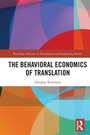
Douglas Robinson
The Behavioral Economics of Translation
Book
08/2024
1st Edition
Routledge
€63.50
Shipment within 10-20 days
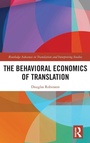
Douglas Robinson
The Behavioral Economics of Translation
Book
11/2022
1st Edition
Routledge
€186.40
Shipment within 10-20 days
Person
Douglas Robinson is Professor of Translation Studies at the Chinese University of Hong Kong, Shenzhen, and author of two dozen books and five dozen articles and book chapters on translation, literature, rhetoric, semiotics, and culture. His recent Routledge books include Critical Translation Studies (2017), Translationality (2017), Priming Translation (2022), and Translation as a Form (2023).
Content
Acknowledgments
Introduction: Stair-Stepped Anti-Idealism
Chapter 1: Agency
Chapter 2: Difference (the Ethics of)
Chapter 3: Eurocentrism (Attitudes Toward)
Chapter 4: Hermeneutics
Chapter 5: Language
Chapter 6: Norms
Chapter 7: Rhetoric
Chapter 8: World Literature
Chapter 9: Conclusion: So What?
References
Index
Introduction: Stair-Stepped Anti-Idealism
Chapter 1: Agency
Chapter 2: Difference (the Ethics of)
Chapter 3: Eurocentrism (Attitudes Toward)
Chapter 4: Hermeneutics
Chapter 5: Language
Chapter 6: Norms
Chapter 7: Rhetoric
Chapter 8: World Literature
Chapter 9: Conclusion: So What?
References
Index
