

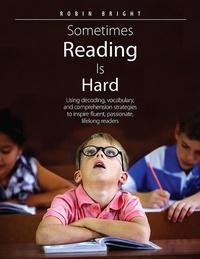
Sometimes Reading Is Hard
Using decoding, vocabulary, and comprehension strategies to inspire fluent, passionate, lifelong readers
Published on 24. August 2021
176 pages
978-1-55138-951-6 (ISBN)
Description

When students say that reading is boring, difficult, overwhelming, or they cannot find a good book, it is almost impossible to sell them on the idea that reading is fun and worthwhile. Sometimes Reading is Hard shows teachers how to develop the skills students need to be successful and how to cultivate passionate, lifelong readers. Classroom vignettes, promising practices, and step-by-step activities illustrate how teachers can weave teaching the skills of reading, decoding, vocabulary, comprehension, and fluency with real reasons to read. When students want to read and they enjoy it, their reading skills improve. With the right motivation, any student can become an enthusiastic reader.
More details
Other editions
Additional editions

Robin Bright
Sometimes Reading is Hard
Using Decoding, Vocabulary, and Comprehension Strategies to Inspire Fluent, Passionate, Lifelong Readers
Book
06/2021
1st Edition
Pembroke Publishing Ltd
€31.00
Article not available at the moment
Content
- Cover
- Title Page
- Copyright Page
- Contents
- Introduction: Setting Off Down the Path
- Learning to Read Is Work
- A Responsibility to Break the Cycle
- Learning How to Teach Reading Is Work
- The Spark for This Book
- What You Will Find in This Book
- Chapter 1: What Do You Mean I Have to Teach Reading?
- The Whole Is Greater Than the Sum of Its Parts
- Underlying Considerations in Teaching Reading
- 1. Sometimes Reading Is Hard
- 2. Structures of Language Support Reading Instruction
- 3. The Components of Reading Need to Be Taught Daily
- 4. Every Teacher Is a Reading Teacher
- 5. Meaningful Relationships Are Key
- 6. Students Need Good Reasons to Read
- 7. Teachers Must Be Readers
- 8. Reading Engagement Leads to the Goal: Capable, Passionate, Lifelong Readers
- 9. Reading Skills and Motivation Factors Are Synergistic
- Chapter 2: Decoding: On the Path to Fluency
- Before Children Read, They Talk
- Learning the Sounds of Language
- Code Breaking
- When Guessing Doesn't Cut It
- Make It Fun
- Is Decoding for Older Readers Too?
- From Talk to Print
- Love at First "Sight"
- The Place for Assessment
- Key Strategies to Help You Teach Decoding
- 1. Lead Guided Reading Groups
- 2. Teach Decoding through Shared Reading
- 3. Inspire Students to Be Word Detectives
- 4. Put Their Names in Lights
- 5. Get Older Students Decoding
- 6. Provide Write-to-Read Activities
- 7. Choose the Right Books
- Chapter 3: Fluency: Teaching How to Recognize Words Automatically
- What Is Reading Fluency?
- Reading Fluency: More than Speed
- Target the Reasons Fluency Is Hard to Achieve
- What Doesn't Work: Round Robin Reading
- What Does Work: Teachers Reading Aloud to Students
- Get Them Reading: Offer Books Tailored to Students' Interests or Just Plain Good Books
- Collaborative Reading Opportunities
- Key Strategies to Help You Teach Fluency
- 1. Get Students Reading to One Another in Groups
- 2. Get Students Reading Together in Pairs
- 3. Stage a Choral Reading
- 4. Stage a Poetry Academy
- 5. Stage Readers Theatre
- 6. Try Tongue Twisters
- 7. Make Time for Independent Reading
- 8. Keep Tabs on Where Your Students Are At
- 9. Practice Retelling with a Story Vine
- Chapter 4: Vocabulary: Teaching How to Build a Library of Words
- The Word-Rich Get Richer, The Word-Poor Get Poorer
- Continual Exposure to Reading
- Which Words to Teach?
- The Role of Dedication in Vocabulary Development
- Vocabulary Instruction in Middle and High School
- Key Strategies to Help You Teach Vocabulary
- 1. Encourage Word Wonder
- 2. Teach Vocabulary through a Teacher Read-Aloud
- 3. Introduce Vocabulary Self-Collection
- 4. Harness Visualization
- 5. Get Students Playing Word Games
- 6. Galvanize a Vocabulary-Growth Mindset
- 7. Preview Vocabulary before Independent Reading
- 8. Build an Interactive Word Wall
- Chapter 5: Comprehension: Teaching How to Construct Meaning from Reading
- Why Comprehension Is Sometimes Hard
- Comprehension: An Interactive Personal Experience
- Creating a Mindset Primed for Comprehension
- Three Stages of Reading: Three Opportunities to Boost Comprehension
- Key Strategies to Help You Teach Comprehension
- 1. Engage Students in Self-Aware, Active Reading
- 2. Teach the Practices of Good Readers
- 3. Teach Text Structures
- 4. Seek Out Mentor Texts
- 5. Organize Book Clubs
- Chapter 6: Sustaining the Journey: How to Inspire Your Students to Love Reading
- The One Book That Changes Everything!
- Key Strategies for Inspiring a Life-Long Relationship with Reading
- 1. Bring Picture Books into Students' Lives
- 2. Provide Diverse Literature
- 3. Use Reading Interest Surveys
- 4. Visit Libraries with Your Students
- 5. Create a Classroom Library
- Bolster the Reading Relationship with Action
- Conclusion: Where Does the Path Lead Now?
- Why We Do It
- Acknowledgements
- References
- Index
