

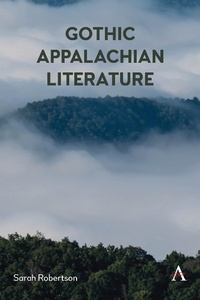
Gothic Appalachian Literature
Published on 1. October 2024
98 pages
978-1-83998-679-6 (ISBN)
Description

Gothic Appalachian Literature examines the ways contemporary Appalachian authors utilize gothic tropes to explore the complex history and contemporary problems of the region, particularly in terms of their representation of economic and environmental concerns. It argues that across Appalachian fiction, the plight of characters to save their homes, land and way of life from the destructive forces of extractive industries brings sharply to bare the histories of colonization and slavery that problematize questions of belonging, ownership and possession.
Robertson extensively considers contemporary manifestations of the gothic in Appalachian literature, arguing that gothic tropes abound in fiction that focuses on the impacts of extractive industries that connect this micro-region with other parts of the Global North and Global South where the devastating impacts of extractive industries are also experienced socially, economically and environmentally.
Robertson extensively considers contemporary manifestations of the gothic in Appalachian literature, arguing that gothic tropes abound in fiction that focuses on the impacts of extractive industries that connect this micro-region with other parts of the Global North and Global South where the devastating impacts of extractive industries are also experienced socially, economically and environmentally.
Reviews / Votes
"Robertson's elegant, carefully researched study explores the diversity and complexity of Appalachia, the most stereotyped and "othered" region of America, as revealed in its gothic literature. Focusing especially on recent decades, Robertson shows the gothic horrors created through extraction of the region's resources, and the resulting legacy of despair." - Charles L. Crow, Professor Emeritus of English, Bowling Green State University "A thoroughly sourced and nuanced examination of the ways that Gothic Appalachian literature has provided fertile ground for authors and readers to explore regional and national crises, race, identity, climate change, extractive capitalism, and belongingness." - Dr. Elizabeth Catte, Historian and Writer of Compact Non-Fiction "Sarah Robertson's Gothic Appalachian Literature takes the Southern Gothic into exciting new territory. This book offers an apt ecological, social, and narrative recoding of Appalachia in literature with a watchmaker's style and pacing. Its larger social and ecological implications are overt, up front, and much needed in Southern Gothic criticism." - Lee Rozelle Hugh, The University of Montevallo "Appalachia is a region of lost futures, inscrutable pasts, and a present that exists in an increasingly precarious state of change. Sarah Robertson's Gothic Appalachian Literature will prove a worthy guide and companion to anyone who wishes to explore this remote region of the landscape and of the mind." - Jesse Graves, East Tennessee State University, author of Merciful Days and Tennessee Landscape with Blighted Pine "This volume represents a genuine departure. With its focus on a wide variety of twenty-first-century fiction and poetry, including marginalized voices and authors not usually labeled "Gothic," the text is completely up to date. Robertson demonstrates understanding of and empathy for the unfortunate role Appalachia has played and continues to play in the popular imagination. This beautifully organized volume places the emphasis on the authors and their creations as the subjects of their own stories, rather than as the objects of the horrified gaze of outsiders, demonstrating with great insight that the people of Appalachia are not monstrous villains who prey upon visitors from the city but are instead the victims of those city dwellers who have exploited the natural and human resources of the mountains for centuries."- Faye Ringel, PhD, Professor Emerita of Humanities, U.S. Coast Guard AcademyMore details
Series
Language
English
Place of publication
London
United Kingdom
Target group
Professional and scholarly
ISBN-13
978-1-83998-679-6 (9781839986796)
Copyright in bibliographic data and cover images is held by Nielsen Book Services Limited or by the publishers or by their respective licensors: all rights reserved.
Schweitzer Classification
Other editions
Additional editions
Sarah Robertson
Gothic Appalachian Literature
Book
10/2024
Anthem Press
€30.50
Shipment within 3-4 weeks
Person
Dr Sarah Robertson is an Associate Professor in English Literature at UWE Bristol.
Content
Introduction; 1. War and Diseases of Despair in Gothic Appalachian Literature; 2. The Extractive Logic and the Climate Crisis in Gothic Appalachian Literature; 3. Race and LGBTQ+ Rights in Gothic Appalachian Literature; Conclusion; Works Cited; Index
