

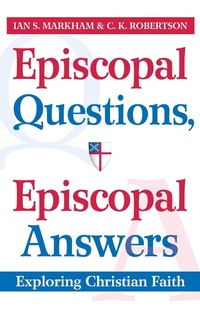
Episcopal Questions, Episcopal Answers
Description

A clear, welcoming introduction to The Episcopal Church, written for seekers, newcomers, and anyone curious.
Ideal for inquirers, newcomers, confirmation classes, and both youth and adult study groups, this book invites readers into the Episcopal tradition without presuming prior knowledge. Its clear question-and-answer structure keeps learning accessible and unintimidating, offering concise, thoughtful responses that fit easily into busy lives. Beneath that simplicity, however, lies a careful engagement with the beliefs, practices, and traditions that define Episcopal faith, marrying clarity with real theological depth.
Readers will find honest, accessible responses to many of the questions people most often ask, including: What do Episcopalians believe about the Bible? Why does the Church practice infant baptism? Why does God permit evil and suffering? What are the sacraments, and why do they matter? Is it acceptable for a bishop to question the Virgin Birth? Why is the Book of Common Prayer so central to Episcopal identity? How does the Prayer Book relate to Scripture? What is the Anglican Communion? How did The Episcopal Church come to be, and how are decisions made within it?
Whether used for personal reading or group discussion, this book offers a thoughtful, open-handed guide to the Episcopal tradition-one that encourages questions, respects doubt, and invites readers into a richer understanding of faith.
More details
Other editions
Additional editions
Persons
C. K. Robertson, PhD, DD, is Canon to the Presiding Bishop of the Episcopal Church and Distinguished Visiting Professor at the General Theological Seminary. His books include Transforming Stewardship, Conversations with Scripture: Acts of the Apostles, and the DVD series, Hazardous Saints, all via Church Publishing. He earned the PhD from the University of Durham, Durham, England. He lives in Oviedo, Florida
Content
- Cover Page
- Title
- Copyright
- Dedication
- Table of Contents
- Acknowledgments
- Introduction
- SECTION ONE: EPISCOPAL BELIEFS
- Is there any evidence that God exists?
- What is God like?
- Can I have doubts and still be an Episcopalian?
- Why does God allow evil and suffering?
- Can I believe in evolution and be an Episcopalian?
- How do Episcopalians respond to the claim that science has made religion redundant?
- How do we approach the creeds?
- Why do Episcopalians believe in the Trinity?
- Is it acceptable for a bishop to question fundamental doctrines like the Virgin Birth?
- What do Episcopalians believe about Jesus?
- What do Episcopalians believe about the Holy Spirit?
- How do Episcopalians decide what is right and true in theology?
- Did Jesus rise from the dead?
- Did Jesus ascend into heaven?
- Is prayer important?
- Does prayer work?
- What is heaven like? Is there any evidence for life after death?
- Do Episcopalians believe in hell?
- What does it mean to say that humanity is made in the "image of God"?
- What is sin? Do Episcopalians believe in original sin?
- What is the Episcopalian view of humanity? Are people basically good or bad?
- Do Episcopalians believe in the atonement?
- What do Episcopalians believe about the end of the world?
- SECTION TWO: ETHICS
- How do Episcopalians decide what is right and wrong in ethics?
- Do Episcopalians allow birth control?
- Why is marriage important in the Episcopal Church?
- What does the Episcopal Church think about divorce and remarriage?
- Where does the Episcopal Church stand on homosexuality?
- Why does social justice matter so much to the Episcopal Church?
- Where does the Episcopal Church stand on issues like abortion and euthanasia?
- Can Christians fight in a war?
- Where do Episcopalians stand on the environment?
- Why am I obligated to get involved in civic society?
- What should be my attitude toward money and wealth?
- SECTION THREE: CHURCH ARCHITECTURE AND VESTMENTS
- Why can't you just worship God in a big warehouse?
- What are the various parts of an Episcopal Church called?
- Why do all the participants in the service vest?
- SECTION FOUR: SCRIPTURE
- How important is the Bible to Episcopalians?
- What does it mean to say that the Bible is the Word of God?
- How many books are in an Episcopalian's Bible?
- Do we take the Bible literally?
- What about the difficult parts of the Bible?
- Do Episcopalians study the Bible?
- What versions of the Bible do Episcopalians accept and use?
- SECTION FIVE: SACRAMENTS
- What are sacraments?
- Why is Baptism so important?
- Why do Episcopalians practice infant Baptism?
- What do Episcopalians think about private confession?
- What is the point of confirmation?
- Who is allowed to receive Communion in the Episcopal Church?
- What are the other sacramental rites and pastoral services and why do they matter?
- SECTION SIX: BOOK OF COMMON PRAYER
- How was the Prayer Book formed?
- Why are there different versions of the Prayer Book in different countries?
- Why is the Prayer Book so important to Episcopalians?
- How does the liturgy work in a typical service of Holy Eucharist?
- What is the relationship between the Bible and the Prayer Book?
- How is the current Prayer Book arranged?
- What is the lectionary, and how is it used in worship services and private study?
- What is The Book of Occasional Services and how does it relate to the Prayer Book?
- What about Enriching Our Worship and Holy Women, Holy Men?
- SECTION SEVEN: THE CHURCH
- How did the Episcopal Church come to be?
- Why is the Church now referred to as TEC instead of ECUSA?
- How are decisions made in the Church?
- What is the significance of the Baptismal Covenant for the Church?
- How do I become a member of the Episcopal Church?
- What are the roles of bishops, priests, and deacons in the Church?
- What is the Episcopal position on the ordination of women?
- How do Episcopalians relate to other Christian churches?
- How do Episcopalians relate to other religions?
- SECTION EIGHT: ANGLICAN COMMUNION
- What is the Anglican Communion?
- Who is the archbishop of Canterbury and how do Episcopalians view him?
- What is the Lambeth Conference of bishops and how did it come about?
- What is the significance of the Lambeth Conference today?
- What is a primate? Why is ours called a presiding bishop, not an archbishop?
- How do Episcopalians connect globally with other Anglicans?
- Are conservative Christians still welcome in the Episcopal Church?
- SECTION NINE: AND FINALLY .
- What is the future of the Episcopal Church?
- Additional Reading
