

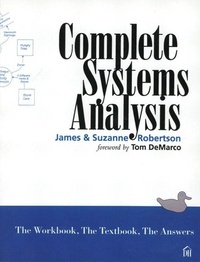
Complete Systems Analysis
The Workbook, the Textbook, the Answers
1st Edition
Published on 12. July 2013
625 pages
978-0-13-349231-6 (ISBN)
Description

This is the digital version of the printed book (Copyright (c) 1998, 1994).
In a fundamentally new approach, Complete Systems Analysis teaches everything you need to know about analyzing systems: the methods, the models, the techniques, and more.
A definitive text on modern systems analysis techniques is combined with an extensive case study to give readers hands-on experience in completing an actual analysis project.
Readers proceed through each step of a full-scale analysis project, analyzing the complex requirements of a television station's airtime programming department. Each phase of the case study and each exercise in the textbook section is thoroughly explained in separate review and answer sections.
An innovative Trail Guide system-inspired by the difficulty levels marked on ski trails-encourages readers to follow a sequence that suits their skill level. Beginners follow the full trail while experienced analysts fill in gaps in their training, refresh their understanding of key concepts, and practice their skills. Managers review key concepts but can skip the detailed work with models.
The book shows how analysis is used for object-oriented implementation, and how event-response data flow models and entity-relationship data models are complementary, not competing, models.
Complete Systems Analysis adapts to the reader's needs and provides an appropriate learning path for the beginner, with a more direct route for experienced analysts wanting to make better use of today's techniques. Since its initial publication in 1994 as a two-volume set in hardcover, this highly acclaimed text-released in 1998 as a single, softcover volume-has served as a course text in classes throughout the world.
Topics include
Analysis Models
Data Flow Diagrams
Data Viewpoint
Data Models
Leveled Data Flow Diagrams
Current Physical Viewpoint
Building the Data Dictionary
Strategy: Focusing on the Essentials
Identifying Events
Modeling an Event Response
Writing Mini Specifications
CRUD Check
Modeling New Requirements
New Physical Viewpoint
Object-Oriented Viewpoint
Strategy: Toward Implementation
In a fundamentally new approach, Complete Systems Analysis teaches everything you need to know about analyzing systems: the methods, the models, the techniques, and more.
A definitive text on modern systems analysis techniques is combined with an extensive case study to give readers hands-on experience in completing an actual analysis project.
Readers proceed through each step of a full-scale analysis project, analyzing the complex requirements of a television station's airtime programming department. Each phase of the case study and each exercise in the textbook section is thoroughly explained in separate review and answer sections.
An innovative Trail Guide system-inspired by the difficulty levels marked on ski trails-encourages readers to follow a sequence that suits their skill level. Beginners follow the full trail while experienced analysts fill in gaps in their training, refresh their understanding of key concepts, and practice their skills. Managers review key concepts but can skip the detailed work with models.
The book shows how analysis is used for object-oriented implementation, and how event-response data flow models and entity-relationship data models are complementary, not competing, models.
Complete Systems Analysis adapts to the reader's needs and provides an appropriate learning path for the beginner, with a more direct route for experienced analysts wanting to make better use of today's techniques. Since its initial publication in 1994 as a two-volume set in hardcover, this highly acclaimed text-released in 1998 as a single, softcover volume-has served as a course text in classes throughout the world.
Topics include
Analysis Models
Data Flow Diagrams
Data Viewpoint
Data Models
Leveled Data Flow Diagrams
Current Physical Viewpoint
Building the Data Dictionary
Strategy: Focusing on the Essentials
Identifying Events
Modeling an Event Response
Writing Mini Specifications
CRUD Check
Modeling New Requirements
New Physical Viewpoint
Object-Oriented Viewpoint
Strategy: Toward Implementation
More details
Series
Edition
1. Auflage
Language
English
Place of publication
Boston
United States
Publishing group
Pearson Education (US)
Target group
College/higher education
File size
38,90 MB
ISBN-13
978-0-13-349231-6 (9780133492316)
Copyright in bibliographic data and cover images is held by Nielsen Book Services Limited or by the publishers or by their respective licensors: all rights reserved.
Schweitzer Classification
Persons
Suzanne Robertson and James Robertson have, over many years, helped hundreds of companies improve their requirements techniques and move into the fast lane of system development. Their courses and seminars on requirements, analysis, and design are widely praised for their innovative approach. The Robertsons are London-based principals of The Atlantic Systems Guild, an international consultancy specializing in the human dimensions of complex system building. They are also the coauthors of Mastering the Requirements Process, Third Edition (Addison-Wesley, 2012), and are the developers of the Volere requirements techniques.
Content
>Acknowledgments ix
Foreword xi
Section 1: The Project 1
Chapter 1.l: Your Project Starts Here 3
Chapter 1.2: Start with the Context 15
Chapter 1.3: What About the Business Data? 20
Chapter 1.4: The Piccadilly Organization 23
Chapter 1.5: Building the Data Dictionary 33
Chapter 1.6: Selling the Airtime 39
Chapter 1.7: Strategy: Focusing on the Essentials 45
Chapter 1.8: Identifying Events 49
Chapter 1.9: Modeling an Event Response 53
Chapter 1.10: Refining an Event Response 55
Chapter 1.11: Writing Mini Specifications 58
Chapter 1.12: Another Event Response 60
Chapter 1.13: More Events 65
Chapter 1.14: Some New Requirements 69
Chapter 1.15: CRUD Check 72
Chapter 1.16: Strategy: Toward Implementation 75
Chapter 1.17: Piccadilly's New Environment 79
Chapter 1.18: Analysis Strategy 91
Section 2: The Textbook 103
Chapter 2.1: Analysis Models 105
Chapter 2.2: Data Flow Diagrams 113
Chapter 2.3: A Variety of Viewpoints 130
Chapter 2.4: Data Viewpoint 138
Chapter 2.5: Data Models 145
Chapter 2.6: More on Data Flow Diagrams 174
Chapter 2.7: Leveled Data Flow Diagrams 193
Chapter 2.8: Current Physical Viewpoint 209
Chapter 2.9: Data Dictionary 220
Chapter 2.10: Essential Viewpoint 235
Chapter 2.11: Event-Response Models 245
Chapter 2.12: Mini Specifications 278
Chapter 2.13: Modeling New Requirements 299
Chapter 2.14: New Physical Viewpoint 307
Chapter 2.15: Object-Oriented Viewpoint 332
Section 3: Project Reviews 345
Chapter 3.1: Review: Start with the Context 347
Chapter 3.2: Review: What About the Business Data? 353
Chapter 3.3: Review: The Piccadilly Organization 369
Chapter 3.4: Review: Building the Data Dictionary 377
Chapter 3.5: Review: Selling the Airtime 387
Chapter 3.6: Complete Current Physical Model 394
Chapter 3.7: Review: Identifying Events 431
Chapter 3.8: Review: Modeling an Event Response 438
Chapter 3.9: Review: Refining an Event Response 441
Chapter 3.10: Review: Writing Mini Specifications 447
Chapter 3.11: Review: Another Event Response 451
Chapter 3.12: Review: More Events 463
Chapter 3.13: Review: Some New Requirements 516
Chapter 3.14: Review: CRUD Check 521
Section 4: Textbook Solutions 529
Chapter 4.1: Solutions: Analysis Models 531
Chapter 4.2: Solutions: Data Flow Diagrams 533
Chapter 4.3: Solutions: Data Models 540
Chapter 4.4: Solutions: More on Data Flow Diagrams 544
Chapter 4.5: Solutions: Leveled Data Flow Diagrams 552
Chapter 4.6: Solutions: Data Dictionary 555
Chapter 4.7: Solutions: Event-Response Models 561
Chapter 4.8: Solutions: Mini Specifications 572
Bibliography 575
Glossary 582
Index 593
Trail Guide 611
Foreword xi
Section 1: The Project 1
Chapter 1.l: Your Project Starts Here 3
Chapter 1.2: Start with the Context 15
Chapter 1.3: What About the Business Data? 20
Chapter 1.4: The Piccadilly Organization 23
Chapter 1.5: Building the Data Dictionary 33
Chapter 1.6: Selling the Airtime 39
Chapter 1.7: Strategy: Focusing on the Essentials 45
Chapter 1.8: Identifying Events 49
Chapter 1.9: Modeling an Event Response 53
Chapter 1.10: Refining an Event Response 55
Chapter 1.11: Writing Mini Specifications 58
Chapter 1.12: Another Event Response 60
Chapter 1.13: More Events 65
Chapter 1.14: Some New Requirements 69
Chapter 1.15: CRUD Check 72
Chapter 1.16: Strategy: Toward Implementation 75
Chapter 1.17: Piccadilly's New Environment 79
Chapter 1.18: Analysis Strategy 91
Section 2: The Textbook 103
Chapter 2.1: Analysis Models 105
Chapter 2.2: Data Flow Diagrams 113
Chapter 2.3: A Variety of Viewpoints 130
Chapter 2.4: Data Viewpoint 138
Chapter 2.5: Data Models 145
Chapter 2.6: More on Data Flow Diagrams 174
Chapter 2.7: Leveled Data Flow Diagrams 193
Chapter 2.8: Current Physical Viewpoint 209
Chapter 2.9: Data Dictionary 220
Chapter 2.10: Essential Viewpoint 235
Chapter 2.11: Event-Response Models 245
Chapter 2.12: Mini Specifications 278
Chapter 2.13: Modeling New Requirements 299
Chapter 2.14: New Physical Viewpoint 307
Chapter 2.15: Object-Oriented Viewpoint 332
Section 3: Project Reviews 345
Chapter 3.1: Review: Start with the Context 347
Chapter 3.2: Review: What About the Business Data? 353
Chapter 3.3: Review: The Piccadilly Organization 369
Chapter 3.4: Review: Building the Data Dictionary 377
Chapter 3.5: Review: Selling the Airtime 387
Chapter 3.6: Complete Current Physical Model 394
Chapter 3.7: Review: Identifying Events 431
Chapter 3.8: Review: Modeling an Event Response 438
Chapter 3.9: Review: Refining an Event Response 441
Chapter 3.10: Review: Writing Mini Specifications 447
Chapter 3.11: Review: Another Event Response 451
Chapter 3.12: Review: More Events 463
Chapter 3.13: Review: Some New Requirements 516
Chapter 3.14: Review: CRUD Check 521
Section 4: Textbook Solutions 529
Chapter 4.1: Solutions: Analysis Models 531
Chapter 4.2: Solutions: Data Flow Diagrams 533
Chapter 4.3: Solutions: Data Models 540
Chapter 4.4: Solutions: More on Data Flow Diagrams 544
Chapter 4.5: Solutions: Leveled Data Flow Diagrams 552
Chapter 4.6: Solutions: Data Dictionary 555
Chapter 4.7: Solutions: Event-Response Models 561
Chapter 4.8: Solutions: Mini Specifications 572
Bibliography 575
Glossary 582
Index 593
Trail Guide 611
