

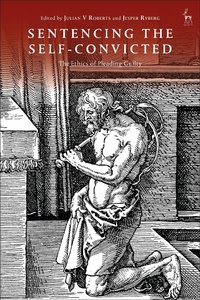
Sentencing the Self-Convicted
The Ethics of Pleading Guilty
1st Edition
Published on 23. February 2023
320 pages
978-1-5099-5745-3 (ISBN)
Description

This book addresses the fundamental ethical and legal aspects, penal consequences, and social context arising from a citizen's acceptance of guilt. The focus is upon sentencing people who have pleaded guilty; in short, post-adjudication, rather than issues arising from discussions in the pretrial phase of the criminal process.
The vast majority of defendants across all common law jurisdictions plead guilty and as a result receive a reduced sentence. Concessions by a defendant attract more lenient State punishment in all western legal systems. The concession is significant: At a stroke, a guilty plea relieves the State of the burden of proving the defendant's guilt beyond a reasonable doubt, and in open court. Plea-based sentencing has become even more visible in recent years.
The book provides insightful commentary on the following questions:
- If an individual voluntarily accepts guilt, should the State receive this plea without further investigation or any disinterested adjudication?
- Is it ethically acceptable to allow suspects and defendants, to self-convict in this manner, without independent confirmation and evidence to support a conviction?
- If it is acceptable, what is the appropriate State response to such offenders?
- If the defendant is detained pretrial, the ability to secure release in return for a plea may be particularly enticing. Might it be too enticing, resulting in wrongful convictions?
The vast majority of defendants across all common law jurisdictions plead guilty and as a result receive a reduced sentence. Concessions by a defendant attract more lenient State punishment in all western legal systems. The concession is significant: At a stroke, a guilty plea relieves the State of the burden of proving the defendant's guilt beyond a reasonable doubt, and in open court. Plea-based sentencing has become even more visible in recent years.
The book provides insightful commentary on the following questions:
- If an individual voluntarily accepts guilt, should the State receive this plea without further investigation or any disinterested adjudication?
- Is it ethically acceptable to allow suspects and defendants, to self-convict in this manner, without independent confirmation and evidence to support a conviction?
- If it is acceptable, what is the appropriate State response to such offenders?
- If the defendant is detained pretrial, the ability to secure release in return for a plea may be particularly enticing. Might it be too enticing, resulting in wrongful convictions?
More details
Edition
1. Auflage
Language
English
Place of publication
London
United Kingdom
Publishing group
Bloomsbury Publishing PLC
Target group
Professional and scholarly
ISBN-13
978-1-5099-5745-3 (9781509957453)
Copyright in bibliographic data and cover images is held by Nielsen Book Services Limited or by the publishers or by their respective licensors: all rights reserved.
Schweitzer Classification
Other editions
Additional editions
Book
08/2024
Hart Publishing
€75.70
Shipment within 15-20 days
Book
02/2023
Hart Publishing
€133.70
Shipment within 15-20 days
Persons
Julian V Roberts is Professor of Criminology at the University of Oxford, UK.
Jesper Ryberg is Professor of Ethics and Philosophy of Law at Roskilde University, Denmark.
Jesper Ryberg is Professor of Ethics and Philosophy of Law at Roskilde University, Denmark.
Content
1. The Ethics of Pleading Guilty and the State Response to Self-convicting Offenders
Julian V Roberts (University of Oxford, UK) and Jesper Ryberg (Roskilde University, Denmark)
2. When Should We Plead Guilty?
RA Duff (University of Stirling, UK)
3. Guilty Plea, Sentencing Discounts and Retributivism
Jesper Ryberg (Roskilde University, Denmark)
4. Guilty Pleas, Sentencing Reductions, and Non-punishment of the Innocent
Zachary Hoskins (University of Nottingham, UK)
5. Rewarding Virtue: An Ethical Defence of Plea-based Sentence Reductions
Julian V Roberts (University of Oxford, UK) and Netanel Dagan (Hebrew University, Israel)
6. The Limited Moral Relevance of Pleas and Verdicts
Adam Kolber (Brooklyn Law School, USA)
7. The Guilty Plea and Self-Respect
Gabrielle Watson (University of Oxford, UK)
8. Why Should Guilty Pleas Matter?
Thom Brooks (Durham University, UK)
9. Victim-related Assumptions Underlying Plea-based Sentence Reductions: A Communicative and Experiential Framework
Marie Manikis (McGill University, Canada)
10. Plea-Based Sentence Reductions: Legal Assumptions and Empirical Realities
Rebecca Helm (University of Exeter, UK)
11. Plea Negotiations and Mitigation
Mike Hough (Birkbeck, University of London, UK) and Jessica Jacobson (Birkbeck, University of London, UK)
12. Guilty Pleas, Fools' Bargains and Wonderful Justice
Leo Zaibert (Union College, USA)
Julian V Roberts (University of Oxford, UK) and Jesper Ryberg (Roskilde University, Denmark)
2. When Should We Plead Guilty?
RA Duff (University of Stirling, UK)
3. Guilty Plea, Sentencing Discounts and Retributivism
Jesper Ryberg (Roskilde University, Denmark)
4. Guilty Pleas, Sentencing Reductions, and Non-punishment of the Innocent
Zachary Hoskins (University of Nottingham, UK)
5. Rewarding Virtue: An Ethical Defence of Plea-based Sentence Reductions
Julian V Roberts (University of Oxford, UK) and Netanel Dagan (Hebrew University, Israel)
6. The Limited Moral Relevance of Pleas and Verdicts
Adam Kolber (Brooklyn Law School, USA)
7. The Guilty Plea and Self-Respect
Gabrielle Watson (University of Oxford, UK)
8. Why Should Guilty Pleas Matter?
Thom Brooks (Durham University, UK)
9. Victim-related Assumptions Underlying Plea-based Sentence Reductions: A Communicative and Experiential Framework
Marie Manikis (McGill University, Canada)
10. Plea-Based Sentence Reductions: Legal Assumptions and Empirical Realities
Rebecca Helm (University of Exeter, UK)
11. Plea Negotiations and Mitigation
Mike Hough (Birkbeck, University of London, UK) and Jessica Jacobson (Birkbeck, University of London, UK)
12. Guilty Pleas, Fools' Bargains and Wonderful Justice
Leo Zaibert (Union College, USA)
