

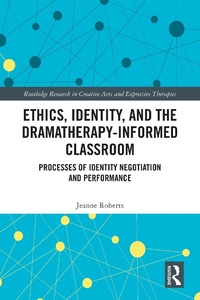
Ethics, Identity, and the Dramatherapy-informed Classroom
Processes of Identity Negotiation and Performance
1st Edition
Published on 29. July 2024
164 pages
978-1-040-10724-9 (ISBN)
Description

Using the drama classroom to shape an active, student-centred space and foster a new perspective for understanding the dramatherapeutic change-process, this book explores the processes that underpin the ways young people negotiate and perform their identities as ethical people.
Arguing for the retention of process-based exploratory drama on the curriculum, chapters critique the impact of neoliberalism and managerialism on the development of young people's ethics and values. Using concepts such as aesthetic distance, encoding, the role of audience and witness, and the contrast between individual, multi, and group roles, to enable students to develop as thinking, reflecting people, the book argues that dramatherapy should not be limited to clinical settings, disconnected from classrooms and the pedagogical contributions that it can make. By absorbing dramatherapy into the broader field of education, an expanded understanding of the concept of the managed classroom space can be gained, based on an understanding of the multiple embodied psychosocial relational processes at play in the drama classroom.
This innately multidisciplinary book will be of use to scholars, researchers, and postgraduate students studying drama education, dramatherapy, and curriculum studies more broadly. Drama teachers and educators will also find this volume of use.
Arguing for the retention of process-based exploratory drama on the curriculum, chapters critique the impact of neoliberalism and managerialism on the development of young people's ethics and values. Using concepts such as aesthetic distance, encoding, the role of audience and witness, and the contrast between individual, multi, and group roles, to enable students to develop as thinking, reflecting people, the book argues that dramatherapy should not be limited to clinical settings, disconnected from classrooms and the pedagogical contributions that it can make. By absorbing dramatherapy into the broader field of education, an expanded understanding of the concept of the managed classroom space can be gained, based on an understanding of the multiple embodied psychosocial relational processes at play in the drama classroom.
This innately multidisciplinary book will be of use to scholars, researchers, and postgraduate students studying drama education, dramatherapy, and curriculum studies more broadly. Drama teachers and educators will also find this volume of use.
Reviews / Votes
'Drama classrooms can offer students critical opportunities to re-think and re-enact themselves as social beings and citizens. Dramatherapy, integrated into mainstream classes, offers long-term exploration of values and identities rather than short-term cultivation of marketable skills. Jeanne Roberts helps us think our way out of the overly-managed classroom and into a space of potential transformation. This splendid adventure in creative, student-centered, drama-based classroom education will appeal to teachers at all levels of education who long for more active and enjoyable ways to engage students and open up their worlds.'Dr Kathy E. Ferguson teaches Political Science and Women's, Gender, and Sexuality Studies at the University of Hawai'i at Manoa.
'This is a book for all those educators, policy makers, and students of education who are interested in educating for children's self-actualisation and critical agency. It powerfully highlights the role of dramatherapeutically informed drama for promoting the embodied, psychosocial, and relational identity work which is fundamental to enabling children in this. Rooted in Roberts' empirical research and over thirty years' practice experience, the book offers searing critique of neoliberalised narrowing of learning, and evidences new possibilities enacted in current dramatherapeutically informed classrooms. The book makes a passionate, rigorously articulated case for the importance of relationality and embodiment in learning and the development of a dramatherapeutic sensibility in drama teaching practice.'
Dr Shona Hunter, Leeds Beckett University, Author of "Power, Politics and the Emotions". 'Drama classrooms can offer students critical opportunities to re-think and re-enact themselves as social beings and citizens. Dramatherapy, integrated into mainstream classes, offers long-term exploration of values and identities rather than short-term cultivation of marketable skills. Jeanne Roberts helps us think our way out of the overly-managed classroom and into a space of potential transformation. This splendid adventure in creative, student-centered, drama-based classroom education will appeal to teachers at all levels of education who long for more active and enjoyable ways to engage students and open up their worlds'.
Dr Kathy E. Ferguson, University of Hawai'i, Manoa
'This is a book for all those educators, policy makers, and students of education who are interested in educating for children's self-actualisation and critical agency. It powerfully highlights the role of dramatherapeutically informed drama for promoting the embodied, psychosocial, and relational identity-work which is fundamental to enabling children in this. Rooted in Roberts' empirical research and over thirty years' practice experience, the book offers searing critique of neoliberalised narrowing of learning, and evidences new possibilities enacted in current dramatherapeutically informed classrooms. The book makes a passionate, rigorously articulated case for the importance of relationality and embodiment in learning and the development of a dramatherapeutic sensibility in drama-teaching practice'.
Dr Shona Hunter, Leeds Beckett University, Author of Power, Politics and the Emotions
More details
Series
Edition
1. Auflage
Language
English
Place of publication
London
United Kingdom
Publishing group
Taylor & Francis Ltd
Target group
College/higher education
Professional and scholarly
Illustrations
13 Line drawings, black and white; 1 Halftones, black and white; 14 Illustrations, black and white
ISBN-13
978-1-040-10724-9 (9781040107249)
Copyright in bibliographic data and cover images is held by Nielsen Book Services Limited or by the publishers or by their respective licensors: all rights reserved.
Schweitzer Classification
Other editions
Additional editions
Jeanne Roberts
Ethics, Identity, and the Dramatherapy-informed Classroom
Processes of Identity Negotiation and Performance
Book
approx. 06/2026
1st Edition
Routledge
€58.00
Not yet published

Jeanne Roberts
Ethics, Identity, and the Dramatherapy-Informed Classroom
Processes of Identity Negotiation and Performance
Book
08/2024
Routledge
Unfortunately, price unknown
Available (delivery time upon request)
Jeanne Roberts
Ethics, Identity, and the Dramatherapy-informed Classroom
Processes of Identity Negotiation and Performance
Book
07/2024
1st Edition
Routledge
€207.10
Shipment within 10-20 days
Person
Jeanne Roberts worked as head of drama in secondary schools for over 30 years in the UK and the Crown Dependencies. She received her doctorate from Leeds Beckett University, UK, and is a full member of the British Association of Dramatherapists (BADth).
Content
Chapter 1: Introduction
Chapter 2: Resisting the Neoliberal Binary
Chapter 3: The Situated Mindbody: Embodied Psychosocial Relationality
Chapter 4: Bridging the Theory/Practice Divide: What Is Actually Going On Inside the Classroom and How Do We Know?
Chapter 5: Group Drama: Trust the Process
Chapter 6: Functional-, Fictional-, and Relational-Roles
Chapter 7: The Choices I Make as Teacher
Chapter 8: Conclusions: Negotiating Change in the Overlaps and the Spaces In-between
Chapter 2: Resisting the Neoliberal Binary
Chapter 3: The Situated Mindbody: Embodied Psychosocial Relationality
Chapter 4: Bridging the Theory/Practice Divide: What Is Actually Going On Inside the Classroom and How Do We Know?
Chapter 5: Group Drama: Trust the Process
Chapter 6: Functional-, Fictional-, and Relational-Roles
Chapter 7: The Choices I Make as Teacher
Chapter 8: Conclusions: Negotiating Change in the Overlaps and the Spaces In-between
