

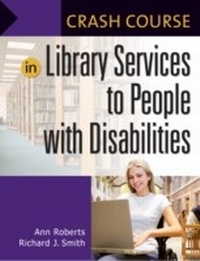
Crash Course in Library Services to People with Disabilities
1st Edition
Published on 23. March 2010
176 pages
978-1-61069-056-0 (ISBN)
Description

This book helps libraries identify and implement new ways to serve their physically or mentally disabled patients.
Authors Ann Roberts and Dr. Richard Smith work at the state level with persons with disabilities. They find that very few librarians feel comfortable with providing services addressed to the needs of the disabled, yet those who do offer services and programs other libraries can adopt and adapt.
Crash Course in Library Services to People with Disabilities will help librarians get up to speed in understanding disabled persons and what they can do to make library premises and holdings more accessible to them. It provides basic information on the different types of mental and physical disabilities a librarian might encounter, then offers a range of exemplary policies, services, and programs for people with disabilities-efforts that are in place and working across the country.
Authors Ann Roberts and Dr. Richard Smith work at the state level with persons with disabilities. They find that very few librarians feel comfortable with providing services addressed to the needs of the disabled, yet those who do offer services and programs other libraries can adopt and adapt.
Crash Course in Library Services to People with Disabilities will help librarians get up to speed in understanding disabled persons and what they can do to make library premises and holdings more accessible to them. It provides basic information on the different types of mental and physical disabilities a librarian might encounter, then offers a range of exemplary policies, services, and programs for people with disabilities-efforts that are in place and working across the country.
More details
Series
Edition
1. Auflage
Language
English
Place of publication
New York
United States
Publishing group
Bloomsbury Publishing Plc
Target group
Interest Age: From 7 to 17 years
ISBN-13
978-1-61069-056-0 (9781610690560)
Copyright in bibliographic data and cover images is held by Nielsen Book Services Limited or by the publishers or by their respective licensors: all rights reserved.
Schweitzer Classification
Other editions
Additional editions
Ann Roberts | Richard J. Smith
Crash Course in Library Services to People with Disabilities
Book
03/2010
Libraries Unlimited Inc
€52.80
Shipment within 3-4 weeks
Persons
Ann Roberts is adult services consultant for Missouri State Library, Jefferson City, MO.
Richard J. Smith, MLS, PhD, is the chief of the Network Division at the National Library Service for the Blind and Physically Handicapped (NLS) in the Library of Congress.
Richard J. Smith, MLS, PhD, is the chief of the Network Division at the National Library Service for the Blind and Physically Handicapped (NLS) in the Library of Congress.
Content
A Note from the Editor
Introduction
Chapter 1: Taking Stock
American Library Association: Library Services for People with Disabilities Policy
Policy Statements and the Request for Accommodation
Americans with Disabilities Act Compliance Policy
Statement of Policy
Amesbury Public Library
Requests for Accommodations for Library Programs
Reasonable Accommodation Request Form
Where to Begin
The DO-IT Center
Issues to Consider
Legal Issues
Building Access and Environment
Library Staff
Library Services
Adaptive Technology for Computers
Electronic Resources
Helpful Communication Hints
Other Accommodations
Getting in on the Ground Floor
Disabled or Dislabeled?
Conclusion
Chapter 2: Leading by Example
The Numbers
The Decennial Census Long Form
Know Your Resources
Marketing Your Library's Service to Persons with Disabilities
Perfect Partners: A Special Needs Lending Library
In-Home Library Services
Getting Started with In-Home Library Service
Chelsea District Library
The Right Person for the Job
Skills Development
Security Issues
On the Security Flip Side
Protection of Children, the Elderly, and Individuals with Disabilities
Pre-employment or Volunteer Screening
State Laws
Programming
Art Abilities: Beauty in Differences
Shake Things Up: Gaming for All
One-Switch or Retro Games
Wii-Habilitation
Other Suggestions
Conclusions
Chapter 3: Assistive Technology and Total Access
The Alliance for Technology Access
Communications
Minimum Requirements for Effective Communication
Facility
Accessibility to Library Services and Programs
Technology
Starting Goals
Web Site
Starting Goals
Testing for Web Accessibility
Introduction to Web Accessibility
A Pragmatic Approach
Common Assistive Technologies in Libraries
The Association of Assistive Technology Programs
Conclusion
Chapter 4: Library Services to Baby Boomers and Older Adults
Transforming Life after 50
Realities
The Physical Changes
Guidelines for Library and Information Services to Older Adults
Computer Training for Older Adults
Older Adults and Web 2.0
Senior-Friendly Web Sites
Blogs
Gaming ... Again
Electronic Games
Electronic Brain Games
We Like to Play ... Wii
Academic Libraries and Wii
Health Literacy
What Is Health Literacy?
The NAALS Report
Savvy Senior Health
Programming Ideas to Improve Physical and Mental Health in Seniors
Book Discussion Groups
Choosing the Books
Discussion Preparation
Personal Memoir Writing
Memory Lane
The NLS and Library Services to the Blind and Physically Handicapped
Books for the Adult Blind
Books for the Blind Division
Web-Braille
Eligibility of Blind and Other Physically Handicapped Persons for Loan of Library Materials
The 102 Talking-Book Club (Ten Squared Club)
Braille and Audio Reading Download (BARD)
Free Recorded Literature Online
Conclusion
Chapter 5: Library Services to Persons with Mental and Learning Disabilities
Mental Illness and Homelessness
Deinstitutionalization
Library Services to the Homeless
Library Policies That Affect the Homeless
Sleeping and Other Problem Behavior Policies
Services to Persons with Dementia
Library Materials for Persons with Dementia
Mental Disorders You Might or Might Not Recognize
Librarian 411: Help for Those on the Frontlines
Prepared for Anything
Learning Disabilities
Dyslexia
Dyscalculia
Attention Deficit Hyperactivity Disorder
Conclusion
Chapter 6: Summing It All Up
Appendix A: National Library Service State and Regional Libraries
Appendix B: Three Library Policies for Rules of Conduct
References
Index
Introduction
Chapter 1: Taking Stock
American Library Association: Library Services for People with Disabilities Policy
Policy Statements and the Request for Accommodation
Americans with Disabilities Act Compliance Policy
Statement of Policy
Amesbury Public Library
Requests for Accommodations for Library Programs
Reasonable Accommodation Request Form
Where to Begin
The DO-IT Center
Issues to Consider
Legal Issues
Building Access and Environment
Library Staff
Library Services
Adaptive Technology for Computers
Electronic Resources
Helpful Communication Hints
Other Accommodations
Getting in on the Ground Floor
Disabled or Dislabeled?
Conclusion
Chapter 2: Leading by Example
The Numbers
The Decennial Census Long Form
Know Your Resources
Marketing Your Library's Service to Persons with Disabilities
Perfect Partners: A Special Needs Lending Library
In-Home Library Services
Getting Started with In-Home Library Service
Chelsea District Library
The Right Person for the Job
Skills Development
Security Issues
On the Security Flip Side
Protection of Children, the Elderly, and Individuals with Disabilities
Pre-employment or Volunteer Screening
State Laws
Programming
Art Abilities: Beauty in Differences
Shake Things Up: Gaming for All
One-Switch or Retro Games
Wii-Habilitation
Other Suggestions
Conclusions
Chapter 3: Assistive Technology and Total Access
The Alliance for Technology Access
Communications
Minimum Requirements for Effective Communication
Facility
Accessibility to Library Services and Programs
Technology
Starting Goals
Web Site
Starting Goals
Testing for Web Accessibility
Introduction to Web Accessibility
A Pragmatic Approach
Common Assistive Technologies in Libraries
The Association of Assistive Technology Programs
Conclusion
Chapter 4: Library Services to Baby Boomers and Older Adults
Transforming Life after 50
Realities
The Physical Changes
Guidelines for Library and Information Services to Older Adults
Computer Training for Older Adults
Older Adults and Web 2.0
Senior-Friendly Web Sites
Blogs
Gaming ... Again
Electronic Games
Electronic Brain Games
We Like to Play ... Wii
Academic Libraries and Wii
Health Literacy
What Is Health Literacy?
The NAALS Report
Savvy Senior Health
Programming Ideas to Improve Physical and Mental Health in Seniors
Book Discussion Groups
Choosing the Books
Discussion Preparation
Personal Memoir Writing
Memory Lane
The NLS and Library Services to the Blind and Physically Handicapped
Books for the Adult Blind
Books for the Blind Division
Web-Braille
Eligibility of Blind and Other Physically Handicapped Persons for Loan of Library Materials
The 102 Talking-Book Club (Ten Squared Club)
Braille and Audio Reading Download (BARD)
Free Recorded Literature Online
Conclusion
Chapter 5: Library Services to Persons with Mental and Learning Disabilities
Mental Illness and Homelessness
Deinstitutionalization
Library Services to the Homeless
Library Policies That Affect the Homeless
Sleeping and Other Problem Behavior Policies
Services to Persons with Dementia
Library Materials for Persons with Dementia
Mental Disorders You Might or Might Not Recognize
Librarian 411: Help for Those on the Frontlines
Prepared for Anything
Learning Disabilities
Dyslexia
Dyscalculia
Attention Deficit Hyperactivity Disorder
Conclusion
Chapter 6: Summing It All Up
Appendix A: National Library Service State and Regional Libraries
Appendix B: Three Library Policies for Rules of Conduct
References
Index
