

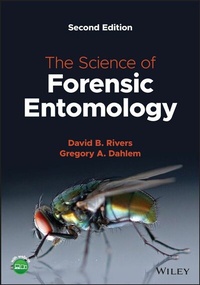
The Science of Forensic Entomology
Description

In the newly revised second edition of The Science of Forensic Entomology, two distinguished entomologists deliver a foundational and practical resource that equips students and professionals to be able to understand and resolve questions concerning the presence of specific insects at crime scenes. Each chapter in the book addresses a topic that delves into the underlying biological principles and concepts relevant to the insect biology that grounds the use of insects in legal and investigational contexts.
In addition to non-traditional topics, including the biology of maggot masses, temperature tolerances of necrophagous insects, chemical attraction and communication, reproductive strategies of necrophagous flies, and archaeoentomology, the book also offers readers:
* A thorough introduction to the role of forensic science in criminal investigations and the history of forensic entomology
* Comprehensive discussions of the biology, taxonomy, and natural history of forensically important insects
* Fulsome treatments of the postmortem decomposition of human remains and vertebrate carrion
* In-depth introduction to the concepts of accumulated degree days and the use of insect development for estimation of the postmortem interval
* New chapters dedicated to forensic entomotoxicology, aquatic insects in forensic investigations, microbiomes of forensic insects and carrion, professional standards, and case studies
Perfect for graduate and advanced undergraduate students in forensic entomology, forensic biology, and general forensic science, The Science of Forensic Entomology will also earn a place in the libraries of law enforcement and forensic investigators, as well as researchers in forensic entomology
More details
Other editions
Additional editions
Persons
David B. Rivers is Professor of Biology and Director of Forensic Studies at Loyola University Maryland. His efforts are currently focused on training the next generation of biologists to assist in criminal investigations.
Gregory A. Dahlem, PhD, holds a teaching position at Northern Kentucky University and whose research involves the evolution, identification, and behavior of calyptrate Diptera.
Content
Preface xv
About the companion website xvii
Chapter 1 Role of forensic science in criminal investigations 1
Chapter 2 History of forensic entomology 17
Chapter 3 Role of insects and other arthropods in urban and stored product entomology 35
Chapter 4 Introduction to entomology 55
Chapter 5 Biology, taxonomy, and natural history of forensically important insects 77
Chapter 6 Reproductive strategies of necrophagous flies 103
Chapter 7 Chemical attraction and communication 121
Chapter 8 Biology of the maggot mass 143
Chapter 9 Temperature tolerances of necrophagous insects 167
Chapter 10 Postmortem decomposition of human remains and vertebrate carrion 195
Chapter 11 Insect succession on carrion under natural and artificial conditions 217
Chapter 12 Decomposition in aquatic environments 241
Chapter 13 Microbiomes of carrion and forensic insects 265
Chapter 14 Postmortem interval 283
Chapter 15 Insect stains and artifacts: alterations of bloodstain and body fluid evidence 311
Chapter 16 Necrophagous and parasitic flies as indicators of neglect and abuse 333
Chapter 17 Wildlife forensics 355
Chapter 18 Forensic entomotoxicology 365
Chapter 19 Application of molecular methods to forensic entomology 383
Chapter 20 Archaeoentomology: insects and archaeology 409
Chapter 21 Insects as weapons of war and threats to national security 427
Chapter 22 Insects and arthropods that cause death 451
Chapter 23 Professional standards and ethics 475
Chapter 24 Forensic entomology case studies 487
Appendix I Collection and preservation of calyptrate Diptera 505
Appendix II Getting specimens identified 511
Appendix III Necrophagous fly and beetle life table references 515
Appendix IV Current names for species in Aldrich's Sarcophaga and allies 521
Glossary 525
Index 537
