

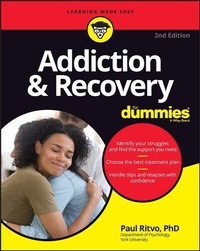
Addiction & Recovery For Dummies
2nd Edition
Published on 27. April 2023
304 pages
978-1-119-88700-3 (ISBN)
Description

No matter what your road to recovery looks like, Dummies is on your side
Addiction and Recovery For Dummies gives you the tools you need to identify and face addiction in yourself or a loved one, while working towards a healthy and realistic approach to recovery. This book offers a compassionate, unbiased, and non-judgmental guide to evaluating and overcoming addiction. You'll learn to identify the range of addiction levels, the various types (including substance and non-substance), and the possible causes of addiction. An expert author guides you through the range of addiction treatment philosophies and approaches, including twelve-step programs, other in- and outpatient programs, and teen treatments. We'll also look at common recovery roadblocks, so you're prepared to overcome whatever hurdles your recovery process brings. Medications, therapeutic communities, self-help groups, long-term recovery strategies--it's all in here.
* Learn the signs of addiction and identify the most appropriate treatments
* Gain advice on offering help to friends or family members struggling with addiction
* Discover available recovery supports, including groups and medications
* Understand the media and cultural factors that encourage addiction, and how to avoid them
Updated with the latest treatment options, Addiction & Recovery For Dummies is a valuable resource for those on a recovery journey, and a support guide for the 45 million people who are directly impacted by addiction.
Addiction and Recovery For Dummies gives you the tools you need to identify and face addiction in yourself or a loved one, while working towards a healthy and realistic approach to recovery. This book offers a compassionate, unbiased, and non-judgmental guide to evaluating and overcoming addiction. You'll learn to identify the range of addiction levels, the various types (including substance and non-substance), and the possible causes of addiction. An expert author guides you through the range of addiction treatment philosophies and approaches, including twelve-step programs, other in- and outpatient programs, and teen treatments. We'll also look at common recovery roadblocks, so you're prepared to overcome whatever hurdles your recovery process brings. Medications, therapeutic communities, self-help groups, long-term recovery strategies--it's all in here.
* Learn the signs of addiction and identify the most appropriate treatments
* Gain advice on offering help to friends or family members struggling with addiction
* Discover available recovery supports, including groups and medications
* Understand the media and cultural factors that encourage addiction, and how to avoid them
Updated with the latest treatment options, Addiction & Recovery For Dummies is a valuable resource for those on a recovery journey, and a support guide for the 45 million people who are directly impacted by addiction.
More details
Other editions
Additional editions
Book
08/2023
Wiley
€22.50
Shipment within 15-20 days
Content
- Intro
- Title Page
- Copyright Page
- Table of Contents
- Introduction
- About This Book
- Foolish Assumptions
- Icons Used in This Book
- Beyond the Book
- Where to Go from Here
- Part 1 The Hole in the Heart: Detecting Addiction
- Chapter 1 Addiction: What Is It?
- Defining Substance Use, Abuse, and Addiction
- Understanding what addiction is
- Mental dependence
- Physical dependence
- The difference between abuse and dependence
- Medical criteria for substance dependence
- Medical criteria for substance abuse
- Nonsubstance or behavioral addictions
- Your personal definition of addiction
- Case study: Is Joe abusing marijuana?
- Case study: Is Mark abusing marijuana?
- The answer
- The Role of Experimentation
- Assessing Your Addiction Risk
- Warning signs of addiction
- A comment for families and friends of the addicted person
- Exploring Methods and Models of Treatment
- Treatment centers and professional help
- Things to consider when deciding on your treatment
- The twelve-step program and other self-help approaches
- The Ins and Outs of Recovery
- Overcoming fears and obstacles to recovery
- What to do if you slip
- How to relate to family, friends, and colleagues
- What family and friends can do
- Chapter 2 Substance Use, Substance Abuse, and Addiction
- The Basics of How Substances of Abuse Work
- The Drug Lineup
- Marijuana (THC)
- Sedatives and tranquilizers
- Alcohol
- Pharmaceutical sedatives
- Barbiturates
- Stimulants
- Amphetamines
- Cocaine
- Psychedelics
- Opiates and narcotics
- Dissociative anesthetics
- Anti-anxiety and antidepressant drugs
- Volatile hydrocarbons (inhalants)
- Solvents
- Gases
- Nitrates/poppers
- Steroids
- Chapter 3 Behavioral Addictions: Addictions Without Substances
- Some General Advice
- Compulsive Gambling
- Three phases of compulsive gambling
- Winning
- Losing
- Desperation
- The impact of compulsive gambling
- It's about money
- It isn't about money
- Sex and Pornography
- Pornography addiction
- Sex addiction
- Love addiction
- Computer Games and the Internet
- Food Addiction
- Eating too much
- Eating too little
- Work Addiction
- Do I have a problem?
- How work addiction starts
- Kicking the habit when everyone is asking for more
- Chapter 4 Dancing with the Tiger: The Risks of Experimenting
- Going with the Flow: Peer Pressure and Other Influences
- Partying and club drugs
- Hooking up
- "I didn't know what I was doing"
- Rebellion and experimentation
- The Risks of Experimentation and Addiction
- Drinking, drugging, and driving
- Unsafe sexual behavior
- The sex trade
- Crime
- Feeding the habit
- Impulsive crimes under the influence
- Anger and aggression
- Child abuse and neglect
- Health risks
- The Costs of Addiction to Families
- The blame game
- The consequences to you and your family
- Part 2 Taking Those First Steps
- Chapter 5 Recognizing Addiction in Yourself and Others
- Am I at Risk?
- Genetics: Addiction Across Generations
- Determining who's susceptible
- Applying your family history
- How a Body Gets Addicted
- From the mind out
- From the body in
- What drugs are the most addictive?
- Waking Up to Your Own Addiction
- Starting with self-observation
- Taking a quick self-assessment
- Breaking down the types of addictions
- Alcohol
- Street drugs
- Prescription drugs
- Gambling
- Computer games
- Eating
- Sex
- Work
- Perceiving Addiction in a Loved One
- Case study: Jack and his daughter
- Recognizing the warning signs
- Chapter 6 Assessing Your Readiness: Do You Need Help Now?
- Understanding Your Role as the Client
- Assessing the Options
- Avoiding hopelessness
- Choosing what's right for you
- Matching Your Characteristics to Treatment Options
- Client characteristics
- Demographics
- Age and extent of addiction
- The dual diagnosis factor
- Treatment characteristics
- Making a treatment choice
- Deciding When to Start
- Cost-benefit analysis of seeking help
- Self-assessing your readiness for change now
- Chapter 7 Quitting: Easy to Say, Hard to Do
- Successful Quitting
- Becoming Aware of Your Triggers
- External triggers
- Internal triggers
- Combination triggers
- Time as a trigger
- Your identity as a trigger
- The ease of availability as a trigger
- Magical thinking
- Increasing Your Motivation to Change
- Factors That Affect Your Ability to Find Addiction Freedom
- Geographical change
- A change of job
- New relationships
- Codependency with a partner
- A recovering partner
- Part 3 Examining Treatment Approaches
- Chapter 8 Treatment Choices
- Different Viewpoints on Addiction
- The moral dimension
- The disease perspective
- The pharmacological perspective
- Thinking your way free: The cognitive-behavioral perspective
- Addictions as a bad habit: The learning models
- The psychodynamic perspective
- The biopsychosocial perspective
- Combination Treatments
- The twelve-step treatments and other variants of the AA model
- Treatments based on cognitive behavioral, psychodynamic, and learning methods
- The cognitive-behavioral model approach to treatment
- The psychodynamic approach to treatment
- The learning model approach to treatment
- Chapter 9 Reviewing Inpatient and Outpatient Treatment Options
- Interventions: Breaking Through Denial and Fear
- How an intervention works
- Intervention principles
- Choosing an interventionist
- Residential Versus Outpatient Care: Deciding What's Best for You
- Outpatient Treatment
- Psychotherapy
- Controlled drinking
- How controlled drinking works
- Is controlled drinking for you?
- Risk reduction
- Tips on seeking outpatient professional help
- Therapist or counselor?
- Credentials
- The therapeutic alliance
- Residential or Inpatient Treatment
- The stages of inpatient treatment
- It's voluntary
- The rules of rehab
- How long is long enough?
- Aftercare
- Fear of the real world
- Telephone counseling
- The Minnesota Model
- Relapse Prevention
- Therapeutic Communities and Sober Living
- How therapeutic communities work
- A focus on rehabilitation
- How effective are therapeutic communities?
- Who obtains treatment from a therapeutic community?
- How long should you stay in treatment in a therapeutic community?
- Andrew's Choice: A True Story of Getting into Treatment and Achieving Success
- How things began
- One day in rehab
- Chapter 10 Treating Physical Dependence
- Understanding Your Body's Reactions to Drugs
- Detoxification: What Is It, and How Does It Work?
- The goals of detox
- The process: In the body
- The process: In the mind
- Knowing What to Expect with Detoxification Treatments
- Detox from alcohol and other sedatives/hypnotics
- Alcohol
- Benzodiazepines
- Detox from stimulants such as cocaine and amphetamines
- Detox from opiates
- Detox from marijuana
- Detox from inhalants/solvents
- Medications That May Help
- Medications for alcohol problems
- Medications for treating benzodiazepine withdrawal
- Medications for treating opiate addiction
- Medications for stimulant abuse
- Maintenance medications and craving reducers
- Naltrexone
- Antabuse (disulfiram)
- Campral
- Buprenorphine
- Methadone Treatment
- What is methadone?
- Methadone myths
- Who should choose methadone treatment?
- Does it work?
- Chapter 11 Twelve-Step Programs
- Types of Twelve-Step Programs
- The Actual Twelve Steps
- Working Your Program
- Hitting bottom and working toward recovery - one day at a time
- Discovering spirituality
- Using affirmations
- Deciding Whether a Twelve-Step Program Is Right for You
- Problems with Twelve-Step Programs
- What the critics say
- Is a twelve-step program enough?
- Chapter 12 Joining Self-Help and Support Groups
- Secular Organizations for Sobriety and Save Our Selves (SOS)
- The SOS approach
- Joining an SOS group
- Self-Management and Recovery Training: SMART
- The SMART approach
- Joining SMART
- Women for Sobriety (WFS)
- The WFS approach
- Joining WFS
- Religious Organizations
- Chapter 13 Psychedelic Therapies and Other Alternative Treatments
- Psychedelics
- Acupuncture
- Correlational research
- Clinical trials
- Ibogaine
- How ibogaine may work
- Ibogaine research
- Ketamine
- Nutritional Therapy
- Addictions and poor nutrition
- What is good nutrition?
- Macrobiotic diets
- Macrobiotic diets and substance addiction
- The research on macrobiotic diets as an aid to substance abuse treatment
- Meditation
- Harm-Reduction Approaches
- Chapter 14 Teen Treatment
- Why Alcohol and Drugs Are More Destructive When You're Young
- It's easier to damage a growing brain
- Teens have a tougher time these days
- What to Do When You Suspect Substance Abuse in a Loved One
- Advice for parents
- Advice for good friends
- A word about denial
- Be prepared for a long haul to a healthy recovery
- Making the investment in teen treatment
- Getting Treatment as a Teen
- Asking for help: Any time is a good time
- Finding a counselor
- Relating to your counselor
- Counseling in group programs
- Residential treatment: Group and individual treatments
- Harm reduction programs for youth
- Remembering That Slips Aren't Freefalls
- Part 4 Life in Recovery
- Chapter 15 Overcoming Barriers to Recovery
- Be Prepared: The First Step
- Building Your Skills for Recovery
- Pacing: Taking Things One Step at a Time
- If you're going too fast, slow down
- If you're bogged down, pick up the pace
- Pacing with time
- Pacing with activities
- Building Resilience
- Maintain personal hygiene
- Explore your senses
- Exercise
- Handling Your Everyday Fears
- The work of worry
- Death and dying
- Abandonment
- Handling Your Fears about Recovery
- Short-term fears: Withdrawal problems
- Long-term fears
- Boredom
- Discomfort
- Helplessness
- Avoiding Self-Anger: A Slippery Slope to Relapse
- Putting judgments on hold
- Recognizing negative moods
- Assessing your sadness
- Assessing your anxiety
- Assessing your anger
- Assessing your guilt and shame
- Recognizing stressful situations
- Taking Action: Storming the Barricades
- Taking action to commit to change
- Taking action against triggers that increase cravings
- Taking action to build self-confidence
- Taking action against negative moods
- Chapter 16 Handling Slips and Relapse
- Slips Versus Relapse: What's the Difference?
- Why Relapse Happens
- You can almost count on it
- Triggers for relapse and what to do about them
- High-risk situations and their remedies
- The good news: Relapse is preventable
- Learning from Relapse
- Examining your relapse
- Doing things differently next time
- Getting Your Balance Back
- Medications may help
- Getting back on track
- Deciding whether you need some extra help
- Chapter 17 Handling Work and Family During Recovery
- Dealing with Relationships During Recovery
- Dealing with positive changes
- Dealing with negative changes
- Dealing with Family Problems
- Do the right thing: Be a good role model
- How families are affected by addiction
- Making positive changes in family relationships
- Solving family problems by changing norms
- Making long-term plans for positive change
- Dealing with Work Problems
- Scenario one: You were hardworking to begin with
- Scenario two: You lose your job due to your addiction
- Dealing with Financial Problems
- Relapses, Restarts, and How They Affect Your Family
- Coming to terms with a relapse
- Restarting with the help of your family
- Chapter 18 For Families and Friends: Ways to Make a Difference
- Breaking Through Denial and Codependency
- Overcoming denial
- Dealing with resistance
- "It's none of your business"
- "You're breaking up the family"
- Preparing for Change
- Helping Your Loved One Follow Through
- Recognizing negative emotions
- Empathizing: "I feel your pain"
- Supporting Change over the Long-Term
- The six weeks of helping
- Expecting and getting through relapse
- The Ups and Downs of Change
- Dropping expectations and falsely positive images
- Turning downs into ups
- Sustaining Optimism and Support in Your Family
- Leaving fantasy-land to find realistic optimism
- Being deserving of victory and success
- Part 5 The Part of Tens
- Chapter 19 Ten Ways to Help a Friend or Loved One
- Talk Things Over Truthfully While You Listen Attentively
- Recognize the Telltale Signs of Addiction
- Confront Denial
- Help Get Treatment
- Let Go of Your Need to Control the Situation
- Hold Criticism at Bay
- Offer Balanced Support
- Understand What You're Fighting
- Remain Optimistic
- Know What to Do When Treatment Efforts Fail
- Chapter 20 More Than Ten Self-Help Resources
- Self-Help Books for Problems Related to Addictions
- Self-Help Websites for Managing Addictions
- Websites for Treatment Models
- Websites for Families and Teens
- Websites for Problems Related to Addictions
- Online Lectures on Addiction-Related Topics
- Treatment Centers
- Index
- EULA
