

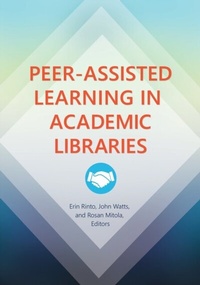
Peer-Assisted Learning in Academic Libraries
1st Edition
Published on 5. July 2017
232 pages
978-1-4408-4689-2 (ISBN)
Description

Written specifically for academic librarians and library administrators, this book identifies the myriad benefits of peer-assisted learning, exploring how the implementation of peer-assisted learning benefits information literacy instruction, cocurricular outreach, and reference services.
In this era of accountability-and stretched budgets-in higher education, librarians need to make instructional programming both highly effective and sustainable. Peer-assisted learning is a methodology that has long been accepted in teaching but is relatively new as applied to academic library instruction, outreach, and reference. This book brings together the most innovative applications of peer-assisted learning in these contexts, explaining specific ways to apply peer-assisted learning in a variety of academic library settings for maximum benefit.
This guidebook begins with an extensive literature review of the theoretical underpinnings of peer-assisted learning and the various benefits these programs can provide academic librarians and peer mentors. The bulk of the book's content is organized into three sections that address the subjects of information literacy instruction, cocurricular outreach, and reference services separately. Each section showcases real-world examples of peer-assisted learning at a variety of academic institutions. Through these case studies, readers can fully understand the development, implementation, and assessment of a peer-assisted learning program, and librarians and administrators will see the practical benefits of enriching the experiences of student employees. Practitioners will receive inspiration and guidance through chapters that discuss training activities, identify lessons learned, and explain the implications for further research.
In this era of accountability-and stretched budgets-in higher education, librarians need to make instructional programming both highly effective and sustainable. Peer-assisted learning is a methodology that has long been accepted in teaching but is relatively new as applied to academic library instruction, outreach, and reference. This book brings together the most innovative applications of peer-assisted learning in these contexts, explaining specific ways to apply peer-assisted learning in a variety of academic library settings for maximum benefit.
This guidebook begins with an extensive literature review of the theoretical underpinnings of peer-assisted learning and the various benefits these programs can provide academic librarians and peer mentors. The bulk of the book's content is organized into three sections that address the subjects of information literacy instruction, cocurricular outreach, and reference services separately. Each section showcases real-world examples of peer-assisted learning at a variety of academic institutions. Through these case studies, readers can fully understand the development, implementation, and assessment of a peer-assisted learning program, and librarians and administrators will see the practical benefits of enriching the experiences of student employees. Practitioners will receive inspiration and guidance through chapters that discuss training activities, identify lessons learned, and explain the implications for further research.
More details
Edition
1. Auflage
Language
English
Place of publication
United States
Publishing group
Bloomsbury Publishing Plc
Target group
Interest Age: From 7 to 17 years
ISBN-13
978-1-4408-4689-2 (9781440846892)
Copyright in bibliographic data and cover images is held by Nielsen Book Services Limited or by the publishers or by their respective licensors: all rights reserved.
Schweitzer Classification
Other editions
Additional editions
Erin Rinto | John Watts | Rosan Mitola
Peer-Assisted Learning in Academic Libraries
Book
07/2017
Libraries Unlimited Inc
€72.60
Shipment within 10-20 days
Persons
Erin Rinto is teaching and learning librarian at the University of Nevada, Las Vegas, where she coordinates the library instruction component of the English composition program.
John Watts is teaching and learning librarian at the University of Nevada, Las Vegas, where he works with faculty and students to integrate the library into the general education curriculum.
Rosan Mitola is outreach librarian for the University of Nevada, Las Vegas, where she collaborates with campus groups to integrate library collections and services into cocurricular educational experiences for students.
John Watts is teaching and learning librarian at the University of Nevada, Las Vegas, where he works with faculty and students to integrate the library into the general education curriculum.
Rosan Mitola is outreach librarian for the University of Nevada, Las Vegas, where she collaborates with campus groups to integrate library collections and services into cocurricular educational experiences for students.
Content
Foreword
Patricia Iannuzzi
Introduction
Part I: Peer-Assisted Learning in Information Literacy Instruction
1 The Research Mentor Program at the University of New Hampshire Manchester Library
Annie Donahue, Carolyn Gamtso, and Kim Donovan
2 The LibRAT Program at Cal Poly, San Luis Obispo
Brett Bodemer
3 The Mathlete Program at the University of Oregon Libraries
Genevieve Schaack and Annie Zeidman-Karpinski
4 Library Peer Mentors at Utah State University
Pamela Martin
5 The Mason Undergraduate Peer Research Coach Program at the University of Nevada, Las Vegas Libraries
Erin Rinto, John Watts, and Rosan Mitola
Part II: Peer-Assisted Learning in Co-Curricular Outreach
6 Library House Outreach Program at Harvard College
Anna Esty, Alexis Gomez, Ramona Islam, Vegas Longlois, and Reed Lowrie
7 Library Living Learning Connection at Indiana University of Pennsylvania Libraries
Theresa McDevitt and Malaika M. Turner
8 Peer Research Coaches at the University of Texas at San Antonio Libraries
Tyler A. Dunn, Jan H. Kemp, and Ellen V. Blumberg
9 Master Builders of build IT @San Diego State University Library
Jenny Wong-Welch
Part III: Peer-Assisted Learning in Reference Services
10 Peer Research Mentors at Gettysburg College
Clinton Baugess, Mallory Jallas, Meggan Smith, and Janelle Wertzberger
11 The Learning Commons Research Assistance Program at Indiana University Libraries
Michael Courtney and Kate Otto
12 The Peer Research Assistants at the Michigan State University Libraries
Emilia R. Marcyk and Benjamin Oberdick
13 Peer Reference Services at Southern Illinois University Carbondale
Joshua Vossler
14 Undergraduate Research Assistants at Hope College
Jessica Hronchek and Rachel Bishop
Index
About the Editors and Contributors
Patricia Iannuzzi
Introduction
Part I: Peer-Assisted Learning in Information Literacy Instruction
1 The Research Mentor Program at the University of New Hampshire Manchester Library
Annie Donahue, Carolyn Gamtso, and Kim Donovan
2 The LibRAT Program at Cal Poly, San Luis Obispo
Brett Bodemer
3 The Mathlete Program at the University of Oregon Libraries
Genevieve Schaack and Annie Zeidman-Karpinski
4 Library Peer Mentors at Utah State University
Pamela Martin
5 The Mason Undergraduate Peer Research Coach Program at the University of Nevada, Las Vegas Libraries
Erin Rinto, John Watts, and Rosan Mitola
Part II: Peer-Assisted Learning in Co-Curricular Outreach
6 Library House Outreach Program at Harvard College
Anna Esty, Alexis Gomez, Ramona Islam, Vegas Longlois, and Reed Lowrie
7 Library Living Learning Connection at Indiana University of Pennsylvania Libraries
Theresa McDevitt and Malaika M. Turner
8 Peer Research Coaches at the University of Texas at San Antonio Libraries
Tyler A. Dunn, Jan H. Kemp, and Ellen V. Blumberg
9 Master Builders of build IT @San Diego State University Library
Jenny Wong-Welch
Part III: Peer-Assisted Learning in Reference Services
10 Peer Research Mentors at Gettysburg College
Clinton Baugess, Mallory Jallas, Meggan Smith, and Janelle Wertzberger
11 The Learning Commons Research Assistance Program at Indiana University Libraries
Michael Courtney and Kate Otto
12 The Peer Research Assistants at the Michigan State University Libraries
Emilia R. Marcyk and Benjamin Oberdick
13 Peer Reference Services at Southern Illinois University Carbondale
Joshua Vossler
14 Undergraduate Research Assistants at Hope College
Jessica Hronchek and Rachel Bishop
Index
About the Editors and Contributors
