


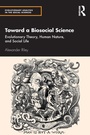
Toward a Biosocial Science
Evolutionary Theory, Human Nature, and Social Life
1st Edition
Published on 3. May 2021
188 pages
978-1-000-37618-0 (ISBN)
Description

Sociology is in crisis. While other disciplines have taken on board the revolutionary discoveries driven by evolutionary biology and psychology, genomics and behavioral genetics, and the neurosciences, sociology has ignored these advances and embraced a biophobia that threatens to drive the discipline into marginality.
This book takes its place in a rich tradition of efforts to integrate sociological thinking into the world of the biological sciences that can be traced to the origins of the discipline, and that took on modern form beginning a generation ago in the works of thinkers such as E.O. Wilson, Richard Alexander, Joseph Lopreato, and Richard Machalek. It offers an accessible introduction to rethinking sociological science in consonance with these contemporary biological revolutions. From the standpoint of a biosociology rooted in the single most important scientific theory touching on human life, the Darwinian theory of natural selection, the book sketches an evolutionary social science that would enable us to properly attend to basic questions of human nature, human behavior, and human social organization.
Individual chapters take on such topics as: The roots and nature of human sociality; the origins of morality in human social life and an evolutionary perspective on human interests, reciprocity, and altruism; the sex difference in our species and what it contributes to an explanation of sociological facts; the nature of stratification, status, and inequality in human evolutionary history; the question of race in our species; and the contribution evolutionary theory makes to explaining the origins and the importance of culture in human societies.
This book takes its place in a rich tradition of efforts to integrate sociological thinking into the world of the biological sciences that can be traced to the origins of the discipline, and that took on modern form beginning a generation ago in the works of thinkers such as E.O. Wilson, Richard Alexander, Joseph Lopreato, and Richard Machalek. It offers an accessible introduction to rethinking sociological science in consonance with these contemporary biological revolutions. From the standpoint of a biosociology rooted in the single most important scientific theory touching on human life, the Darwinian theory of natural selection, the book sketches an evolutionary social science that would enable us to properly attend to basic questions of human nature, human behavior, and human social organization.
Individual chapters take on such topics as: The roots and nature of human sociality; the origins of morality in human social life and an evolutionary perspective on human interests, reciprocity, and altruism; the sex difference in our species and what it contributes to an explanation of sociological facts; the nature of stratification, status, and inequality in human evolutionary history; the question of race in our species; and the contribution evolutionary theory makes to explaining the origins and the importance of culture in human societies.
Reviews / Votes
"Although evolutionary thinking in sociology predated Darwin, Alexander Riley observes that it has been only very recently that sociologists have begun to reclaim their legacy as evolutionary scientists. Providing an excellent overview of developments in evolutionary biology that began in the mid-1960s, Riley traces the recent development of what is now becoming known as 'evolutionary sociology.' Riley provides an introduction to this exciting scientific and scholarly project that will be both accessible to readers unfamiliar with the pertinent technical literature as well as stimulating and thought-provoking to sociologists who are already actively engaged in the 'second Darwinian Revolution.' Insisting that sociological analysis must be guided by the discipline of reason and evidence, Riley encourages his peer sociologists not to allow ideological and political commitments to compromise their efforts to conduct dispassionate scientific analyses. Only then can they pursue their craft in a manner that will contribute to the development of a twenty-first century social science that can fulfill the explanatory promise envisioned by its founders."Richard Machalek, Emeritus Professor of Sociology, University of Wyoming
"Toward a Biosocial Science is an extraordinary book, entertaining, erudite, courageous, and a potential lifeline for sociology."
Edward O. Wilson, University Professor Emeritus, Harvard University
More details
Series
Edition
1. Auflage
Language
English
Place of publication
London
United Kingdom
Publishing group
Taylor & Francis Ltd
Target group
College/higher education
ISBN-13
978-1-000-37618-0 (9781000376180)
Copyright in bibliographic data and cover images is held by Nielsen Book Services Limited or by the publishers or by their respective licensors: all rights reserved.
Schweitzer Classification
Other editions
Additional editions
Book
05/2021
1st Edition
Routledge
€56.80
Shipment within 15-20 days
Book
05/2021
1st Edition
Routledge
€186.90
Shipment within 15-20 days
Person
Alexander Riley, Professor of Sociology at Bucknell University, USA, has read and written extensively in social theory and the history of the social sciences over the past 20 years. His work on the nature and legacy of the Durkheimian tradition is internationally recognized. Riley is the author of several previous books, including Angel Patriots: The Crash of United Flight 93 and the Myth of America, and Godless Intellectuals? The Intellectual Pursuit of the Sacred Reinvented.
Content
Preface: The Dismal Science of Human Nature
Part 1. The Problem with Sociology and its Solution
1. What's Wrong with Sociology?
2. The Basics for an Evolutionary Sociology
3. Why and How are Humans Social?
4. Morality in a Biosocial Context
Part 2. Basic Categories of Human Differentiation
5. The Sex Difference in Homo sapiens
6. Stratification, Status, and Inequality in Homo sapiens
7. Racial Identity and Difference in Homo sapiens
8. Culture in Homo sapiens
Epilogue: The Evolutionary End of Sociology?
Part 1. The Problem with Sociology and its Solution
1. What's Wrong with Sociology?
2. The Basics for an Evolutionary Sociology
3. Why and How are Humans Social?
4. Morality in a Biosocial Context
Part 2. Basic Categories of Human Differentiation
5. The Sex Difference in Homo sapiens
6. Stratification, Status, and Inequality in Homo sapiens
7. Racial Identity and Difference in Homo sapiens
8. Culture in Homo sapiens
Epilogue: The Evolutionary End of Sociology?
