

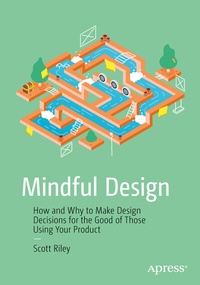
Mindful Design
Description

Learn to create seamless designs backed by a responsible understanding of the human mind. This book examines how human behavior can be used to integrate your product design into lifestyle, rather than interrupt it, and make decisions for the good of those that are using your product.
Mindful Design introduces the areas of brain science that matter to designers, and passionately explains how those areas affect each human's day-to-day experiences with products and interfaces. You will learn about the neurological aspects and limitations of human vision and perception; about our attachment to harmony and dissonance, such as visual harmony, musical harmony; and about our brain's propensity towards pattern recognition and how we perceive the world cognitively.
In the second half of the book you will focus on the practical application of what you have learned, specific to interaction and interface design. Real-world examples are used throughout so that you can really see how design is impacting our everyday digital experience.
Design is a responsibility, but not enough designers understand the human mind or the process of thought. This book explores the key factors involved and shows you how to make the right design choices.
What You'll Learn
-
Review how attention and distraction work and the cost of attentional switching
-
Use Gestalt principles to communicate visual grouping
-
Ensure your underlying models make sense to your audience
-
Use time, progression, and transition to create a composition
-
Carefully examine controlling behavior through reductionist and behaviorist motivation concepts
-
Apply the theoretical knowledge to practical, mindful application design
Who This Book Is For
The primary audience for this book is professional designers who wish to learn more about thehuman mind and how to apply that to their work. The book is also useful for design-focussed product owners and startup founders who wish to apply ethical thinking to a team, or when bootstrapping their products. The secondary audience is design students who are either studying a 'traditional' visual design course, or a UX/interaction design course who have a desire to learn how they might be able to apply mindful design to their early careers. Finally, a tertiary audience for this book would be tutors involved in teaching design, or peripheral, courses who may wish to incorporate its teachings into their lectures, workshops or seminars.More details
Other editions
New editions
Additional editions
Person
Content
1. Attention and Distraction.- 2. Vision, Perception, and Aesthetics.- 3. Learning and Memory.- 4. Expectation, Surprise, and the Musical Interface.- 5. Reward and Motivation.- 6. Designing Environments.- 7. The Design Stack.- 8. Emotional Mapping.- 9. The Anatomy of an Interaction.- 10. Responsible Implementation.
