

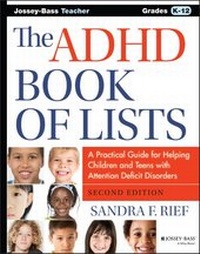
The ADHD Book of Lists
A Practical Guide for Helping Children and Teens with Attention Deficit Disorders
2nd Edition
Published on 21. May 2015
528 pages
978-1-118-93777-8 (ISBN)
Description

Practical ADHD management techniques for parents and teachers
The ADHD Book of Lists is a comprehensive guide to ADHD/ADD, providing the answers parents, teachers, and other caregivers seek in a convenient list format. This new second edition has been updated with the latest research findings and resources, including the most up to date tools and strategies for helping these children succeed. Each aspect of ADHD/ADD is fully explained, from diagnosis to intervention, providing readers with the insight they need to make the best choices for the affected child. Coverage includes the latest medications and behavioral management techniques that work inside and outside the classroom, plus guidance toward alleviating individual struggles including inattention, impulsivity, executive function and subject-specific academic issues. Readers learn how to create a collaborative care team by bringing parents, teachers, doctors, therapists, and counselors on board to build a comprehensive management plan, as well as the practical techniques they can use every day to provide these children the support they need to be their very best.
Attention Deficit/Hyperactivity Disorder cannot be cured, but it can be managed successfully. This book is an insightful guide to supporting children and teens with ADHD, and giving them the mental, emotional, and practical tools that boost their confidence and abilities and enable them to thrive.
* Investigate comprehensive treatments, including ADHD coaching
* Learn strategies for strengthening organization, working memory and other executive functions.
* Understand effective classroom management of students with ADHD
* Discover ways to help struggling children succeed despite the challenges
The ADHD Book of Lists is the complete easy-to-reference guide to practical ADHD management and will be a go-to resource for parents, teachers, clinicians, and others involved in the care and education of students with ADHD.
More details
Other editions
Additional editions
Sandra F. Rief
The ADHD Book of Lists
A Practical Guide for Helping Children and Teens with Attention Deficit Disorders
Book
07/2015
2nd Edition
Wiley
€35.00
Shipment within 15-20 days
Person
SANDRA F. RIEF, MA, is a leading speaker, author, and consultant on meeting the needs of children with learning, attention, and behavioral challenges. She is the author of the bestseller How to Reach and Teach Children with ADD/ADHD, as well as The ADD/ADHD Checklist and several others. Sandra is an award-winning educator who has worked with numerous schools in their efforts to provide struggling students with effective interventions and has trained thousands of teachers in the U.S. and abroad on best practices for helping students with ADHD.
Content
- Cover
- Title Page
- Copyright
- Contents
- Acknowledgments
- About the Author
- About This Book
- A Note from the Author
- Section 1 Understanding, Diagnosing, and Treating ADHD
- 1.1 ADHD: Definitions and Descriptions
- What Is ADHD?
- Descriptions of ADHD: Explaining It to Children
- Sources and Resources
- 1.2 ADHD and the "Executive Functions''
- Definitions of Executive Function (EF)
- EF Analogies and Metaphors
- EF Components
- EF Dysfunction in ADHD
- Models Explaining Executive Function Impairment in ADHD
- Other Interesting Information about Executive Functions
- School-Related EF Difficulties
- What Parents and Teachers Should Keep in Mind
- What Parents, Teachers, and Other Supportive Adults Can Do to Help
- Sources and Resources
- 1.3 The Official Diagnostic Criteria for ADHD (DSM-5)
- DSM-5 Criteria
- Three Presentations of ADHD
- Other Criteria That Must Be Met
- Changes in the DSM Criteria
- References
- 1.4 What Is Currently Known and Unknown about ADHD
- We Know.
- We Do Not Yet Know Enough About.
- Sources and Resources
- 1.5 Signs and Symptoms of ADHD
- Symptoms of Inattention and Associated Problems
- Predominantly Inattentive ADHD
- Symptoms of Hyperactivity and Impulsivity and Associated Problems
- Predominantly Hyperactive-Impulsive ADHD
- Other Common Difficulties Experienced by Children and Teens with ADHD
- Source and Resource
- 1.6 ADHD Statistics: Prevalence and Risk Factors
- Prevalence of ADHD
- More Statistics
- Statistics Regarding Risks Associated with ADHD
- Sources and Resources
- 1.7 Causes of ADHD
- Heredity
- What Are These Brain Differences Associated with ADHD?
- Other Causes of ADHD
- Sources and Resources
- 1.8 ADHD and Coexisting Disorders
- Common Coexisting Conditions and Disorders
- Other Disorders and Conditions
- Identifying and Treating Coexisting Disorders
- About Oppositional Defiant Disorder (ODD) and Conduct Disorder (CD)
- Theory about ADHD and Comorbidity
- Sources and Resources
- 1.9 ADHD Look-Alikes
- Source and Resource
- 1.10 Positive Traits and Strengths
- 1.11 Developmental Course of ADHD across the Life Span
- Infancy and Toddler Stages
- Preschool and Kindergarten Years
- Elementary School Years
- Middle School Years
- High School and Teen Years
- Adults
- Points to Keep in Mind
- Sources and Resources
- 1.12 Girls with ADHD
- What We Have Learned
- Research on Girls with ADHD
- Sources and Resources
- 1.13 ADHD and Its Effects on the Family
- Important Points to Keep in Mind
- 1.14 Pursuing an Evaluation for ADHD: Tips for Parents
- Finding a Professional to Evaluate Your Child
- A School-Based Evaluation
- 1.15 Diagnosing ADHD in Children and Teens
- The Diagnosis
- Who Is Qualified to Diagnose ADHD?
- Components of a Comprehensive Evaluation for ADHD
- Sources and Resources
- 1.16 The School's Role and Responsibilities in the Diagnosis of ADHD
- Information about Current School Functioning
- Information about the School History
- Points to Keep in Mind
- 1.17 If You Suspect a Student Has ADHD: Recommendations for Teachers and Other School Personnel
- Caution and Tips for Teachers
- 1.18 School-Based Assessment for ADHD
- Referral
- Screening
- Comprehensive Assessment
- Interpreting the Data and Next Steps
- Sources and Resources
- 1.19 Multimodal Treatment for ADHD
- Multimodal Intervention
- Additional Points to Keep in Mind
- Sources and Resources
- 1.20 Medication Treatment for Managing ADHD
- Stimulant Medications in the Treatment of ADHD
- Nonstimulants
- Other Medications
- Additional Information
- Sources and Resources
- 1.21 If a Child or Teen Is Taking Medication: Advice for School Staff and Parents
- What Teachers Need to Know
- What Parents Need to Know
- Sources and Resources
- 1.22 Behavior Therapy (Psychosocial Interventions) for Managing ADHD
- General Principles of Behavior Modification
- Home-Based Behavioral Treatment
- School-Based Behavioral Treatment
- Child-Based Behavioral Treatment
- Sources and Resources
- 1.23 Alternative and Complementary Treatments
- Other Complementary Treatments That May Have Benefit for Children and Teens with ADHD
- Other Brain Training Technology Interventions
- Dietary Factors and Interventions
- Sources and Resources
- Section 2 Minimizing and Managing Behavior Problems
- 2.1 Proactive Classroom Management
- Create a Positive Classroom Environment
- Establish Rules and Behavioral Expectations
- Teach Procedures and Routines
- Use Your Proximity and Movement
- Use Signals and Visual Prompts
- Provide Positive Attention and Reward Appropriate Behavior
- Accommodate the Need to Move
- Other Important Strategies and Tips
- Address Misbehavior
- Source and Resource
- 2.2 Proactive Parenting: Positive Discipline and Behavior-Management Strategies
- Basic Guidelines
- Preventive Strategies
- Points to Keep in Mind
- 2.3 Creating an ADHD-Friendly Environment
- Environmental Supports and Accommodations in the Classroom
- Visual and Auditory Cues to the Environment
- Environmental Supports and Modifications at Home
- Source and Resource
- 2.4 Tips for Giving Directions and Increasing Compliance
- Strategies and Tips for Parents
- Strategies and Tips for Teachers
- Sources and Resources
- 2.5 Target Behaviors for Students with ADHD
- School Target Behaviors
- Home Target Behaviors
- Sources and Resources
- 2.6 Preventing Behavior Problems Outside of the Home
- Sources and Resources
- 2.7 Rewards and Positive Reinforcement for Home and School
- Rewards for Home
- Rewards for School
- 2.8 Class (Group) Behavior Management Systems
- Positive-Only Group Reinforcement Systems
- Reinforcement Systems That Also May Involve Fines or Deductions
- What to Do about Students Whose Behavior Interferes with Group Success on Class Incentive Systems
- Points to Keep in Mind
- Sources and Resources
- 2.9 Individualized Behavior Supports and Interventions
- Goal Sheets
- Contingency Contracts
- Token Economies and Token Programs
- Daily Report Cards
- Check-In Check-Out
- Other Behavior Charts and Monitoring Forms
- Direct Behavior Ratings
- With All Positive Incentive Programs
- Other Individualized Behavioral Interventions
- Points to Keep in Mind about Behavioral Supports and Interventions at School
- Sources and Resources
- 2.10 Preventing Behavior Problems During Transitions and ``Challenging Times'' of The School Day
- Classroom Transitions
- Transition from Out-of-Classroom Activities to the Classroom
- Out-of-Classroom School Settings
- 2.11 Common Triggers to Misbehavior
- Environmentally Based
- Physically Based
- Related to Specific Activity or Event
- Related to a Performance or Skill Demand
- Related to a Specific Time
- Other
- 2.12 Strategies for Attention, Focus, and On-Task Behaviors
- What Teachers Can Do to Help
- What Parents Can Do to Help
- Sources and Resources
- 2.13 Strategies for Impulsive and Hyperactive Behaviors
- Ways Parents and Teachers Can Help Children and Teens with ADHD
- More Strategies for Teachers
- More Strategies for Home
- 2.14 Tough Kids: Coping and Dealing with Challenging Behaviors
- About Oppositional Defiant Disorder
- Sources and Resources
- 2.15 Managing Student Anger, Frustration, and Poor Emotional Regulation
- Prevention Strategies
- Strategies to Aid Calming and Avoid Escalation
- Sources and Resources
- 2.16 Managing Your Child's Difficulty with Emotional Control
- Prevention Strategies
- Strategies to Aid Calming and Avoid Escalation
- Sources and Resources
- 2.17 ADHD and Social Skills Interventions
- School Interventions and Recommendations for Educators
- Interventions in Settings Outside of School and Recommendations for Parents
- Sources and Resources
- Section 3 Instructional Strategies, Accommodations, and Supports
- 3.1 Adaptations, Accommodations, Modifications: What's the Difference?
- Adaptations
- Accommodations
- Modifications
- Be Aware
- Sources and Resources
- 3.2 Getting and Focusing Students' Attention
- Auditory Techniques
- Visual Techniques
- The Tech Advantage
- Arousing Students' Curiosity and Anticipation
- Liven It Up
- Make It Personal
- Organizing Student Thinking
- Management Tips
- 3.3 Maintaining Students' Attention and Participation
- General Tips for Keeping Students Engaged
- Questioning Techniques to Increase Student Engagement and Response Opportunities
- Whole-Group and Unison Responses
- Small-Group and Partner Responses
- 3.4 Keeping Students On Task during Seatwork
- 3.5 Adaptations of Assignments and Materials
- Accommodations and Modifications of Assignments
- Adaptations and Modifications of Materials
- Use a Recording Device
- Structure Materials to Enhance Students' Attention and Focus
- Compensate for Writing Difficulties
- Math Material Supports and Adaptations
- Additional Suggestions
- Sources and Resources
- 3.6 Testing Adaptations and Supports
- Individualized Testing Accommodations and Modifications
- Accommodations for Standardized Testing
- Source and Resource
- 3.7 Accommodating Learning Style Differences and Sensory Needs
- Visual Learners
- Auditory Learners
- Tactile-Kinesthetic Learners
- Other Styles
- Environmental Factors
- Sources and Resources
- 3.8 Research-Based Instructional Approaches and Intervention Resources
- Universal Design for Learning (UDL)
- Differentiated Instruction
- Key Instructional Components for Designing Interventions for Struggling Learners
- Sources and Resources
- Section 4 Study Skills, Organization, and Other Executive Function Strategies
- 4.1 Working Memory Weaknesses and Supports
- Definitions and Descriptions of Working Memory
- Verbal and Nonverbal Working Memory
- Working Memory Deficits and ADHD
- Difficulties Associated with Poor Working Memory
- Working Memory Strategies and Supports
- Cognitive Working Memory Training (CWMT) Programs
- Sources and Resources
- 4.2 Strategies to Aid Memory
- Use Mnemonics
- Use Music and Rhyme
- Try These Other Memory Strategies and Tips
- Provide Support for Memory Weaknesses
- Sources and Resources
- 4.3 Metacognitive and Other Learning Strategies
- Metacognitive Strategies
- Cognitive Learning Strategies (CSI)
- Sources and Resources
- 4.4 ADHD: Difficulties with Organization, Time Management, and Homework
- 4.5 What Parents Can Do to Help with Organization
- Supplies and Materials
- The Homework Supply Kit
- Your Child's Room and Work Area
- Use Visual Reminders and Memory Cues
- More Organizational Tips
- Sources and Resources
- 4.6 What Teachers Can Do to Help with Organization
- Organize Student Workspace and Materials
- Visual Reminders and Memory Cues
- Monitor, Support, and Motivate
- Organizational Assistance in Planning and Thinking
- More Organizational Tips
- Sources and Resources
- 4.7 What Parents Can Do to Help with Time Management
- Time Awareness
- Tools, Schedules, and Supports
- Managing Routines and Schedules
- Long-Term Projects
- Sources and Resources
- 4.8 What Teachers Can Do to Help with Time Management
- Time Awareness
- Assignment Sheets and Student Planners, Calendars, and Agendas
- Schedules
- Long-Term Projects
- Other Ways Teachers Can Help with Time Management
- Sources and Resources
- 4.9 Homework Tips for Parents
- Creating the Work Environment
- Developing a Homework Routine and Schedule
- Preparation and Structuring
- Help during Homework
- Increasing Motivation and Work Production
- Communicating with Teachers about Homework Issues
- Other Ways to Help
- Source and Resource
- 4.10 Homework Tips for Teachers
- Communicate Clearly
- Provide Monitoring and Support
- Keep Things in Perspective
- Increase Motivation
- Section 5 Academic Difficulties, Strategies, and Supports in Reading, Writing, and Math
- 5.1 Common Reading Problems in Children and Teens with ADHD
- Definition of Dyslexia
- Other Common Reading Errors and Weaknesses in Children and Teens with ADHD
- Inattention-Related Reading Errors and Difficulties
- Impulsivity-Related Reading Errors and Difficulties
- Working Memory-Related Errors and Difficulties
- Metacognition-Related Errors and Difficulties
- Other Executive Function-Related Difficulties
- Processing Speed-Related Errors and Difficulties
- Related Lists
- Sources and Resources
- 5.2 The Reading Process: What Good Readers Do
- Source and Resource
- 5.3 Strategies for Building Word Recognition, Decoding, Fluency, and Vocabulary
- Word Recognition and Decoding
- Instruction for Students with Dyslexia
- Building Fluency
- Factors That Contribute to Fluency
- Fluency-Building Strategies
- Additional Fluency Strategies
- Remediation Challenge
- Tips for Oral Reading in the Classroom
- Tips for Independent Reading
- Vocabulary
- Strategies for Vocabulary Development and Working with Words
- Points to Keep in Mind
- Sources and Resources
- 5.4 Strategies for Reading Comprehension
- Strategies for Before Reading
- Strategies for During Reading
- Strategies for After Reading
- Graphic Organizers
- More Key Comprehension Strategies
- Other Reading Comprehension Strategies
- Sources and Resources
- 5.5 Reading Tips and Strategies for Parents
- Motivating Your Struggling or Reluctant Reader
- If You Suspect Your Child Has a Reading Disability (Dyslexia)
- Sources and Resources
- 5.6 Why Writing Is a Struggle
- Planning and Organization
- Attention and Inhibition
- Working Memory and Retrieval
- Shifting and Cognitive Flexibility
- Self-Monitoring
- Speed of Written Output and Production
- Language
- Graphomotor Skills
- Spelling
- Steps of the Writing Process and Potential Problems
- Sources and Resources
- 5.7 Strategies to Help with Prewriting: Planning and Organization
- Prewriting Techniques in the Classroom
- Using Planning Forms and Visual Organizers
- Thinking and Questioning
- Mnemonic Strategies
- Other Recommended Instructional Techniques in the Prewriting Stage
- Tips for Parents for Helping Their Children Think of Writing Topics
- Sources and Resources
- 5.8 Strategies for Building Skills in Written Expression
- Teaching Sentence Structure and Expanded Word Choices
- Teaching Students to Compose a Draft
- Teaching Self-Monitoring
- Sources and Resources
- 5.9 Strategies for Revising and Editing
- Strategies for Helping Students with Revision
- Strategies for Helping Students with Editing
- Other Tips for Helping Students with Their Writing
- Learning Strategies
- Sources and Resources
- 5.10 Spelling: Challenges, Strategies, and Supports
- Spelling Instruction
- Motivating, Multisensory Techniques for Practicing Spelling Words
- Sources and Resources
- 5.11 Improving Handwriting and the Legibility of Written Work
- Handwriting Tips, Strategies, and Programs
- Tactile-Kinesthetic Techniques to Motivate Letter Formation
- Additional Tips
- Sources and Resources
- 5.12 Strategies to Bypass and Accommodate Writing Difficulties
- For Teachers
- Use of Assistive Tools and Technology
- Sources and Resources
- 5.13 Math Difficulties Related to ADHD and Learning Disabilities
- Attention Weaknesses
- Memory Weaknesses
- Other Executive Skill Weaknesses
- Sequencing Weaknesses
- Visual-Motor, Fine-Motor, and Spatial-Organization Weaknesses
- Language Weaknesses
- Written Expression Weaknesses
- Related Lists
- Sources and Resources
- 5.14 Math Strategies and Interventions
- Strategies for Increasing Focus and Attention
- Strategies and Supports for Memory and Recall of Math Facts and Procedures
- Strategies to Compensate for Spatial-Organization and Perceptual-Motor Difficulties
- Self-Monitoring and Metacognitive Strategies
- Instructional and Assessment Strategies and Modifications
- Tips for Parents
- Sources and Resources
- Section 6 Educational Rights and Systems of Support at School
- 6.1 Response to Intervention (RTI)
- What is RTI?
- Essential Components of RTI
- The Three-Tiered Model of Intervention
- RTI and IDEA 2004
- Benefits of RTI
- Potential Disadvantages of RTI for Students with Dyslexia or Other Learning Disabilities
- Important Information for Parents and Schools
- RTI and PBIS
- Sources and Resources
- 6.2 The Student Support Team (SST) Process
- The Role of Parents
- The Role of the School
- The Role of Teachers
- Additional Points
- Sources and Resources
- 6.3 Educational Rights for Students with ADHD
- IDEA 2004
- Section 504 of the Rehabilitation Act of 1973
- The Americans with Disabilities Act (ADA) and Section 504
- Which Is More Advantageous for Students with ADHD-IDEA or Section 504?
- Sources and Resources
- 6.4 Federal Law IDEA and Special Education
- Basic Information about Special Education Law (IDEA 2004)
- Related Services
- Referral and Evaluation
- Individualized Education Programs (IEPs)
- Eligibility for Students with ADHD under OHI or SLD Categories
- Specific Learning Disabilities (SLD) Eligibility Criteria
- Sources and Resources
- 6.5 Section 504 Law and How It Applies to Students with ADHD
- What Is Section 504?
- Section 504 Eligibility Criteria
- What Is the Americans with Disabilities Act (ADA) Amendments Act of 2008 (ADAAA)?
- Changes to Section 504 as of ADA Amendments Act of 2008 (ADAAA)
- Important Information about Section 504
- 504 Accommodations
- Sources and Resources
- 6.6 Disciplining Students with Disabilities under IDEA
- Removal from School (Suspensions and Expulsions)
- What Is a Manifestation Determination Review?
- What Is a Functional Behavior Assessment (FBA)?
- What Is a Behavioral Intervention Plan (BIP)?
- Case-by-Case Determination
- Services for Students with a Change of Placement
- What Are "Special Circumstances" under the Law?
- The Right to Due Process and Appeal
- Protections for Students Who Do Not Have IEPs
- Sources and Resources
- Section 7 Understanding, Supporting, and Improving Outcomes for Children and Teens with ADHD
- 7.1 The Necessity of a Team Approach
- The Diagnostic Process
- The Treatment Plan
- More about the Team Approach
- Sources and Resources
- 7.2 Advocacy Tips for Parents
- Know Your Child's Educational Rights
- Be an Effective Advocate at Team Meetings
- Maintain Good Records
- More Tips
- Know When You Need Additional Support or Services
- Ensure the Right Care from Doctors and Other Professionals
- Sources and Resources
- 7.3 Parent and Teacher Communication and Relations
- Tips for Teachers
- Tips for Parents
- Sources and Resources
- 7.4 ADHD in Young Children (Ages Three to Five)
- Developmental Signs and Symptoms of ADHD in Young Children
- What the Research Shows
- Diagnosis and Intervention
- Other Preschool-Kindergarten Interventions
- Strategies and Tips for Parents
- Strategies and Tips for Preschool and Kindergarten Teachers
- Sources and Resources
- 7.5 ADHD in Middle School and High School
- Tips for Parents
- Transition Plans
- Sources and Resources
- 7.6 ADHD Coaching
- What Is ADHD Coaching?
- How ADHD Coaches Work with Preteens, Teens, and College Students
- Research
- Professional Coaching Organizations and Training Programs
- Sources and Resources
- 7.7 Healthy, Fun, and Therapeutic Ways to Help Manage ADHD Symptoms
- Meditation Practices and Mindfulness
- Breathing and Progressive Relaxation Techniques with Children
- Yoga and Other Controlled Exercises
- Organizations and Resources for Teaching Yoga and Mindfulness to Children
- Other
- Guided Imagery and Visualization
- Exercise and Physical Activity
- Green Time
- More Fun and Play and Laughter
- Music
- Art
- Sources and Resources
- 7.8 What Kids with ADHD Need from Parents and Teachers
- What Children and Teens Need from Parents
- What Students with ADHD Need from Teachers
- 7.9 What Parents of Children with ADHD Need
- Become Educated about ADHD
- Professional Help
- Network with Other Parents
- Be Kind to Yourself
- 7.10 ADHD and Gifted (Dual Exceptionalities)
- Gifted Students
- Special Challenges for Twice Exceptional Students
- What Twice Exceptional Students Need
- Tips for Parents and Teachers of Twice Exceptional Students
- Sources and Resources
- 7.11 Do's and Don'ts for Parents and Teachers
- Additional Do's and Don'ts for Parents
- Additional Do's and Don'ts for Teachers
- 7.12 Recommended Websites and Resources
- US National Organizations, Nonprofits, and Government-Supported Information about ADHD and Learning Disabilities
- Other Information and Resources on ADHD and Related Topics
- Resources for Managing Behavior and Self-Regulation Interventions
- Research-Based Resources Related to Teaching and Learning
- Resources Regarding Special Education, IEPs, Disability Rights, and RTI
- Fun and Educational Websites and More
- Appendix: Charts, Forms, and Visual Prompts
- Index
- EULA
