

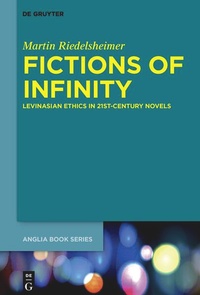
Fictions of Infinity
Description

This study traces the connection of infinity and Levinasian ethics in 21st-century fiction. It tackles the paradox of how infinity can be (re-)presented in the finite space between the covers of a book and finds an answer that combines conceptual metaphor theory with concepts from classical narratology and beyond, such as mise en abyme, textual circularity, intertextuality or omniscient narration. It argues that texts with such structures may be conceptualised as infinite via Lakoff and Núñez's Basic Metaphor of Infinity. The catachrestic transfer of infinity from structure to text means that the texts themselves are understood to be infinite. Taking its cue from the central role of the infinite in Emmanuel Levinas's ethics, the function of such 'fictions of infinity' turns out to be ethical: infinite textuality disrupts reading patterns and calls into question the reader's spontaneity to interpret. This hypothesis is put to the test in detailed readings of four 21st-century novels, David Mitchell's Cloud Atlas , Jeanette Winterson's The Stone Gods , Ian McEwan's Saturday and John Banville's The Infinities . This book thus combines ethical criticism with structural aesthetics to uncover ethical potential in fiction.
More details
Other editions
Additional editions
Person
Martin Riedelsheimer , Augsburg University, Germany.
Content
- Intro
- Acknowledgements
- List of Abbreviations
- Contents
- 1. Introduction: Towards Infinity
- 2. Narrative Infinity: Aesthetics and Conceptualisation
- 3. Levinas and the Ethical Aporia of Infinity
- 4. Infinitely Encountering the Ineffable: David Mitchell's Cloud Atlas
- 5. Infinitely Repeating: Jeanette Winterson's The Stone Gods
- 6. Infinite Intertextuality: Encountering Alterity in Ian McEwan's Saturday
- 7. Infinite Perspective: John Banville's The Infinities
- 8. Coda: And Beyond?
- Works Cited
- Index
