

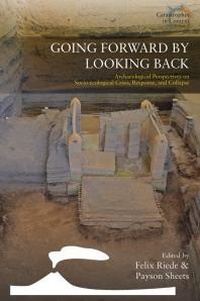
Going Forward by Looking Back
Archaeological Perspectives on Socio-Ecological Crisis, Response, and Collapse
1st Edition
Published on 11. September 2020
458 pages
978-1-78920-865-8 (ISBN)
Description

Catastrophes are on the rise due to climate change, as is their toll in terms of lives and livelihoods as world populations rise and people settle into hazardous places. While disaster response and management are traditionally seen as the domain of the natural and technical sciences, awareness of the importance and role of cultural adaptation is essential. This book catalogues a wide and diverse range of case studies of such disasters and human responses. This serves as inspiration for building culturally sensitive adaptations to present and future calamities, to mitigate their impact, and facilitate recoveries.
Reviews / Votes
"This collection presents diverse studies of climate disasters and human responses, with a particular focus on how knowledge of past catastrophes and resilience in their aftermath can contribute to risk reduction in the future...This is a must-read book on how the world today will face and deal with recurrent disasters through the lens of deep history over time. Highly Recommended." * Choice"This book is causing me to think about how greater attention to environmental hazards through an archaeological lens can shine light on both the strengths and weaknesses of human societal responses...[It] represents an exciting attempt to bring the heft of deep history to bear on the formidable climate-related challenges before us." * American Anthropologist
"The authors have analysed voluminous data from various sites to present a cogent picture of the response by societies to disasters resulting from volcanic eruptions, floods and droughts. The book should be read by policymakers and administrators to strengthen their work in finding disaster relief measures which are people friendly. The book has significant value." * International Journal of Environmental Studies
"This is an important body of work which significantly pushes the boundaries of the scope of archaeology... The volume is quite diverse, thematically, geographically, and in regard to the approach and methodological and theoretical perspectives taken. They add up to a highly interesting, stimulating, thought provoking, and inspiring work." * Christian Isendahl, University of Gothenburg, Sweden
More details
Series
Edition
1. Auflage
Language
English
Place of publication
Oxford
United Kingdom
Target group
Professional and scholarly
Illustrations
Bibliography; Index; 38 Illustrations; 21 Maps; 11 Tables, unspecified; 42 Figures
ISBN-13
978-1-78920-865-8 (9781789208658)
DOI
10.3167/9781789208641
Copyright in bibliographic data and cover images is held by Nielsen Book Services Limited or by the publishers or by their respective licensors: all rights reserved.
Schweitzer Classification
Other editions
Additional editions
Felix Riede | Payson Sheets
Going Forward by Looking Back
Archaeological Perspectives on Socio-Ecological Crisis, Response, and Collapse
Book
03/2023
Berghahn Books
€53.70
Shipment within 3-4 weeks
Felix Riede | Payson Sheets
Going Forward by Looking Back
Archaeological Perspectives on Socio-Ecological Crisis, Response, and Collapse
Book
09/2020
1st Edition
Berghahn Books
€196.30
Shipment within 3-4 weeks
Persons
Felix Riede is Professor of Archaeology at Aarhus University in Denmark. He heads the Laboratory for Past Disaster Science, and his research focuses on the Palaeolithic and Mesolithic of Europe.
Content
List of Illustrations, Figures and Tables
Introduction: Framing Catastrophes Archaeologically
Felix Riede and Payson Sheets
Section I: Fire
Chapter 1. Do Deep-Time Disasters Hold Lessons for Contemporary Understandings of Resilience and Vulnerability?: The Case of the Laacher See Volcanic Eruption
Felix Riede and Rowan Jackson
Chapter 2. Risky Business and the Future of the Past: Nuclear Power in the Ring of Fire
Karen Holmberg
Chapter 3. Do Disasters Always Enhance Inequality?
Payson Sheets
Chapter 4. Political Participation and Social Resilience to the 536/540 CE Atmospheric Catastrophe
Peter Neal Peregrine
Chapter 5. Collapse, Resilience, and Adaptation: An Archaeological Perspective on Continuity and Change in Hazardous Environments
Robin Torrence
Chapter 6. Continuity in the Face of a Slowly Unfolding Catastrophe: The Persistence of Icelandic Settlement Despite Large-Scale Soil Erosion
Andrew Dugmore, Rowan Jackson, David Cooper, Anthony Newton, Arni Daniel Juliusson, Richard Streeter, Vi?ar Hreinsson, Stefani Crabtree, George Hambrecht, Megan Hicks and Tom McGovern
Chapter 7. Coping through Connectedness: A Network-Based Modeling Approach Using Radiocarbon Data from the Kuril Islands of Northeast Asia
Erik Gjesfjeld and William A. Brown
Section II: Water
Chapter 8. The Materiality of Heritage Post-disaster: Negotiating Urban Politics, People, and Place through Collaborative Archaeology
Kelly M. Britt
Chapter 9. Mound-Building and the Politics of Disaster Debris
Shannon Lee Dawdy
Chapter 10. Catastrophe And Collapse in the Late Pre-Hispanic Andes: Responding for Half a Millennium to Political Fragmentation And Climate Stress
Nicola Sharratt
Chapter 11. Beyond One-Shot Hypotheses: Explaining Three Increasingly Large Collapses in the Northern Pueblo Southwest
Timothy A. Kohler, Laura J. Ellyson, and R. Kyle Bocinsky
Chapter 12. Inherent Collapse? Social Dynamics and External Forcing in Early Neolithic and Modern Southwest Germany
Detlef Gronenborn, Hans-Christoph Strien, Kai Wirtz, Peter Turchin, Christoph Zielhofer, and Rolf van Dick
Chapter 13. El Nino as Catastrophe on the Peruvian Coast
Daniel H. Sandweiss and Kirk A. Maasch
Chapter 14. A Slow Catastrophe: Anthropocene Futures and Cape Town's "Day Zero"
Nick Shepherd
Conclusion: Rewriting the Disaster Narrative, an Archaeological Imagination
Mark Schuller
Index
Introduction: Framing Catastrophes Archaeologically
Felix Riede and Payson Sheets
Section I: Fire
Chapter 1. Do Deep-Time Disasters Hold Lessons for Contemporary Understandings of Resilience and Vulnerability?: The Case of the Laacher See Volcanic Eruption
Felix Riede and Rowan Jackson
Chapter 2. Risky Business and the Future of the Past: Nuclear Power in the Ring of Fire
Karen Holmberg
Chapter 3. Do Disasters Always Enhance Inequality?
Payson Sheets
Chapter 4. Political Participation and Social Resilience to the 536/540 CE Atmospheric Catastrophe
Peter Neal Peregrine
Chapter 5. Collapse, Resilience, and Adaptation: An Archaeological Perspective on Continuity and Change in Hazardous Environments
Robin Torrence
Chapter 6. Continuity in the Face of a Slowly Unfolding Catastrophe: The Persistence of Icelandic Settlement Despite Large-Scale Soil Erosion
Andrew Dugmore, Rowan Jackson, David Cooper, Anthony Newton, Arni Daniel Juliusson, Richard Streeter, Vi?ar Hreinsson, Stefani Crabtree, George Hambrecht, Megan Hicks and Tom McGovern
Chapter 7. Coping through Connectedness: A Network-Based Modeling Approach Using Radiocarbon Data from the Kuril Islands of Northeast Asia
Erik Gjesfjeld and William A. Brown
Section II: Water
Chapter 8. The Materiality of Heritage Post-disaster: Negotiating Urban Politics, People, and Place through Collaborative Archaeology
Kelly M. Britt
Chapter 9. Mound-Building and the Politics of Disaster Debris
Shannon Lee Dawdy
Chapter 10. Catastrophe And Collapse in the Late Pre-Hispanic Andes: Responding for Half a Millennium to Political Fragmentation And Climate Stress
Nicola Sharratt
Chapter 11. Beyond One-Shot Hypotheses: Explaining Three Increasingly Large Collapses in the Northern Pueblo Southwest
Timothy A. Kohler, Laura J. Ellyson, and R. Kyle Bocinsky
Chapter 12. Inherent Collapse? Social Dynamics and External Forcing in Early Neolithic and Modern Southwest Germany
Detlef Gronenborn, Hans-Christoph Strien, Kai Wirtz, Peter Turchin, Christoph Zielhofer, and Rolf van Dick
Chapter 13. El Nino as Catastrophe on the Peruvian Coast
Daniel H. Sandweiss and Kirk A. Maasch
Chapter 14. A Slow Catastrophe: Anthropocene Futures and Cape Town's "Day Zero"
Nick Shepherd
Conclusion: Rewriting the Disaster Narrative, an Archaeological Imagination
Mark Schuller
Index
