

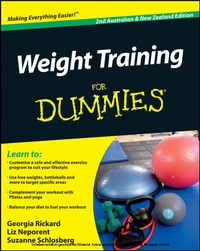
Weight Training For Dummies
Description

Whether you're a beginner who doesn't know a barbell from a chocolate bar, a fitness junkie looking to expand your knowledge on weight training, or you're recovering from an injury and need to rebuild strength, this book is for you. Find out how to use exercise machines and weights at the gym and design a workout to do at home.
Know your way around a gym — learn all the weight lifting lingo, equipment and etiquette
Help control your weight — raise your basal metabolism and burn fat, not muscle, while eating right
Keep your bones healthy — maintain bone density and reduce your risk of developing osteoporosis
Track your progress — use a daily workout log to track your journey from soft to strong
Stay motivated — try a blend of machines, free weights, balls, bands and classes to keep your workout interesting
Improve your heart health — work your heart and lungs with aerobic exercise to complement your strength training
Exercise safely — follow step-by-step instructions on how to train without hurting yourself
Mix up your weight training — improve your balance and coordination with yoga and Pilates moves
Open the book and find:
More than 150 weight training exercises with photos
The latest in equipment, including free weights and machines
The best moves for working your core
Information on toning and strengthening without bulking up
How to find a fitness trainer
The latest exercise DVDs to hire, buy or download
The lowdown on exercise deals and duds
Current data on nutritional supplements
Learn to:
Customise a safe and effective exercise program to suit your lifestyle
Use free weights, kettlebells andmore to target specific areas
Complement your workout withPilates and yoga
Balance your diet to fuel your workout
More details
Other editions
New editions
Additional editions
Content
- Weight Training For Dummies, 2nd Australian & New Zealand Edition
- About the Authors
- Authors' Acknowledgements
- Contents at a Glance
- Table of Contents
- Introduction
- What Weight Training Can Do for You
- How to Use This Book
- How This Book Is Organised
- Icons Used in This Book
- Special Icons
- Part I: Stuff to Know Before You Pick Up a Weight
- Chapter 1: Tools of the Trade
- Jargon We Couldn't Resist
- A For Dummies Guide to Dumbbells and Other Free Weights
- Using a Weight Bench
- Don't Be Afraid of Weight Machines
- Stretching Your Workout
- Lifting Your Body Weight
- Chapter 2: How to Avoid Dropping a Weight on Your Toe and Other Safety Tips
- The Universal, Immutable Safety Laws of Weight Lifting
- Weight Machine Safety Tips
- Free Weight Safety Tips
- The Art of Spotting and Being Spotted
- Common Weight Training Injuries
- Overcoming Injuries
- Chapter 3: Testing Your Strength and Tracking Your Progress
- The Safest Way to Test Your Strength
- Tracking Your Progress
- Be All That You Can Be
- Part II: Weight Training Wisdom
- Chapter 4: Joining a Gym or Exercising at Home: Which Is for You?
- Joining the Club
- Lifting Weights at Home
- Choosing a Gym
- Designing a Home Gym
- Free Weight Options
- Investing in Weight Machines
- Buying Bands
- Chapter 5: Choosing Your Guru: Trainers, DVDs and Exercise Classes
- Everything You Need to Know about Trainers
- An Introduction to Strength Training Classes
- All About Weight Training DVDs
- Chapter 6: Weight Training Etiquette
- Share the Equipment
- Unload Your Weight Bar
- Return Your Weights to the Right Place
- Keep Your Sweat to Yourself
- Don't Block the Flow of Traffic
- Don't Hog the Drinking Fountain
- Keep the Grunting to a Minimum
- Don't Tote Around Your Gym Bag
- Don't Be Afraid to Ask for Advice
- Be Careful When You Offer Unsolicited Advice
- Don't Dress Like a Porn Star
- Treat the Locker Room Like Your Own Bathroom
- Part III: The Exercises
- Chapter 7: How to Read the Exercise Instructions
- Introducing You to the Exercises
- Our Favourite Phrases
- Breathing Lessons
- Chapter 8: Working Your Back
- Upper Back Muscle Basics
- Why You Need a Strong Upper Back
- Keys to a Great Upper Back Workout
- Mistakes to Avoid When Working Your Upper Back
- Upper Back Exercises in This Chapter
- Lower Back Muscle Basics
- Why You Need to Strengthen Your Lower Back
- Keys to a Great Lower Back Workout
- Mistakes to Avoid When Training Your Lower Back
- Lower Back Exercises
- Chapter 9: Working Your Chest
- Chest Muscle Basics
- Why Strong Pecs Matter
- Keys to a Great Chest Workout
- Mistakes to Avoid When Pumping Your Pecs
- Exercises in This Chapter
- Chapter 10: Working Your Shoulders
- Shoulder Muscle Basics
- Why You Need to Strengthen Your Shoulders
- Keys to a Great Shoulder Workout
- Mistakes to Avoid when Training Your Shoulders
- Exercises in This Chapter
- Chapter 11: Working Your Arms
- Arm Muscle Basics
- Why You Need Strong Arms
- Keys to a Great Arm Workout
- Mistakes to Avoid When Training Your Arms
- Exercises in This Chapter
- Chapter 12: Working Your Abdominals
- Abdominal Muscle Basics
- Why You Need Strong Abdominals
- Strategies for a Great Abdominal Workout
- Mistakes to Avoid When Training Your Abdominals
- Exercises in This Chapter
- Chapter 13: Working Your Core
- Introducing Core Stabiliser Muscle Basics
- Enjoying a Strong Core
- Getting a Core Workout
- Avoiding Mistakes When Training Your Core
- Exercises in This Chapter
- Chapter 14: Working Your Butt and Legs
- Butt and Leg Muscle Basics
- Why You Need Strong Legs
- Keys to a Great Leg Workout
- Mistakes to Avoid When Working Your Lower Body
- Exercises in This Chapter
- Chapter 15: Advanced Weight Training Exercises
- Important Safety Cautions
- Exercises in This Chapter
- Part IV: Designing Your Workout Program
- Chapter 16: Designing a Basic Workout
- Jargon You Actually Need to Know
- The Rap on Reps
- The Scoop on Sets
- Essential Elements of a Weight Routine
- How to Custom-design a Routine
- Sample Beginner Routines
- Chapter 17: Expanding Your Repertoire
- The Big Picture: Organising Your Program Month to Month
- Weight Training Week by Week
- Ideas for Organising Your Daily Workout
- Advanced Training Techniques
- Part V: Beyond the Barbell
- Chapter 18: Yoga and Pilates
- What's the Difference Between Yoga and Pilates?
- What Will Yoga and Pilates Give You That Weight Training Won't?
- Can Yoga and Pilates Replace Weight Training?
- How Can I Fit Yoga and Pilates into My Fitness Program?
- More Details About Yoga
- The Lowdown on Pilates
- Chapter 19: Having a Ball (Almost Literally)
- Picking Out the Right Ball
- Using Exercise Balls Safely
- How Often Should I Use My Ball?
- Exercises in This Chapter
- Chapter 20: Whipping Your Heart and Lungs into Shape
- What Type of Activities Count as Aerobic Exercise?
- How Many Days a Week Should I Do Aerobic Exercise?
- Should I Do Aerobic Exercise Before or After My Weight Workouts?
- Is It True That I'll Lose More Weight If I Exercise at a Slower Pace?
- Finding Your Target Heart Rate
- How Do I Measure My Heart Rate?
- What Level of Intensity Will Give Me the Best Results?
- If I Do Aerobic Workouts Regularly, When Will I Start Seeing Results?
- What Is the Best Cardiovascular Machine?
- Can I Make Cardio Exercise Machines Less Boring?
- Chapter 21: Stretching: The Truth
- Why Stretching Is So Controversial
- Discovering the Different Methods of Stretching
- Chapter 22: Improving Your Balance and Coordination
- Losing Balance with Age
- Balance Exercises
- Vibration Machines
- Other Nifty Balance Gadgets
- Chapter 23: Pills, Powders and Potions: Nutrition in a Nutshell
- The Scoop on Fat-Burning and Muscle-Building Supplements
- The Lowdown on Protein
- Do Energy Bars Really Give You Energy?
- Snacking and Drinking for Exercise
- Part VI: The Part of Tens
- Chapter 24: Ten Ways to Educate Yourself about Weight Training
- Read Fitness Magazines
- Be a Voyeur
- Browse the Internet
- Read Books
- Hire a Cyber Trainer
- Watch Fitness TV Shows
- Hook Up with an Advice Board
- Hire a Qualified Dietitian
- Keep a Training Diary
- Get Certified as a Trainer
- Chapter 25: Ten Myths and Misconceptions about Weight Training
- Myth #1: You'll Get Huge Unless You Lift Light Weights
- Myth #2: You're the Only One in the Gym Baffled by the Equipment
- Myth #3: Lifting Weights Is Dangerous
- Myth #4: Thigh Exercises Will Slim Your Thighs, and Ab Exercises Will Whittle Your Middle
- Myth #5: The Best Trainers Are Those With the Best Bodies
- Myth #6: Lifting Weights Won't Help You Lose Weight
- Myth #7: There's One Best Weight Training Program
- Myth #8: Stretching Is a Good Warm-up for Weight Lifting
- Myth #9: Free Weights Are for Muscle-heads and Machines Are for Beginners
- Myth #10: Not Everyone Needs to Strength Train
- Chapter 26: Ten Major Weight Lifting Goofs
- Cheating Your Abs
- Squatting Too Far
- Arching Your Back
- Lowering Your Elbows Too Far
- Pulling a Fast One
- Sticking Your Butt Up
- Exaggerating the Row
- Carrying a Weight Plate Too Casually
- Finishing an Exercise the Wrong Way
- Spotting Too Much - Or Not Enough
- Chapter 27: Ten (Plus Some) Things You Can Do with Latex Rubber (G-Rated)
- Handling Bands on the Run
- Using an Exercise Band
- Discovering Ten Excellent Band Exercises
- Chapter 28: Ten Weight Training Deals and Duds
- Five Great Weight Training Investments
- Five Weight Training Rip-offs
- Index
