

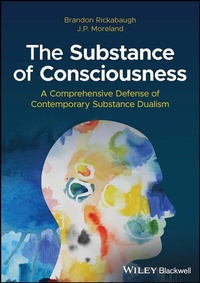
The Substance of Consciousness
A Comprehensive Defense of Contemporary Substance Dualism
1st Edition
Published on 7. September 2023
432 pages
978-1-394-19550-3 (ISBN)
Description

A singularly powerful and rigorous argument in favor of modern substance dualism
In The Substance of Consciousness: A Comprehensive Defense of Contemporary Substance Dualism, two distinguished philosophers deliver a unique and powerful defense of contemporary substance dualism, which makes the claim that the human person is an embodied fundamental, immaterial, and unifying substance. Multidisciplinary in scope, the book explores areas of philosophy, cognitive science, neuroscience, and the sociology of mind-body beliefs.
The authors present the most comprehensive, up-to-date, and rigorous non-edited work on substance dualism in the field, as well as a detailed history of how property and substance dualism have been presented and evaluated over the last 150 years. Alongside developing new and updated positive arguments for substance dualism, they also discuss key metaphysical notions and distinctions that inform the examination of substance dualism and its alternatives.
Readers will also find:
* A thorough examination of the recent shift away from standard physicalism and the renaissance of substance dualism
* Comprehensive explorations of the likely future of substance dualism in the twenty-first century, including an exhaustive list of proposed research projects for substance dualists
* Practical discussion of new and rigorous critiques of significant physicality alternatives, including emergentism and panpsychism.
* Extensive treatments of philosophy of mind debates about the roles played by staunch/faint-hearted naturalism and theism in establishing or presuming methodology, epistemic priorities, and prior metaphysical commitments
Perfect for professional philosophers, The Substance of Consciousness will also earn a place in the libraries of consciousness researchers, philosophical theologians, and religious studies scholars.
In The Substance of Consciousness: A Comprehensive Defense of Contemporary Substance Dualism, two distinguished philosophers deliver a unique and powerful defense of contemporary substance dualism, which makes the claim that the human person is an embodied fundamental, immaterial, and unifying substance. Multidisciplinary in scope, the book explores areas of philosophy, cognitive science, neuroscience, and the sociology of mind-body beliefs.
The authors present the most comprehensive, up-to-date, and rigorous non-edited work on substance dualism in the field, as well as a detailed history of how property and substance dualism have been presented and evaluated over the last 150 years. Alongside developing new and updated positive arguments for substance dualism, they also discuss key metaphysical notions and distinctions that inform the examination of substance dualism and its alternatives.
Readers will also find:
* A thorough examination of the recent shift away from standard physicalism and the renaissance of substance dualism
* Comprehensive explorations of the likely future of substance dualism in the twenty-first century, including an exhaustive list of proposed research projects for substance dualists
* Practical discussion of new and rigorous critiques of significant physicality alternatives, including emergentism and panpsychism.
* Extensive treatments of philosophy of mind debates about the roles played by staunch/faint-hearted naturalism and theism in establishing or presuming methodology, epistemic priorities, and prior metaphysical commitments
Perfect for professional philosophers, The Substance of Consciousness will also earn a place in the libraries of consciousness researchers, philosophical theologians, and religious studies scholars.
More details
Other editions
Additional editions
Brandon Rickabaugh | J. P. Moreland
The Substance of Consciousness
A Comprehensive Defense of Contemporary Substance Dualism
Book
10/2023
1st Edition
Wiley-Blackwell
€37.50
Shipment within 15-20 days
Brandon Rickabaugh | J. P. Moreland
The Substance of Consciousness
A Comprehensive Defense of Contemporary Substance Dualism
Book
10/2023
1st Edition
Wiley-Blackwell
€60.50
Shipment within 15-20 days
Persons
Brandon Rickabaugh is Assistant Professor of Philosophy and Research Scholar of Philosophy of Technology and Culture at Palm Beach Atlantic University. He is a fellow of the Cultura Initiative at The Martin Institute in Santa Barbara, California.
J.P. Moreland is Distinguished Professor of Philosophy at Talbot School of Theology, Biola University. He has authored or contributed to 95 books, including Does God Exist?, Universals, Consciousness and the Existence of God, and The Blackwell Companion to Natural Theology. Moreland was selected by The Best Schools as one of the 50 most influential living philosophers in the world.
Content
List of Figures xxi
Acknowledgments xxii
Part I Ontologically Serious Philosophy of Mind 1
1 Substance Dualism in the 21st Century 3
2 How Staunch Naturalism Shapes the Dialectic in Philosophy of Mind 16
3 A Brief Ontological Detour: Subjects, Parts, Wholes, and Unity 43
Part II Arguments from Introspection, Self-Awareness, and Intentionality 57
4 The Real Nature of Introspection Arguments for Substance Dualism 59
5 From Self-Awareness and Intentionality to the Self as Soul 74
Part III On the Fundamental Unity of Conscious Beings 117
6 From Phenomenal Unity to the Synchronic Unity of the Immaterial Self 119
7 Mereological Essentialism and the Diachronic Endurance of the Soul 144
Part IV Updated and Novel Arguments from Modality and Libertarian Freedom 189
8 Upgrading Modal Arguments for Substance Dualism 191
9 Staunch Libertarian Agency and the Simple, Enduring Soul 234
Part V New and Neglected Responses to Common Defeaters Against Substance Dualism 273
10 Important Frequently Raised Defeaters Against Substance Dualism 275
Part VI Charting a Future for Substance Dualism 309
11 New Research Programs for 21st Century Substance Dualism 311
APPENDIX: The Soul, Mental Action, and the Conservation Laws 344
Mihretu P. Guta
Bibliography 361
Index 392
Acknowledgments xxii
Part I Ontologically Serious Philosophy of Mind 1
1 Substance Dualism in the 21st Century 3
2 How Staunch Naturalism Shapes the Dialectic in Philosophy of Mind 16
3 A Brief Ontological Detour: Subjects, Parts, Wholes, and Unity 43
Part II Arguments from Introspection, Self-Awareness, and Intentionality 57
4 The Real Nature of Introspection Arguments for Substance Dualism 59
5 From Self-Awareness and Intentionality to the Self as Soul 74
Part III On the Fundamental Unity of Conscious Beings 117
6 From Phenomenal Unity to the Synchronic Unity of the Immaterial Self 119
7 Mereological Essentialism and the Diachronic Endurance of the Soul 144
Part IV Updated and Novel Arguments from Modality and Libertarian Freedom 189
8 Upgrading Modal Arguments for Substance Dualism 191
9 Staunch Libertarian Agency and the Simple, Enduring Soul 234
Part V New and Neglected Responses to Common Defeaters Against Substance Dualism 273
10 Important Frequently Raised Defeaters Against Substance Dualism 275
Part VI Charting a Future for Substance Dualism 309
11 New Research Programs for 21st Century Substance Dualism 311
APPENDIX: The Soul, Mental Action, and the Conservation Laws 344
Mihretu P. Guta
Bibliography 361
Index 392
