

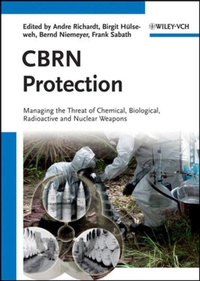
CBRN Protection
Managing the Threat of Chemical, Biological, Radioactive and Nuclear Weapons
1st Edition
Published on 4. March 2013
XXIV, 490 pages
978-3-527-65019-4 (ISBN)
Description

Originating in the armed forces of the early 20th century, weapons based on chemical, biological or nuclear agents have become an everpresent threat that has not vanished after the end of the cold war. Since the technology to produce these agents is nowadays available to
many countries and organizations, including those with terrorist aims, civil authorities across the world need to prepare against incidents involving these agents and train their personnel accordingly.
As an introductory text on NBC CBRN weapons and agents, this book leads the reader from the scientific basics to the current threats and strategies to prepare against them. After an introductory part on the history of NBC CBRN weapons and their international control, the three classes of nuclear/radiological, biological, and chemical weapons are introduced, focusing on agents and delivery vehicles. Current methods
for the rapid detection of NBC CBRN agents are introduced, and the principles of physical protection of humans and structures are explained.
The final parts addresses more general issues of risk management, preparedness and response management, as the set of tools that authorities and civil services will be needed in a future CBRN scenario as well as the likely future scenarios that authorities and civil services will be faced with in the coming years.
This book is a must-have for Health Officers, Public Health Agencies, and Military Authorities.
many countries and organizations, including those with terrorist aims, civil authorities across the world need to prepare against incidents involving these agents and train their personnel accordingly.
As an introductory text on NBC CBRN weapons and agents, this book leads the reader from the scientific basics to the current threats and strategies to prepare against them. After an introductory part on the history of NBC CBRN weapons and their international control, the three classes of nuclear/radiological, biological, and chemical weapons are introduced, focusing on agents and delivery vehicles. Current methods
for the rapid detection of NBC CBRN agents are introduced, and the principles of physical protection of humans and structures are explained.
The final parts addresses more general issues of risk management, preparedness and response management, as the set of tools that authorities and civil services will be needed in a future CBRN scenario as well as the likely future scenarios that authorities and civil services will be faced with in the coming years.
This book is a must-have for Health Officers, Public Health Agencies, and Military Authorities.
More details
Other editions
Additional editions
Software
03/2013
Wiley-VCH
€122.38
No shipping information available
Andre Richardt | Birgit Hülseweh | Bernd Niemeyer
CBRN Protection
Managing the Threat of Chemical, Biological, Radioactive and Nuclear Weapons
Book
11/2012
1st Edition
Wiley-VCH
€89.90
Shipment within 5-7 days
Persons
Andre Richardt has obtained his academic degrees from University Cologne in 1991 (Dipl. Degree in Genetics), Albert-Ludwigs-University, Freiburg (Dr. rer. nat Degree in Microbiology) in 1997 and Helmut-Schmidt-University, Hamburg (Dr. habil Degree in Biotechnology) in 2006. Currently, he is head of Biological and Chemical Decontamination business area at the Bundeswehr Research Institute for Protective Technologies and NBC Protection in Munster, Germany. Most of his career he has been working for the German Armed Forces in the field of CBRN-protection. From 2004 to 2005 he worked at dstl, PortonDown, Great Britain. In the special field catalytic decontamination of biological and chemical warfare agents he has been working for over ten years in national and international working-groups. His current research interests include investigations of non-thermal inactivation of biological and chemical agents as well as the control of the efficiency of a decontamination process. Currently, he is also a lecturer at the Helmut-Schmidt-University, Hamburg and he tutors young officers in the field of CBRN-protection. He is a member in several working groups dealing with fundamental technical and scientific aspects of CBRN protection.
Dr. Birgit Hülseweh studied Biology at the Heinrich-Heine-University of Düsseldorf, Germany with a focus on Microbiology, Molecularbiology and Organic Chemistry. There she received her Diploma in 1990 and did her doctoral thesis (PhD) at the Institute of Microbiology.
From 1994 to 1998 she was as a post-doc at the Max-Planck Institute for Molecular Physiology in Dortmund, Germany and for another 4 year period she worked as a scientific assistant at the University of Essen-Duisburg, Germany. From 2001 to 2002 she was the head of the scientific laboratory of Alpha Technology GmbH in Cologne, Germany, a biotech company, which dealt with the spotting, production and electrical read-out of microarrays for microbial diagnostics. In 2003 she joined as a senior scientist the department of Virology at the Bundeswehr Research Institute for Protective Technologies and NBC Protection in Munster, Germany. Her research focuses on innovative technologies for the identification of microorganisms and her scientific interests include all aspects of real-time-PCR methods, array applications as well as innovative applications of nanotechnology. Dr. Hülseweh has extensive experience in Molecular and Cellular Biology as well as in Immunology and Biochemistry. She is the author of diverse peer reviewed scientific publications and tutors several PhD-students. She has been working as scientific advisor in national and international working-groups and takes care for several international scientific co-operations.
Bernd Niemeyer studied Chemical Engineering and obtained his German Diploma degree (Dipl.-Ing.) at the University Erlangen-Nuremberg, Germany in 1986. His following PhD work focused in the field of bio engineering at the same University. He obtained his PhD-degree in 1990. As Post-doc he visited the Department of Scientific and Industrial Research (DSIR) in Lower Hutt (New Zealand) for one year and researched into separation technologies for health and chemical engineering topics. After his comeback he worked for the Deutsche Aerospace AG (later named DaimlerChrysler Aerospace AG) and the company Thermoselect Suedwest GmbH. He designed, constructed and commissioned new waste treatment plants for ammunition disposal (newly invented process) as well as for municipal waste processing.
Since 1996 he leads the Chair of "Process Engineering with focus on Separation Technology" at the Helmut-Schmidt-University / University of the Federal Armed Forces Hamburg in combination with the Research Group "Molecular Recognition and Separation" at the Helmholtz-Zentrum Geesthacht, Centre for Material Science and Coastal Research.
His research interests are applicable for CBRN-safety (analyses and decontamination of biological warfare agents a
Dr. Birgit Hülseweh studied Biology at the Heinrich-Heine-University of Düsseldorf, Germany with a focus on Microbiology, Molecularbiology and Organic Chemistry. There she received her Diploma in 1990 and did her doctoral thesis (PhD) at the Institute of Microbiology.
From 1994 to 1998 she was as a post-doc at the Max-Planck Institute for Molecular Physiology in Dortmund, Germany and for another 4 year period she worked as a scientific assistant at the University of Essen-Duisburg, Germany. From 2001 to 2002 she was the head of the scientific laboratory of Alpha Technology GmbH in Cologne, Germany, a biotech company, which dealt with the spotting, production and electrical read-out of microarrays for microbial diagnostics. In 2003 she joined as a senior scientist the department of Virology at the Bundeswehr Research Institute for Protective Technologies and NBC Protection in Munster, Germany. Her research focuses on innovative technologies for the identification of microorganisms and her scientific interests include all aspects of real-time-PCR methods, array applications as well as innovative applications of nanotechnology. Dr. Hülseweh has extensive experience in Molecular and Cellular Biology as well as in Immunology and Biochemistry. She is the author of diverse peer reviewed scientific publications and tutors several PhD-students. She has been working as scientific advisor in national and international working-groups and takes care for several international scientific co-operations.
Bernd Niemeyer studied Chemical Engineering and obtained his German Diploma degree (Dipl.-Ing.) at the University Erlangen-Nuremberg, Germany in 1986. His following PhD work focused in the field of bio engineering at the same University. He obtained his PhD-degree in 1990. As Post-doc he visited the Department of Scientific and Industrial Research (DSIR) in Lower Hutt (New Zealand) for one year and researched into separation technologies for health and chemical engineering topics. After his comeback he worked for the Deutsche Aerospace AG (later named DaimlerChrysler Aerospace AG) and the company Thermoselect Suedwest GmbH. He designed, constructed and commissioned new waste treatment plants for ammunition disposal (newly invented process) as well as for municipal waste processing.
Since 1996 he leads the Chair of "Process Engineering with focus on Separation Technology" at the Helmut-Schmidt-University / University of the Federal Armed Forces Hamburg in combination with the Research Group "Molecular Recognition and Separation" at the Helmholtz-Zentrum Geesthacht, Centre for Material Science and Coastal Research.
His research interests are applicable for CBRN-safety (analyses and decontamination of biological warfare agents a
Content
PREFACE
PART I: History and Treaties in CBRN - Warfare and Terrorism
A GLANCE BACK - MYTHS AND FACTS ABOUT CBRN INCIDENTS
Introduction
History of Chemical Warfare
Introduction to Biological Warfare
Introduction to Radiological and Nuclear Warfare
INTERNATIONAL TREATIES - ONLY A MATTER FOR DIPLOMATS?
Introduction to the Minefield of Negotiations
Why It Is so Difficult to Implement International Regulations?
Historic Development of Treaties - the Link to the Incidents
Today's System of Treaties - a Global Network
Nuclear Weapons
Organizations
Conclusions and Where Does the Road Lead?
PART II: CBRN Characteristics - Is There Something Inimitable?
CHEMICAL AGENTS - SMALL MOLECULES WITH DEADLY PROPERTIES
Are Special Properties Required for Chemical Warfare Agents?
How can we Classify Chemical Warfare Agents?
Properties of Chemical Warfare Agents
Choking and Irritant Agents
Incapacitating Agents
Dissemination Systems of Chemical Warfare Agents
Conclusions and Outlook
CHARACTERISTICS OF BIOLOGICAL WARFARE AGENTS - DIVERSITY OF BIOLOGY
What Is Special?
Types of Biological Agents
Risk Classification of Biological and Biological Warfare Agents
Routes of Entry
Origin, Spreading, and Availability
The Biological Event - Borderline to Pandemics, Endemics, and Epidemics
The Bane of Biotechnology - Genetically Engineered Pathogens
Conclusions and Outlook
CHARACTERISTICS OF NUCLEAR AND RADIOLOGICAL WEAPONS
Introduction to Nuclear Explosions
Direct Effects
Indirect Effects
Radiological Weapons
PART III: CBRN Sensors - Key Technology for an Effective CBRN Countermeasure Strategy
WHY ARE RELIABLE CBRN DETECTOR TECHNOLOGIES NEEDED?
Introduction
A Concept to Track CBRN Substances
Low-Level Exposure and Operational Risk Management
Conclusions and Outlook
ANALYSIS OF CHEMICAL WARFARE AGENTS - SEARCHING FOR MOLECULES
Analytical Chemistry - the Scientific Basis for Searching Molecules
Standards for Chemical Warfare Agent Sensor Systems and Criteria for Deployment
False Alarm Rate and Limit of Sensitivity
Technologies for Chemical Warfare Agent Sensor Systems
Testing of Chemical Warfare Agent Detectors
Conclusions and Future Developments
DETECTION AND ANALYSIS OF BIOLOGICAL AGENTS
What Makes the Difference?
The Ideal Detection and Identification Platform
Bioaerosols: Particulate and Biological Background
Aerosol Detection - A Tool for Threat Monitoring
Identification of Biological Warfare Agents
Developing and Upcoming Technologies
Conclusions
MEASUREMENT OF IONIZING RADIATION
Why Is Detection of Ionizing Radiation So Important?
Physical Quantities used to Describe Radioactivity and Ionizing Radiation
Different Measuring Tasks Concerning Ionizing Radiation
Basics of Radiation Detectors
Gamma Dose Rate and Detection of Gamma Radiation
Conclusions and Outlook
PART IV: Technologies for Physical Protection
FILTER TECHNOLOGY - CLEAN AIR IS REQUIRED
Filters - Needed Technology Equipment for Collective and Individual Protection
General Considerations
What are the Principles for Filtration and Air-Cleaning?
Test Methods
Selection Process for CBRN Filters
Conclusions and Outlook
INDIVIDUAL PROTECTIVE EQUIPMENT - DO YOU KNOW WHAT TO WEAR?
Basics of Individual Protection
Which Challenges for Individual Protection Equipment (IPE) Can Be Identified?
The Way to Design Individual Protective Equipment
Function
Ergonomics - a Key Element for Individual Protection Equipment
Donning and Doffing - Training Is Required
Overview of IPE Items - They Have to Act in Concert
Quality Assurance
Workplace Safety
Future Prospects
COLLECTIVE PROTECTION - A SECURE AREA IN A TOXIC ENVIRONMENT
Why Is Collective Protection of Interest?
Collective Protection Systems - Required for Different Scenarios
Basic Design
Conclusions and Outlook
PART V: Cleanup after a CBRN Event
DECONTAMINATION OF CHEMICAL WARFARE AGENTS - WHAT IS THOROUGH?
What Is Decontamination?
Dispersal and Fate of Chemical Warfare Agents
Decontamination Media for Chemical Warfare Agents
Selected Chemica
PART I: History and Treaties in CBRN - Warfare and Terrorism
A GLANCE BACK - MYTHS AND FACTS ABOUT CBRN INCIDENTS
Introduction
History of Chemical Warfare
Introduction to Biological Warfare
Introduction to Radiological and Nuclear Warfare
INTERNATIONAL TREATIES - ONLY A MATTER FOR DIPLOMATS?
Introduction to the Minefield of Negotiations
Why It Is so Difficult to Implement International Regulations?
Historic Development of Treaties - the Link to the Incidents
Today's System of Treaties - a Global Network
Nuclear Weapons
Organizations
Conclusions and Where Does the Road Lead?
PART II: CBRN Characteristics - Is There Something Inimitable?
CHEMICAL AGENTS - SMALL MOLECULES WITH DEADLY PROPERTIES
Are Special Properties Required for Chemical Warfare Agents?
How can we Classify Chemical Warfare Agents?
Properties of Chemical Warfare Agents
Choking and Irritant Agents
Incapacitating Agents
Dissemination Systems of Chemical Warfare Agents
Conclusions and Outlook
CHARACTERISTICS OF BIOLOGICAL WARFARE AGENTS - DIVERSITY OF BIOLOGY
What Is Special?
Types of Biological Agents
Risk Classification of Biological and Biological Warfare Agents
Routes of Entry
Origin, Spreading, and Availability
The Biological Event - Borderline to Pandemics, Endemics, and Epidemics
The Bane of Biotechnology - Genetically Engineered Pathogens
Conclusions and Outlook
CHARACTERISTICS OF NUCLEAR AND RADIOLOGICAL WEAPONS
Introduction to Nuclear Explosions
Direct Effects
Indirect Effects
Radiological Weapons
PART III: CBRN Sensors - Key Technology for an Effective CBRN Countermeasure Strategy
WHY ARE RELIABLE CBRN DETECTOR TECHNOLOGIES NEEDED?
Introduction
A Concept to Track CBRN Substances
Low-Level Exposure and Operational Risk Management
Conclusions and Outlook
ANALYSIS OF CHEMICAL WARFARE AGENTS - SEARCHING FOR MOLECULES
Analytical Chemistry - the Scientific Basis for Searching Molecules
Standards for Chemical Warfare Agent Sensor Systems and Criteria for Deployment
False Alarm Rate and Limit of Sensitivity
Technologies for Chemical Warfare Agent Sensor Systems
Testing of Chemical Warfare Agent Detectors
Conclusions and Future Developments
DETECTION AND ANALYSIS OF BIOLOGICAL AGENTS
What Makes the Difference?
The Ideal Detection and Identification Platform
Bioaerosols: Particulate and Biological Background
Aerosol Detection - A Tool for Threat Monitoring
Identification of Biological Warfare Agents
Developing and Upcoming Technologies
Conclusions
MEASUREMENT OF IONIZING RADIATION
Why Is Detection of Ionizing Radiation So Important?
Physical Quantities used to Describe Radioactivity and Ionizing Radiation
Different Measuring Tasks Concerning Ionizing Radiation
Basics of Radiation Detectors
Gamma Dose Rate and Detection of Gamma Radiation
Conclusions and Outlook
PART IV: Technologies for Physical Protection
FILTER TECHNOLOGY - CLEAN AIR IS REQUIRED
Filters - Needed Technology Equipment for Collective and Individual Protection
General Considerations
What are the Principles for Filtration and Air-Cleaning?
Test Methods
Selection Process for CBRN Filters
Conclusions and Outlook
INDIVIDUAL PROTECTIVE EQUIPMENT - DO YOU KNOW WHAT TO WEAR?
Basics of Individual Protection
Which Challenges for Individual Protection Equipment (IPE) Can Be Identified?
The Way to Design Individual Protective Equipment
Function
Ergonomics - a Key Element for Individual Protection Equipment
Donning and Doffing - Training Is Required
Overview of IPE Items - They Have to Act in Concert
Quality Assurance
Workplace Safety
Future Prospects
COLLECTIVE PROTECTION - A SECURE AREA IN A TOXIC ENVIRONMENT
Why Is Collective Protection of Interest?
Collective Protection Systems - Required for Different Scenarios
Basic Design
Conclusions and Outlook
PART V: Cleanup after a CBRN Event
DECONTAMINATION OF CHEMICAL WARFARE AGENTS - WHAT IS THOROUGH?
What Is Decontamination?
Dispersal and Fate of Chemical Warfare Agents
Decontamination Media for Chemical Warfare Agents
Selected Chemica
