

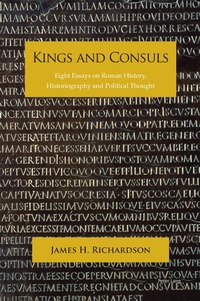
Kings and Consuls
Description

From the beginning, kings ruled Rome; Lucius Brutus established freedom and the consulship. So wrote the Roman historian Tacitus in the second century AD, but the view was orthodox. It is still widely accepted today.
But how could the Romans of later times have possibly known anything about the origins of Rome, the rule and subsequent expulsion of their kings or the creation of the Republic when all those events took place centuries before anyone wrote any account of them? And just how useful are those later accounts, those few that happen to survive, when the Romans not only viewed the past in light of the present but also retold stories of past events in ways designed to meet contemporary needs?
This book attempts to assess what the Romans wrote about the early development of their state. While it may not, in the end, be possible to say very much about archaic Rome, it is certainly possible to draw conclusions about later political ideas and their influence on what the Romans said about their past, about the writing of history at Rome and about the role that stories of past events could play even centuries later.
More details
Other editions
Additional editions
Person
James H. Richardson is Associate Professor of Classics at Massey University. He is the author of The Fabii and the Gauls: Studies in Historical Thought and Historiography in Republican Rome and the co-editor of a number of volumes, including Priests and State in the Roman World and The Roman Historical Tradition: Regal and Republican Rome.
Content
Acknowledgements - Introduction - The People and the State in Early Rome - The King and the Constitution: Elections and Hereditary Succession in Regal Rome - The Oath per Iovem lapidem and the Community in Archaic Rome - Rome's Treaties with Carthage: Jigsaw or Variant Traditions? - Ancient Historical Thought and the Development of the Consulship - The Roman Nobility, the Early Consular Fasti and the Consular Tribunate - 'Firsts' and the Historians of Rome - L. Iunius Brutus the Patrician and the Political Allegiance of Q. Aelius Tubero - Bibliography - Index.
