

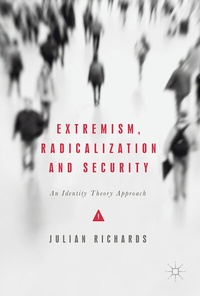
Extremism, Radicalization and Security
Description

This book provides a detailed application of identity theory to contemporary questions of extremism, radicalization and security. The analysis considers how identity forms a central aspect of notions of extremism and security in Western societies, as articulated both by political leaders, the media and the government. It also takes a close and critical look at counter-extremism policy in contemporary Western society. With its detailed and empirical approach to these questions, this book is an accessible and invaluable resource for academics, practitioners, policy-makers and general readers keen to establish a deeper understanding of the key societal security threats of the day.
More details
Other editions
Additional editions
Person
Julian Richards is co-director of the Centre for Security and Intelligence Studies (BUCSIS) at the University of Buckingham in the UK. He co-founded BUCSIS in 2008 following a long career in security policy with the British government.
Content
Chapter 1: Introduction.- Chapter 2: Identity Politics and security.- Chapter 3: Radicalization, extremism, terrorism.- Chapter 4: Reactive identity movements.- Chapter 5: Political myth and discourse analysis in security.- Chapter 6: Identity and security narratives in contemporary Britain.- Chapter 7: State policy and strategy: Prevent, "multi-agency" responses and the way forward.- Chapter 8: Conclusions.
