

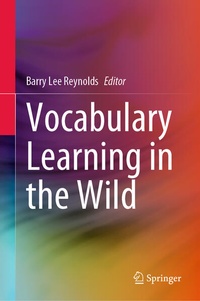
Vocabulary Learning in the Wild
Description

This book provides a timely and valuable resource to explore second language vocabulary learning outside the formal language learning classroom. Rapidly evolving technology and the increasing impact of the global village have resulted in dramatic changes to and increased occasions for second language vocabulary learning. This book offers new and valuable insights into the radically different opportunities both the physical and digital wild provide for language learners to increase their vocabulary knowledge. Practical advice is also given on how second language teachers can integrate vocabulary learning in the wild into their formal classroom instruction. This collection of cutting-edge studies by international experts working within the fields of second language teaching and learning, second language acquisition, applied linguistics, informal language learning, and technology enhanced learning offers an essential resource for language teachers and researchers.
The internet is a powerful source of incidental language learning, but this is only part of language learning in the wild. This excellent book shows the range of opportunities available for learning another language outside the classroom in this much neglected research area.
-- Paul Nation , Emeritus Professor, Victoria University of Wellington
More details
Other editions
Additional editions
Person
Barry Lee Reynolds , Ph.D. is Associate Professor of English Language Education in the Faculty of Education at the University of Macau, Macau SAR, China. He has taught English language and trained English language teachers at thirteen institutions in the USA, Taiwan, and Macau. He has received institutional teaching, research, and outstanding staff awards. His vocabulary research has focused on incidental learning from reading novels, playing video games, text reconstruction, and listening to academic lectures. He has also conducted vocabulary studies on word card use, reader choice, lexical coverage, contextual richness, perception, extramural engagement, and metacognition, among others. In addition to having edited several journal special issues, his most recent edited volumes include Innovative Approaches in Teaching English Writing to Chinese Speakers (2021, De Gruyter Mouton) and English Literacy Instruction for Chinese Speakers (2019, Palgrave). He also serves as an editorial board member for several journals and is a Section Editor for Open Linguistics (De Gruyter Mouton).
Content
Introduction.- A Scoping Review of Second Language Vocabulary Learning In the Wild.- Informal Vocabulary Learning In Formal Contexts.- Productive Collocation Knowledge In L2 German: Study Abroad and L1 Congruency.- Parents In the Classroom: Translanguaging and Informal English Vocabulary Learning Among Newcomer Prekindergarten Students.- Incidental Vocabulary Learning in A Content and Language Integrated Learning Setting.- Vocabulary Learning from Digital Gaming.- The Good Gaming (GG) List: Key Vocabulary in Videogames.- Involvement Load and Vocabulary Acquisition in Digital Game-Based Tasks.- Gaming in a Foreign Language: L2 Vocabulary Processing in a Single-player Role-playing Game.- Vocabulary Learning from Video Viewing .- Youtube for Incidental Vocabulary Learning.- TED Ed for Incidental L2 Academic Vocabulary Learning: A Corpus-driven Study.- Vocabulary Learning from Subtitled Input After Minimal Exposure.- Academic Videos for Incidental Vocabulary Learning Among ESL Foundation Students.- Nonformal Vocabulary Learning.- Computer-assisted Learning of English Formulaic Expressions from Youtube Videos.- Spoken Word Form Recognition with a Mobile Application: Comparing Azerbaijani and Japanese Learners.
