

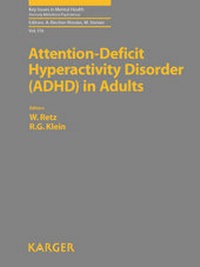
Attention-Deficit Hyperactivity Disorder (ADHD) in Adults
Key Issues in Mental Health, Vol. 176
1st Edition
Published on 5. November 2009
192 pages
978-3-8055-9238-3 (ISBN)
Available for download
Description

Worldwide longitudinal studies performed since the 1970s have clearly shown that ADHD persists into adulthood. These findings have stimulated researchers to develop the therapeutic approaches for adult patients, especially in European countries where scientific and clinical interest in ADHD has increased. In this volume, leading experts from Europe and the United States present their long-term results in order to provide an overview of important aspects of ADHD across the lifespan. These results include epidemiology, neurobiology, psychopathology, longitudinal course, comorbidity and social impairment associated with ADHD. Topics include diagnostic problems and therapeutic options as well as molecular genetic studies. Further, morphological and functional imaging studies in adult ADHD are reviewed, as well as the very important issue of comorbidity. Providing an excellent source of up-to-date information, this publication is essential reading for psychiatrists, neurologists, geneticists, psychotherapists, physicians and other therapists working with ADHD patients.
More details
Other editions
Additional editions
W. Retz | R.G. Klein
Attention-Deficit Hyperactivity Disorder (ADHD) in Adults
Book
11/2009
1st Edition
S. Karger
€68.50
Article exhausted; check different version
Persons
Content
1 - Cover [Seite 1]
2 - Contents [Seite 6]
3 - Preface [Seite 8]
4 - Attention-Deficit Hyperactivity Disorder in Adults: An Overview [Seite 10]
4.1 - Abstract [Seite 10]
4.2 - History of the ADHD Concept [Seite 11]
4.3 - Utah Criteria [Seite 13]
4.4 - Other Common Comorbidities [Seite 16]
4.5 - Differential Diagnosis [Seite 17]
4.6 - Prevalence [Seite 18]
4.7 - Presumed Etiology [Seite 20]
4.8 - Treatment [Seite 23]
4.9 - Case Histories [Seite 26]
4.10 - Conclusion [Seite 34]
4.11 - References [Seite 35]
4.12 - Appendix A [Seite 37]
4.13 - Appendix B [Seite 38]
4.14 - Appendix C [Seite 41]
5 - Family and Twin Studies in Attention-Deficit Hyperactivity Disorder [Seite 47]
5.1 - Abstract [Seite 47]
5.2 - Twin Studies [Seite 48]
5.3 - Family Studies [Seite 55]
5.4 - Conclusions [Seite 61]
5.5 - References [Seite 61]
6 - Molecular Genetics of Attention-Deficit Hyperactivity Disorder [Seite 67]
6.1 - Abstract [Seite 67]
6.2 - Linkage Analyses [Seite 70]
6.3 - Association Studies [Seite 72]
6.4 - Gene-Environment Interactions [Seite 78]
6.5 - Conclusions [Seite 79]
6.6 - References [Seite 79]
7 - Neurophysiology of Adult Attention-Deficit Hyperactivity Disorder [Seite 87]
7.1 - Abstract [Seite 87]
7.2 - Electrophysiology [Seite 87]
7.3 - Quantitative EEG (qEEG) [Seite 89]
7.4 - Event-Related Potentials [Seite 91]
7.5 - Conclusion [Seite 95]
7.6 - References [Seite 95]
8 - Brain Imaging in Adult Attention-Deficit Hyperactivity Disorder [Seite 97]
8.1 - Abstract [Seite 97]
8.2 - Brain Structure in ADHD [Seite 98]
8.3 - Brain Function in ADHD [Seite 101]
8.4 - ADHD and Comorbid Disorders [Seite 107]
8.5 - Conclusions [Seite 107]
8.6 - References [Seite 108]
9 - Attention-Deficit Hyperactivity Disorder in Adults: Diagnosis and Prevalence [Seite 114]
9.1 - Abstract [Seite 114]
9.2 - Introduction [Seite 114]
9.3 - General Problems in the Assessment of ADHD in Adults [Seite 115]
9.4 - Multimodal Assessment and Diagnostic Process [Seite 119]
9.5 - Assessment Instruments [Seite 124]
9.6 - Prevalence [Seite 130]
9.7 - Summary and Perspectives [Seite 131]
9.8 - References [Seite 133]
10 - Comorbidity in Adult Attention-Deficit Hyperactivity Disorder [Seite 135]
10.1 - Abstract [Seite 135]
10.2 - Diagnostic and Methodological Issues [Seite 136]
10.3 - Study Designs and Estimates of Comorbidity [Seite 137]
10.4 - Concurrent Comorbidity [Seite 139]
10.5 - Comorbidity in Adults with ADHD in the General Population [Seite 146]
10.6 - Factors Influencing Diagnostic Comorbidity [Seite 147]
10.7 - Prognostic Comorbidity of Childhood ADHD [Seite 147]
10.8 - Summary and Conclusions [Seite 149]
10.9 - Acknowledgement [Seite 150]
10.10 - References [Seite 150]
11 - Adult Attention-Deficit Hyperactivity Disorder - Functional Impairment, Conduct Problems and Criminality [Seite 153]
11.1 - Abstract [Seite 153]
11.2 - Dysfunction in Activities of Daily Living [Seite 154]
11.3 - ADHD and Criminality [Seite 154]
11.4 - ADHD-Associated Antisociality and APD without ADHD [Seite 160]
11.5 - Conclusion [Seite 163]
11.6 - References [Seite 164]
12 - Psychotherapy in Adult Attention-Deficit Hyperactivity Disorder [Seite 168]
12.1 - Abstract [Seite 168]
12.2 - Specific Approaches to Treatment [Seite 169]
12.3 - Previous Psychotherapy Studies [Seite 169]
12.4 - Classification of the Psychotherapeutic Concepts to Date and the Requirements Placed on a Disorder-Oriented Psychotherapy [Seite 172]
12.5 - The Freiburg Treatment Program as an Example of a Disorder-Oriented Therapy Concept with Several Therapy Modules [Seite 173]
12.6 - Conclusion [Seite 180]
12.7 - References [Seite 181]
13 - Psychopharmacological Treatmentof Attention-Deficit Hyperactivity Disorder in Adults [Seite 183]
13.1 - Abstract [Seite 183]
13.2 - Stimulants [Seite 185]
13.3 - Second-Line Agents [Seite 190]
13.4 - Conclusions [Seite 192]
13.5 - References [Seite 193]
14 - Author Index [Seite 196]
15 - Subject Index [Seite 197]
16 - Back cover [Seite 201]
2 - Contents [Seite 6]
3 - Preface [Seite 8]
4 - Attention-Deficit Hyperactivity Disorder in Adults: An Overview [Seite 10]
4.1 - Abstract [Seite 10]
4.2 - History of the ADHD Concept [Seite 11]
4.3 - Utah Criteria [Seite 13]
4.4 - Other Common Comorbidities [Seite 16]
4.5 - Differential Diagnosis [Seite 17]
4.6 - Prevalence [Seite 18]
4.7 - Presumed Etiology [Seite 20]
4.8 - Treatment [Seite 23]
4.9 - Case Histories [Seite 26]
4.10 - Conclusion [Seite 34]
4.11 - References [Seite 35]
4.12 - Appendix A [Seite 37]
4.13 - Appendix B [Seite 38]
4.14 - Appendix C [Seite 41]
5 - Family and Twin Studies in Attention-Deficit Hyperactivity Disorder [Seite 47]
5.1 - Abstract [Seite 47]
5.2 - Twin Studies [Seite 48]
5.3 - Family Studies [Seite 55]
5.4 - Conclusions [Seite 61]
5.5 - References [Seite 61]
6 - Molecular Genetics of Attention-Deficit Hyperactivity Disorder [Seite 67]
6.1 - Abstract [Seite 67]
6.2 - Linkage Analyses [Seite 70]
6.3 - Association Studies [Seite 72]
6.4 - Gene-Environment Interactions [Seite 78]
6.5 - Conclusions [Seite 79]
6.6 - References [Seite 79]
7 - Neurophysiology of Adult Attention-Deficit Hyperactivity Disorder [Seite 87]
7.1 - Abstract [Seite 87]
7.2 - Electrophysiology [Seite 87]
7.3 - Quantitative EEG (qEEG) [Seite 89]
7.4 - Event-Related Potentials [Seite 91]
7.5 - Conclusion [Seite 95]
7.6 - References [Seite 95]
8 - Brain Imaging in Adult Attention-Deficit Hyperactivity Disorder [Seite 97]
8.1 - Abstract [Seite 97]
8.2 - Brain Structure in ADHD [Seite 98]
8.3 - Brain Function in ADHD [Seite 101]
8.4 - ADHD and Comorbid Disorders [Seite 107]
8.5 - Conclusions [Seite 107]
8.6 - References [Seite 108]
9 - Attention-Deficit Hyperactivity Disorder in Adults: Diagnosis and Prevalence [Seite 114]
9.1 - Abstract [Seite 114]
9.2 - Introduction [Seite 114]
9.3 - General Problems in the Assessment of ADHD in Adults [Seite 115]
9.4 - Multimodal Assessment and Diagnostic Process [Seite 119]
9.5 - Assessment Instruments [Seite 124]
9.6 - Prevalence [Seite 130]
9.7 - Summary and Perspectives [Seite 131]
9.8 - References [Seite 133]
10 - Comorbidity in Adult Attention-Deficit Hyperactivity Disorder [Seite 135]
10.1 - Abstract [Seite 135]
10.2 - Diagnostic and Methodological Issues [Seite 136]
10.3 - Study Designs and Estimates of Comorbidity [Seite 137]
10.4 - Concurrent Comorbidity [Seite 139]
10.5 - Comorbidity in Adults with ADHD in the General Population [Seite 146]
10.6 - Factors Influencing Diagnostic Comorbidity [Seite 147]
10.7 - Prognostic Comorbidity of Childhood ADHD [Seite 147]
10.8 - Summary and Conclusions [Seite 149]
10.9 - Acknowledgement [Seite 150]
10.10 - References [Seite 150]
11 - Adult Attention-Deficit Hyperactivity Disorder - Functional Impairment, Conduct Problems and Criminality [Seite 153]
11.1 - Abstract [Seite 153]
11.2 - Dysfunction in Activities of Daily Living [Seite 154]
11.3 - ADHD and Criminality [Seite 154]
11.4 - ADHD-Associated Antisociality and APD without ADHD [Seite 160]
11.5 - Conclusion [Seite 163]
11.6 - References [Seite 164]
12 - Psychotherapy in Adult Attention-Deficit Hyperactivity Disorder [Seite 168]
12.1 - Abstract [Seite 168]
12.2 - Specific Approaches to Treatment [Seite 169]
12.3 - Previous Psychotherapy Studies [Seite 169]
12.4 - Classification of the Psychotherapeutic Concepts to Date and the Requirements Placed on a Disorder-Oriented Psychotherapy [Seite 172]
12.5 - The Freiburg Treatment Program as an Example of a Disorder-Oriented Therapy Concept with Several Therapy Modules [Seite 173]
12.6 - Conclusion [Seite 180]
12.7 - References [Seite 181]
13 - Psychopharmacological Treatmentof Attention-Deficit Hyperactivity Disorder in Adults [Seite 183]
13.1 - Abstract [Seite 183]
13.2 - Stimulants [Seite 185]
13.3 - Second-Line Agents [Seite 190]
13.4 - Conclusions [Seite 192]
13.5 - References [Seite 193]
14 - Author Index [Seite 196]
15 - Subject Index [Seite 197]
16 - Back cover [Seite 201]

