

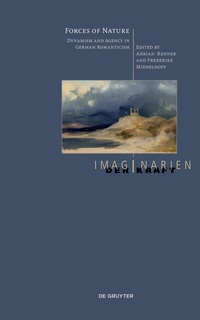
Forces of Nature
Description

Um 1800 diskutierte man über Naturkräfte in verschiedenen wissenschaftlichen und künstlerischen Zusammenhängen: Anziehung und Abstoßung, Lebenskräfte und elektrische Ströme, der "Bildungstrieb" und biologische Organismen wurden als Kräfte untersucht, die sich auf "natürliche" Prozesse zurückführen lassen. Literatur, Wissenschaft und Philosophie der deutschsprachigen Romantik von Schelling bis zu Günderrode und Hölderlin arbeiteten sich an Konzepten von Kräften ab, die als dynamisch und in beständiger Tätigkeit begriffen wurden - Kräfte, die auch menschliche Handlungen, soziale Strukturen und kulturelle Entwicklungen einzuschließen schienen. Der Band erkundet Vor- und Darstellungen von Naturkräften in der Romantik an der Schnittstelle von Naturwissenschaft und kulturellen Vorstellungswelten.
More details
Other editions
Additional editions
Persons
Content
- Intro
- Content
- Acknowledgements
- Dynamism, Agency, Interaction-An Introduction to Forces of Nature in German Romantic Literature and Sciences
- Patterns, Practices, Ethics
- "Bewegung[s]Veränderungskunst". Mechanics and the Force of Rhythm ca. 1800 (Klopstock, Sulzer, A.W. Schlegel, Novalis)
- The Moral Force of Art. Karl Philipp Moritz on Formative Imitation and Bildung
- Practices of Translation, or: How Literature Became the Vital Force of Life
- Imagination, Sensation, Mediation
- Dynamic Perceptions. Forces of Nature and Powers of the Senses in Schelling, Novalis and Günderrode
- Daimonic Energies in Hölderlin's Tod des Empedokles
- "Fire Machines". Heinrich von Ofterdingen and the Transformation of Forces
- Bodies, Powers, Conflicts
- Thirsting for Blood. Romanticizing vis medicatrix naturae in Romantic Medicine and E.T.A. Hoffmann's Ignaz Denner
- Nature's Say. Negotiating the Human-Nature-Continuum in Ludwig Tieck's Der Runenberg
- Homeopathy's Dynamic Forces
- List of Contributors
- Index
